Necessary
Always activeSupports security, form reliability and remembering your privacy choice. It is not used for advertising.

A business website performs as a connected system when conversion, performance, integrations, automation, and scalable structure support one measurable customer journey.
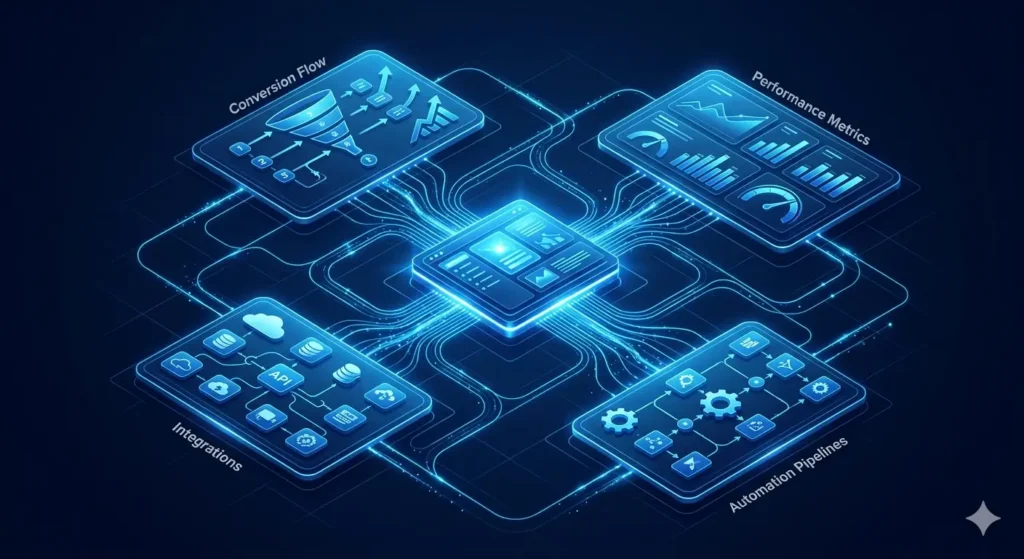
business website systems turn a collection of pages into a dependable path from attention to action. Design still matters, but it cannot compensate for unclear decisions, slow interactions, lost form data, manual follow-up, or a structure that becomes harder to manage as the company grows. Decision-makers should therefore assess the website as an operating layer: what it communicates, what it captures, where information goes, who responds, and how outcomes are measured.
The five systems are interdependent. A clear page can generate interest, yet fail if the form is unreliable. A fast form can capture a lead, yet still create no value if ownership is unclear. Strong website system architecture defines these connections before individual components are optimized.
The value of business website systems comes from continuity. Message, action, data, response, and measurement should preserve context across the journey. That makes problems easier to diagnose and prevents teams from treating every symptom as a separate redesign request.
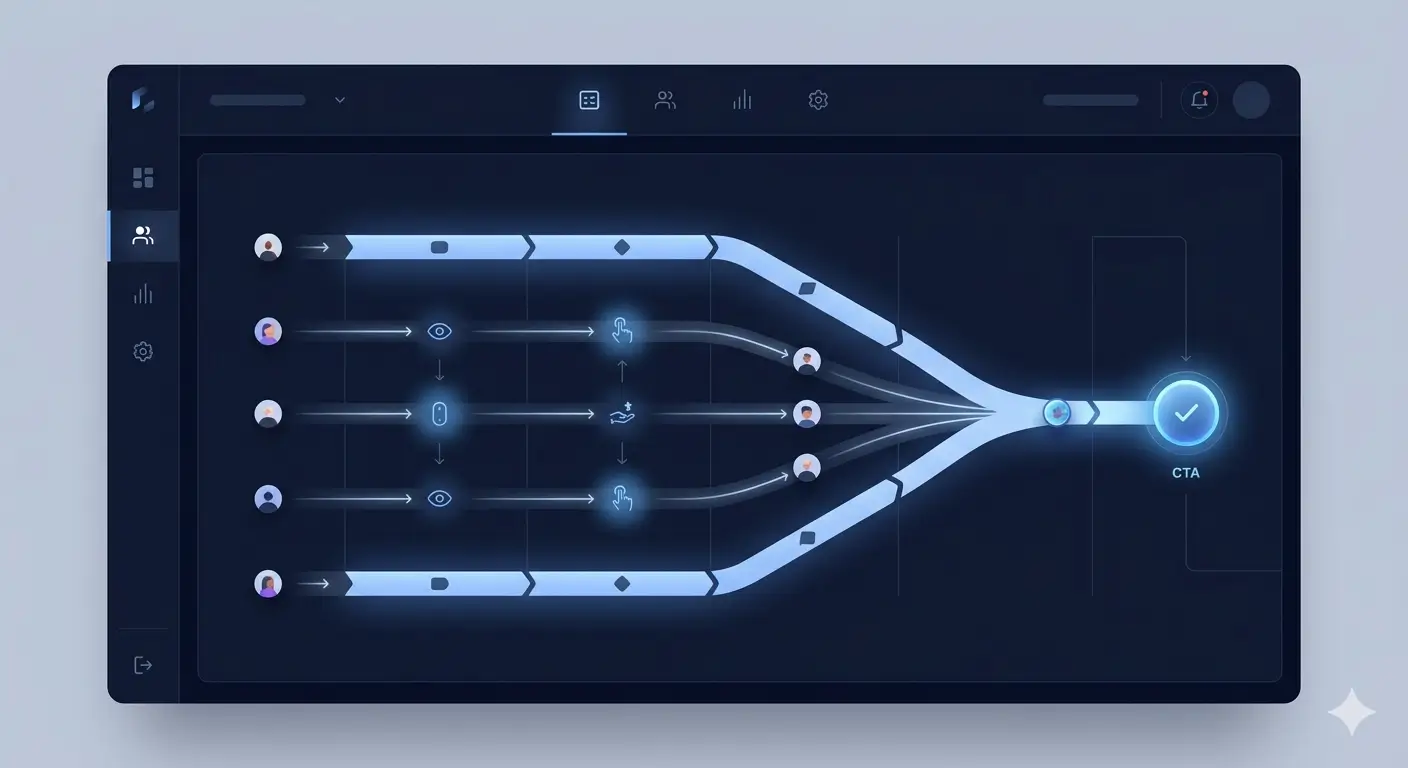
A website conversion system aligns page purpose, proof, calls to action, and capture around the visitor’s next sensible decision. It does not push every reader toward the same commitment. It gives early-stage visitors enough clarity to continue and high-intent visitors a direct route to inquire.
Review the sequence from landing message to confirmation. Each page should explain who the offer is for, what problem it solves, why the claim is credible, and what happens after action. Mono’s Website Conversion System shows how message, trust, CTA flow, capture, and measurement work as one decision path.
A website performance system covers loading, responsiveness, visual stability, asset delivery, code behavior, hosting, and third-party scripts. The official Web Vitals guidance separates loading, interactivity, and visual stability into measurable aspects of user experience. Those metrics do not guarantee conversion, but they expose friction that can interrupt important journeys.
Measure representative pages and actions on real devices, then trace the cause before changing assets or infrastructure. A structured website performance audit helps teams prioritize faults by customer and operational impact rather than chasing an abstract score.

A website integration system connects forms, CRM records, booking tools, payments, analytics, and other approved platforms. The goal is not to connect everything. It is to move necessary information reliably, with clear ownership and failure handling. This practical guide to website API integration explains where data exchange fits inside a wider operating flow.
A website automation system applies defined rules after an action: validate a request, preserve source context, assign an owner, send a confirmation, create a record, or notify a team. Automation should remove repetitive handling without hiding important decisions. The strongest opportunities are predictable, frequent handoffs with clear inputs and owners.
Map the human process first, including exceptions and recovery. Then use website workflow automation where it improves consistency. For acquisition-heavy businesses, a lead generation website system should also preserve campaign and service context through qualification, routing, and response; Mono’s Lead Generation System demonstrates that connected path.
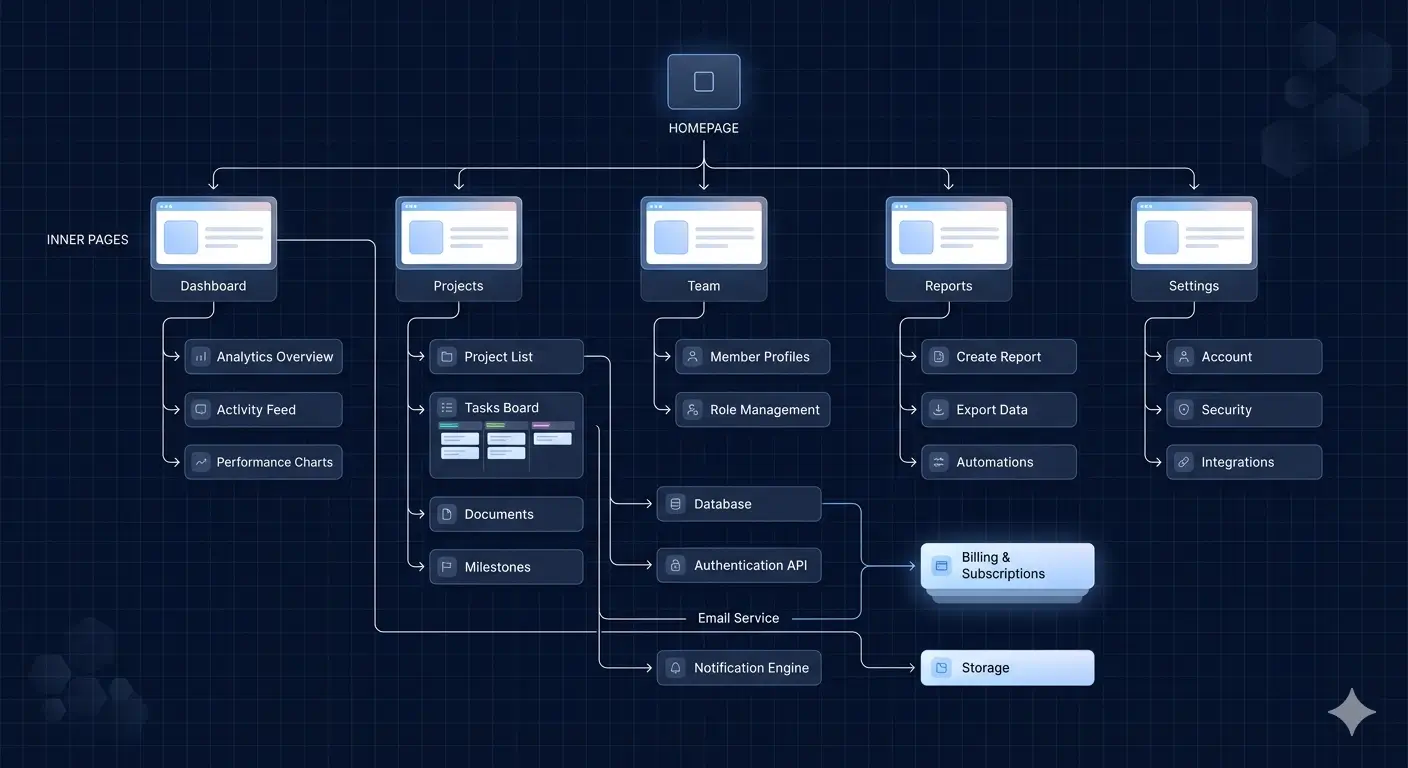
A scalable website structure gives pages, content types, navigation, internal links, components, and permissions a coherent model. Google’s link best practices also emphasize crawlable links and descriptive anchor text, reinforcing the value of purposeful relationships between pages.
Structure should reflect customer questions and operational needs, not only the current menu. Reusable components reduce inconsistency, while an intentional hierarchy supports discovery and future expansion. When several channels and tools must share context, Digital Growth Infrastructure provides the wider model for connecting demand, CRM ownership, automation, and reporting.
Start with one high-value journey and test it end to end. Check whether the page sets the right expectation, the interaction works, the captured data reaches the correct destination, the response is timely, and the outcome is visible. Record the first meaningful break rather than compiling an unprioritized feature list.
Assign an owner to each finding and define how the repaired journey will be retested. This turns the audit into an implementation sequence: stabilize critical failures, restore missing handoffs, improve decision clarity, and then measure the complete path again. Documentation keeps the system understandable as tools, pages, and responsibilities change.
When business website systems are assessed together, teams can distinguish a focused repair from a structural rebuild. Existing sites may need targeted implementation; new or constrained architectures may require conversion-focused web development. If the bottleneck is still unclear, a Mono System Review can define the smallest useful starting point without assuming every layer must be replaced.
Review the full customer and operational journey, identify the first meaningful break, and choose the smallest change that restores continuity.
Start a System ReviewExplore Web DevelopmentArticle FAQ
A system connects the visible pages to conversion paths, data capture, integrations, response workflows, measurement, and a maintainable structure. A brochure mainly presents information and leaves most operational steps disconnected or manual.
Start with the first meaningful break in a high-value customer journey. A failed form, unclear decision path, missing handoff, or unstable page should normally be addressed before secondary features or decorative changes.
An integration provides a reliable way for systems to exchange data. Automation applies rules to that data, such as assigning an inquiry, sending a confirmation, creating a task, or triggering an approved follow-up step.
No. A focused repair may be enough when the underlying structure can support the required journey. A rebuild is more appropriate when templates, content architecture, code, or data flows prevent safe and maintainable improvement.
Measure the complete journey: relevant entry, successful interaction, valid capture, correct routing, timely response, and a visible business outcome. Technical and marketing metrics are useful when interpreted within that end-to-end flow.