Necessary
Always activeSupports security, form reliability and remembering your privacy choice. It is not used for advertising.

Revenue improves when the website, inquiry path, response workflow, and measurement model operate as one connected system.
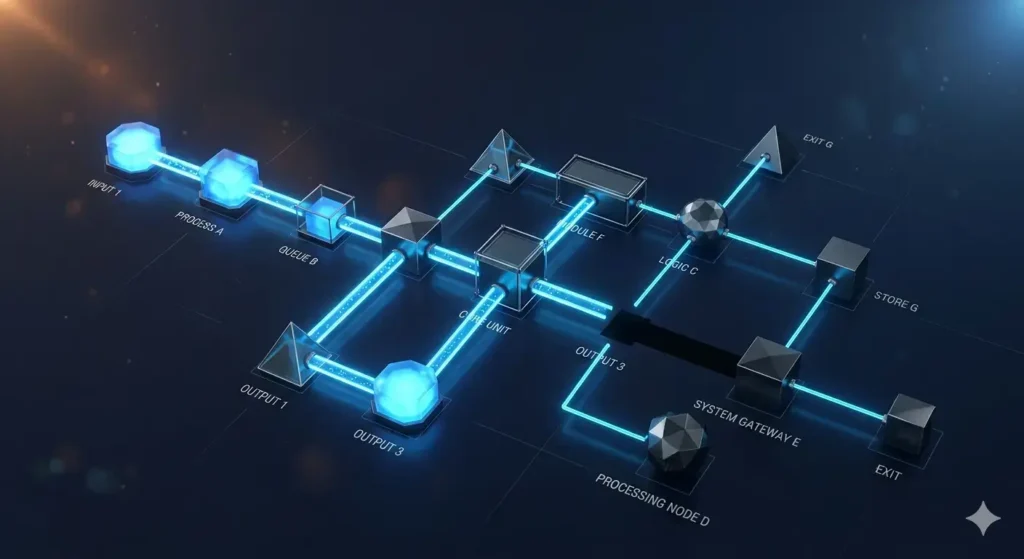
Website revenue optimization starts with a simple distinction: a website can attract attention without creating a dependable path to commercial action. Design, traffic, and content are inputs. Revenue depends on whether the right visitor understands the offer, finds credible reasons to continue, completes an appropriate action, and receives a timely response. When those stages are disconnected, adding more traffic often increases activity without fixing the underlying constraint.
The missing layer is coordination. Pages, forms, analytics, notifications, and follow-up should support one journey. Mono Digital’s Website Conversion System frames the site around that connected path, while a System Review helps identify where the current setup loses clarity or momentum.
A useful website conversion flow begins before the form. Traffic source and search intent shape expectations; the landing page must confirm relevance; service content must explain value and fit; proof must reduce doubt; and the next action must match the reader’s readiness. The path continues through confirmation, routing, response, and follow-up. Optimizing only the button ignores most of the system.
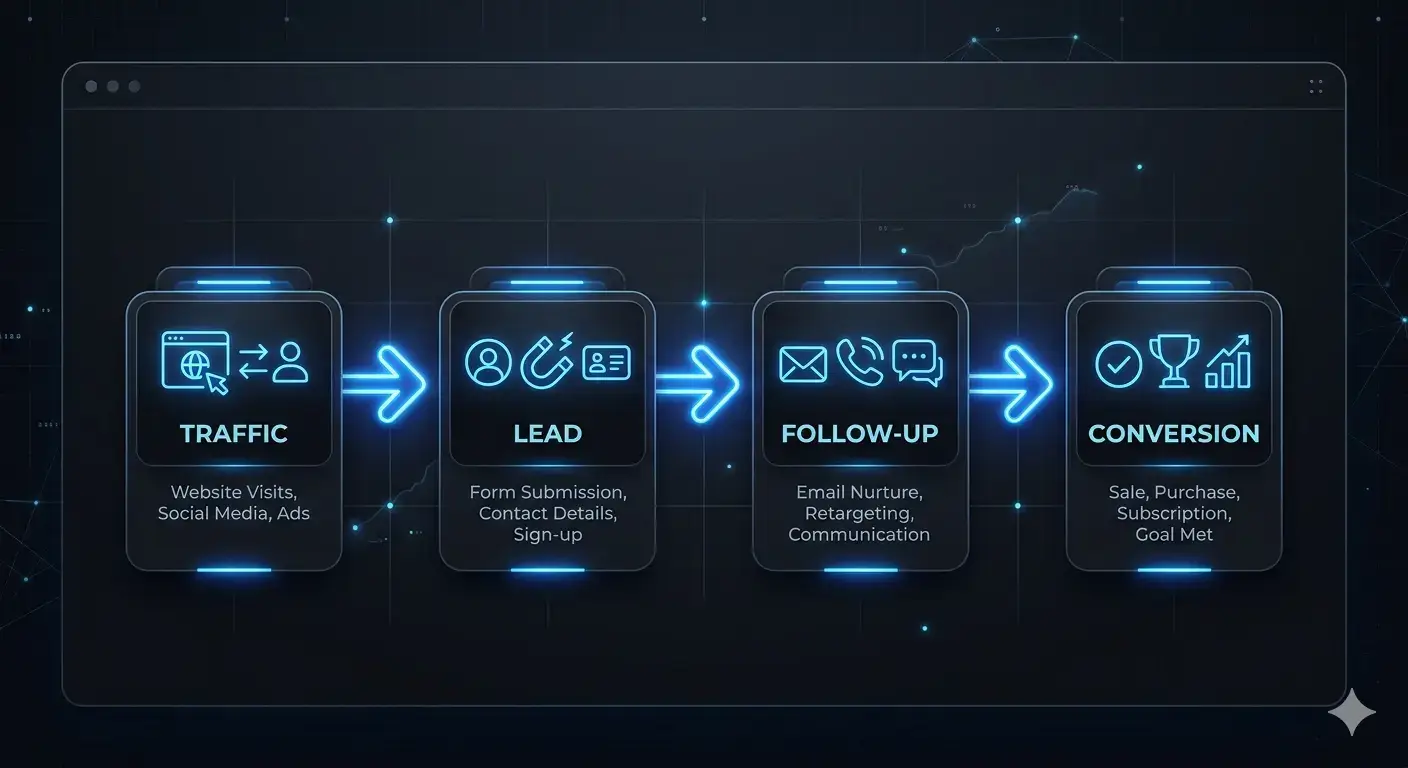
This mapping also makes a lead generation system measurable. Instead of reporting page views as success, teams can define useful events: qualified visits, meaningful engagement, form starts, completed inquiries, accepted bookings, and routed leads. Mono’s Lead Generation System connects landing pages, tracking, forms, and follow-up so those signals describe an operating process rather than a collection of marketing tools.
Conversion bottlenecks appear where visitors must work harder than the business realizes. Common examples include vague service categories, competing calls to action, missing pricing context, weak mobile layouts, forms that request unnecessary information, and confirmation messages that provide no next step. Analytics may show the drop-off, but page review, device testing, and real journey testing are needed to explain it.

Sales funnel optimization should therefore address sequence and intent, not force every visitor toward the same action. A research-stage reader may need a relevant Insight, while a ready buyer needs a clear inquiry or booking route. Helpful internal links to Mono Insights, focused service pages, and appropriate solutions let visitors progress without creating artificial urgency.
A completed form is not the end of conversion. If notifications fail, ownership is unclear, or follow-up depends on someone checking an inbox, demand can still be lost. A website automation system can route inquiries, record key details, send appropriate confirmations, and create a clear human handoff. Mono’s AI Automation service supports these connected workflows without removing human judgment from important customer conversations.
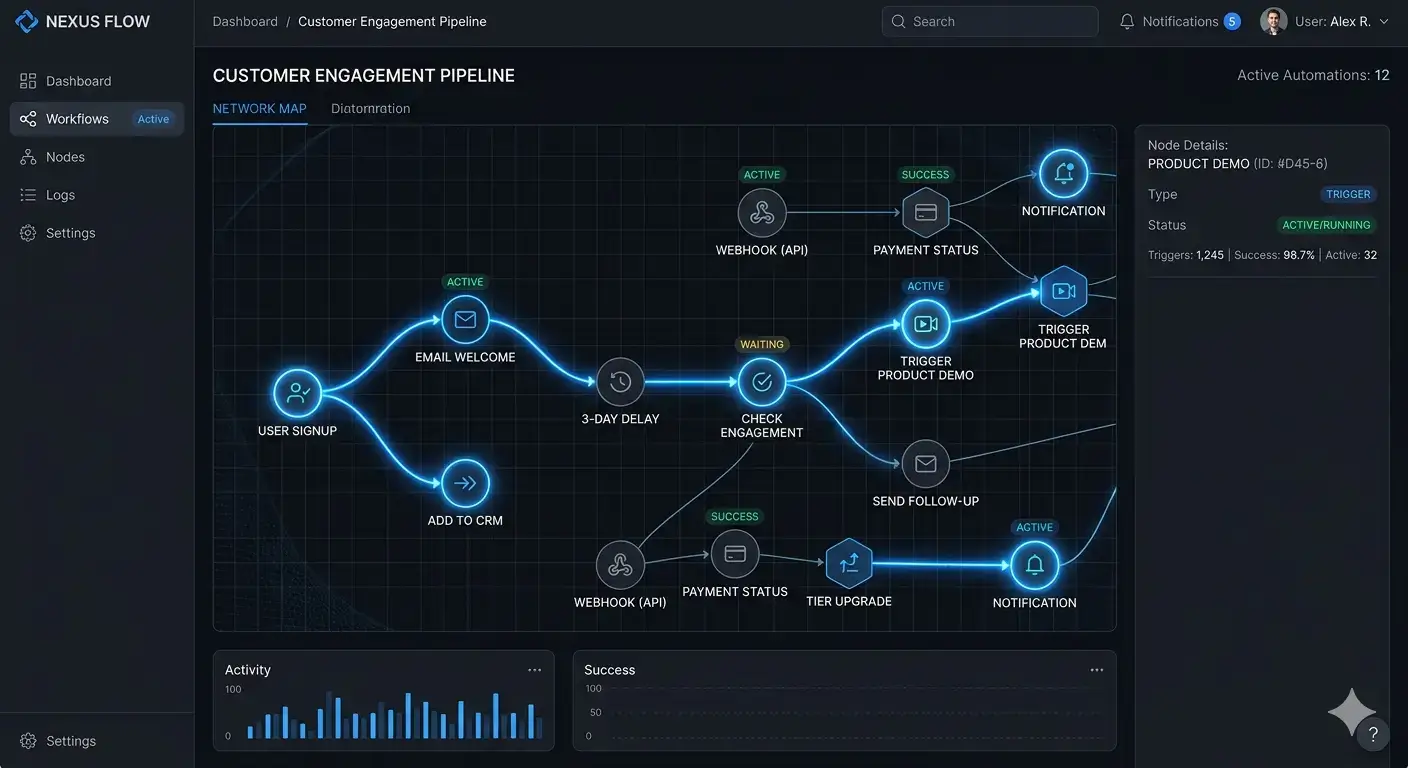
Different businesses require different actions. Consultation firms may need qualification and scheduling; quote-based services may need structured project details; hospitality businesses may need availability and payment steps. The Booking & Inquiry System addresses those operational paths, while Digital Growth Infrastructure connects the website with CRM, analytics, automation, and reporting.
The second practical use of website revenue optimization is prioritization. Teams should establish a baseline, verify event quality, and compare stages rather than reacting to one top-line conversion rate. If qualified traffic is low, positioning or acquisition may be the constraint. If form starts are healthy but completions are weak, the interaction needs attention. If inquiries arrive but few receive timely follow-up, the website is exposing an operational issue.
This approach creates a credible revenue growth strategy because each change has a reason, an owner, and a verification method. Digital Marketing can bring targeted demand, SEO Services can strengthen discoverability and structure, and Web Development can implement reliable components. Their value increases when they work against the same journey and measurement model.
Useful reporting should preserve that stage-by-stage view. A single blended rate can hide whether changes improved traffic quality, message comprehension, action completion, or sales handling. Record definitions for every event, exclude internal tests, and compare consistent periods. Qualitative evidence also matters: recurring sales questions, form feedback, and support conversations often reveal uncertainty that dashboards cannot name.
Experiments should be narrow enough to interpret. Changing the offer, layout, form, and traffic source simultaneously may produce movement without explaining why. Start with a documented hypothesis, protect essential functionality, and allow enough relevant observations before deciding. For lower-volume service businesses, structured journey reviews and direct lead-quality feedback can be more useful than pretending every decision needs a large statistical test.
Optimization should end with verification, not deployment. Test mobile and desktop paths, submit real forms, confirm notifications, inspect analytics events, and review whether the promised next step actually occurs. The final value of website revenue optimization is not a permanently “finished” site. It is a repeatable operating discipline that finds the current constraint, improves it carefully, and keeps marketing activity connected to measurable business action.
Identify the weakest stage in the journey and build a practical roadmap across content, conversion, automation, and measurement.
Get a System ReviewContact MonoArticle FAQ
It improves how positioning, page sequence, proof, calls to action, forms, response workflows, and measurement support one commercial journey.
No. More traffic will not solve unclear messaging, broken inquiry paths, weak follow-up, or unreliable measurement. Diagnose the current constraint first.
Start with failures that block qualified inquiries or prevent reliable measurement, then prioritize the weakest stage by impact, dependency, and implementation effort.
Automation can route inquiries, send confirmations, record lead details, and trigger timely human follow-up so demand is not lost after submission.
Test the complete journey on real devices, submit forms, confirm routing and notifications, inspect analytics events, and compare outcomes against a documented baseline.