Necessary
Always activeSupports security, form reliability and remembering your privacy choice. It is not used for advertising.

A website performs as a system when its pages, proof, actions, data, and follow-up support one deliberate customer journey.

A website can contain every expected page and still leave visitors unsure where to go. A sound website structure strategy defines the decisions each page must support, the path between those decisions, and what happens after someone acts. Without that logic, design and content remain isolated assets rather than parts of a working business system.
The warning signs are familiar: service pages repeat the homepage, proof sits far from the claims it supports, forms collect too little context, and follow-up depends on somebody checking an inbox. These gaps explain why website traffic may not convert even when the individual pages look polished.
Page lists are not architecture. Architecture begins by identifying who enters, what they need to understand, what evidence reduces doubt, and which action represents useful progress. Those answers shape the website conversion flow: an entry page establishes relevance, a service page explains fit, proof supports the promise, and a clear next step captures intent.
This approach turns navigation into part of user journey optimization. Labels should match the language buyers use, related pages should connect naturally, and repeated navigation should remain predictable. The W3C guidance on consistent navigation explains why recurring controls should keep the same relative order across pages.
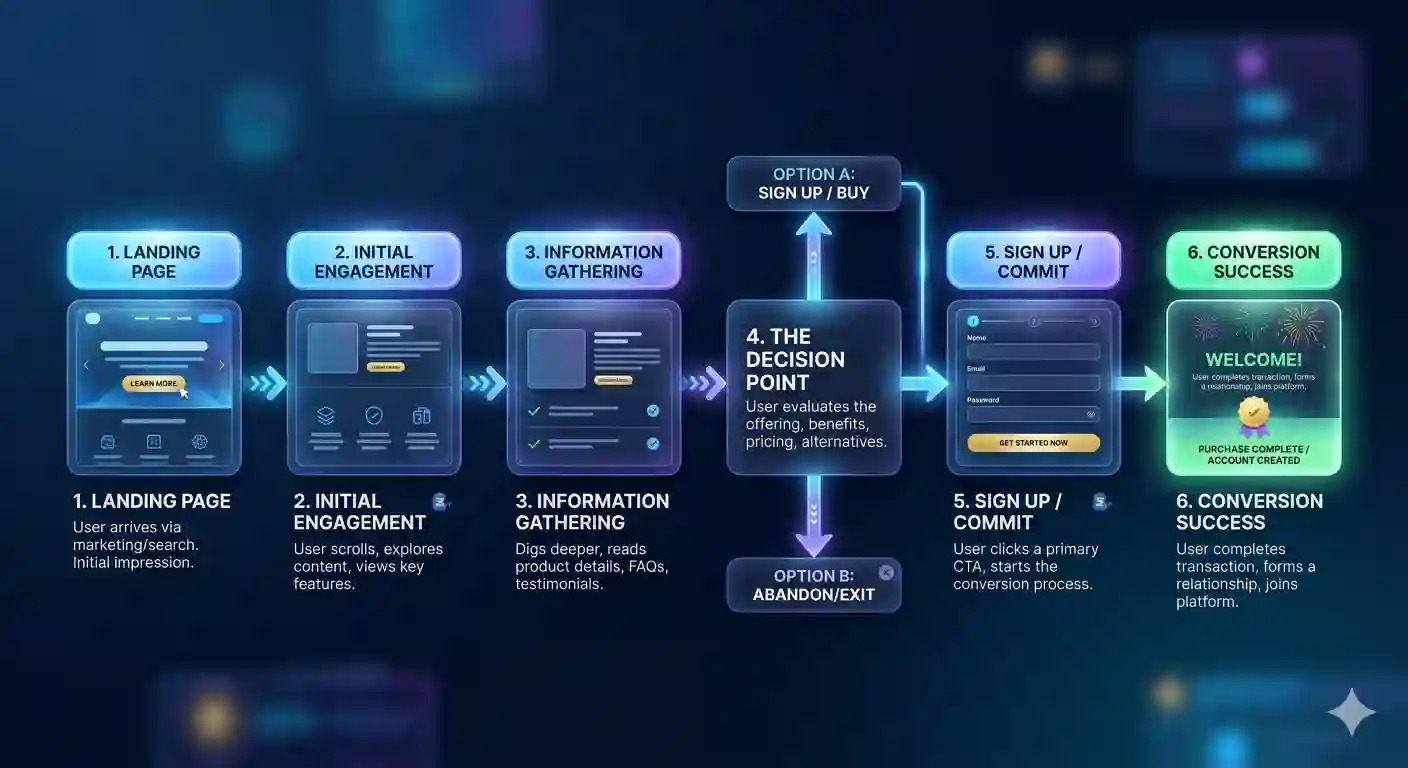
A conversion-focused website does not push every visitor toward the same button. It gives people enough context to choose the right next step. Someone comparing providers may need process detail and relevant work. A returning buyer may need a short inquiry route. A visitor with a technical concern may need an explanation before contact.
Structure also determines when trust appears. A testimonial isolated on the homepage cannot answer uncertainty on a detailed service page. Place credentials, project evidence, FAQs, delivery expectations, and form reassurance near the decisions they support. This is the practical connection between design and website trust and the wider system of structural trust signals.

A useful website structure strategy extends beyond visible navigation. Define what each form records, where each request goes, who owns the response, and how the outcome is measured. That operating layer is the difference between a brochure and deliberate website system architecture.
The required workflow may be simple: attach the service interest and source page to an inquiry, send a confirmation, notify the correct person, and record the event. More complex journeys can qualify requests or trigger follow-up, but a website automation system should support a defined process rather than automate confusion. Mono’s guide to website automation explores that relationship in more detail.
Before selecting tools, write the handoff in plain language. Specify which fields are required, how consent is recorded, which notification is sent, how quickly a person should respond, and where the record is stored. This prevents a form redesign from hiding an operational gap. It also gives developers and marketers one shared definition of a completed inquiry.

Structure affects acquisition as well as conversion. Search engines and visitors both need understandable relationships between topics, services, and supporting guidance. A thoughtful website UX structure uses descriptive headings, focused pages, and internal links that help people continue without creating competing routes. This is where SEO planning and information architecture meet.
Growth should not mean adding pages without a model. A scalable website system uses reusable page patterns, clear ownership, and rules for when a new page deserves to exist. It also protects the journey as services, campaigns, or markets expand. The goal is consistency without forcing every offer into an identical template.
A credible website performance strategy connects page behaviour to business outcomes. Track meaningful steps such as service-page engagement, form starts, successful submissions, booking requests, and qualified inquiries. Then review where users stop, which routes produce useful conversations, and whether follow-up happens as promised.
This evidence helps teams choose between a content correction, navigation change, form repair, or deeper rebuild. The Website Conversion System frames those elements as one decision path, while lead generation infrastructure connects acquisition, capture, routing, and response.
Measurement needs ownership too. A dashboard is useful only when someone reviews anomalies, tests assumptions, and connects online events with lead quality. Compare routes by the conversations they produce, not merely by clicks. If visitors complete a form but the request reaches the wrong team, the interface succeeded while the system failed.
Map the current journey before changing layouts. List the main entry points, user questions, proof requirements, actions, data captured, handoffs, and measurable outcomes. Remove duplicate paths, repair missing transitions, and assign responsibility for every inquiry. A practical structure plan makes these relationships visible before development begins.
Implementation can then preserve useful content while correcting the system around it. That may involve targeted web development, revised service hierarchy, better forms, or connected automation. Treat website structure strategy as an operating decision, not a design exercise, and each page gains a clear job within the customer journey.
Review the journey, lead capture, response path, and measurement before deciding whether to repair or rebuild.
Request a System ReviewView Conversion SystemArticle FAQ
It is a plan for how pages, content, proof, actions, data capture, and follow-up work together to guide a visitor toward a useful outcome.
Navigation is one visible part of structure. The full system also includes page purpose, information hierarchy, conversion paths, forms, handoffs, automation, and measurement.
Not always. A journey review may show that useful pages can be preserved while links, proof placement, forms, or follow-up workflows are repaired.
Clear topic relationships, focused pages, descriptive headings, and useful internal links help visitors and search engines understand how content and services connect.
Add automation after the inputs, routing rules, owner, response, and expected outcome are defined. Automating an unclear process usually preserves the confusion.