Necessary
Always activeSupports security, form reliability and remembering your privacy choice. It is not used for advertising.

Mono built a Hermes-powered SEO content engine that turns structured editorial plans into daily WordPress drafts, supporting visuals, and renewable publishing queues.
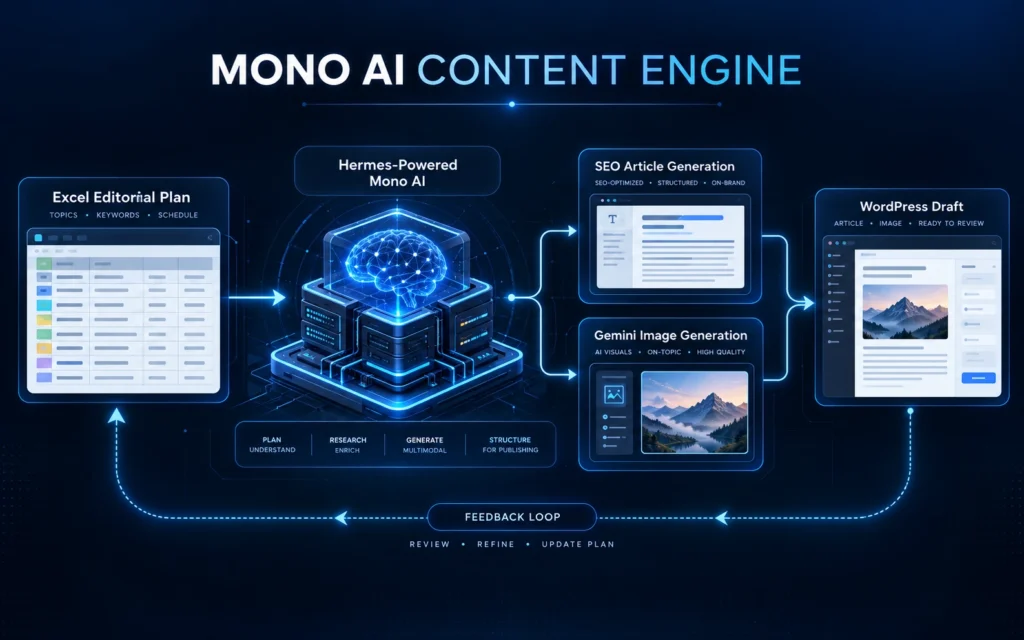
Consistent SEO publishing requires more than generating articles. Every piece of content needs a relevant search intent, an editorial purpose, appropriate keywords, supporting research, internal links, visuals and a clear relationship to the business.
Mono Digital developed the Mono AI Automated SEO Content Engine to coordinate these requirements through one connected production workflow. Built around the open-source Hermes execution environment, the system combines structured editorial planning, AI-assisted writing, Gemini image generation and WordPress draft preparation.
The project was developed for Mono Digital’s own content operations, with the goal of producing one new English-language Insight article draft per day while retaining human editorial control.
A sustainable editorial strategy depends on consistency, but the work behind each article extends well beyond writing.
Topics need to be selected with the existing content library in mind. Primary keywords must reflect search intent, supporting keywords must improve topical coverage, and relevant internal links must connect readers with useful existing information.
Each article also requires metadata, suitable commercial destinations, supporting visuals, FAQ content and a consistent editorial standard.
When these tasks are handled separately, editorial coordination can become repetitive. Topic planning, article preparation, visual production and CMS entry each require their own decisions and handoffs.
The longer-term challenge is maintaining continuity. When an editorial calendar is exhausted, another planning process must begin without unnecessarily repeating previously published subjects.
Mono Digital needed an approach that could connect those responsibilities rather than treating AI writing as an isolated task.
Mono Digital created a custom editorial automation system powered by Hermes and operated under its Mono AI architecture.
The solution connects four responsibilities: content planning, article production, image generation and WordPress draft preparation.
Instead of requesting individual articles manually, the automation uses structured editorial records as its starting point. Each record provides the context required to produce a relevant article package.
The process is designed around a daily execution schedule and a draft-first publishing model. This separates automated preparation from the final decision to publish.
The result is an editorial operating workflow rather than a standalone content generator.
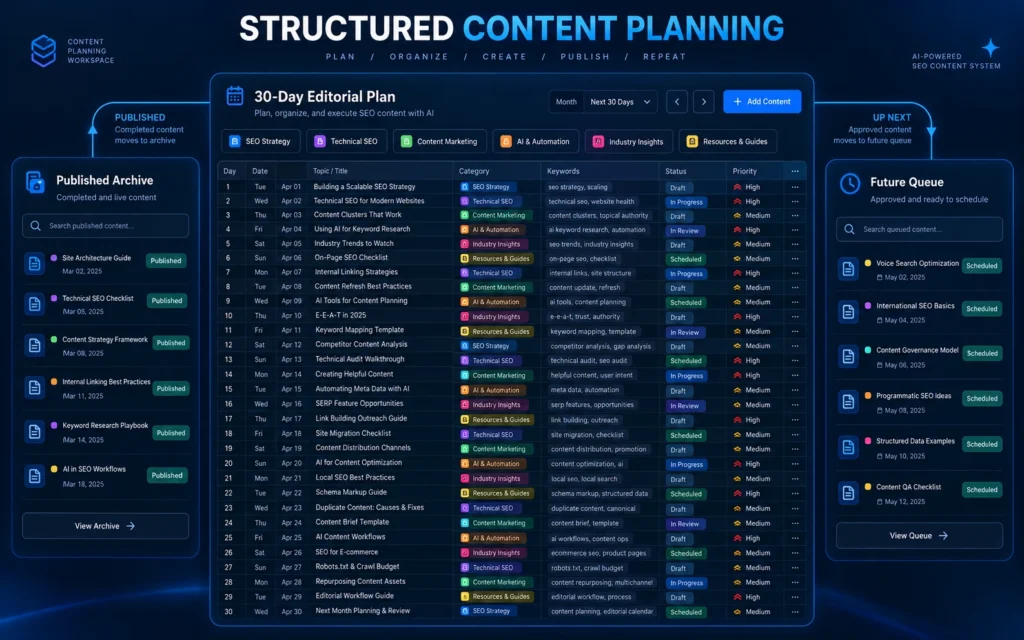
A structured Excel workbook serves as the editorial planning source.
Its 30-Day Plan contains scheduled article topics, keywords, categories, priorities and publishing-related information. A Published Archive maintains historical content references, while the Future Queue preserves additional topics for upcoming cycles.
A Prompt Builder connects the editorial inputs with Mono Digital’s article production requirements. The workbook also contains a Next Cycle AI Brief that defines how subsequent planning rounds should consider existing coverage.
The editorial strategy spans six categories: UX & Trust, Systems, Strategy, Revenue, Performance and Conversion.
This arrangement provides the automation with more than a list of titles. It establishes the strategic context needed to prepare content that fits Mono Digital’s positioning and existing editorial library.
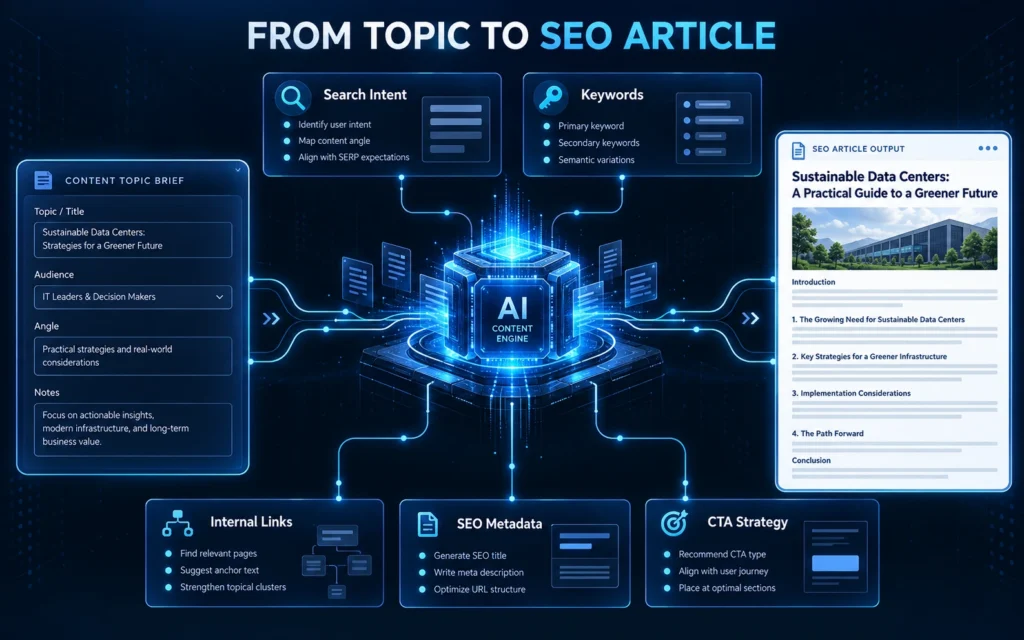
The Hermes-powered workflow runs once daily and selects an eligible topic from the editorial plan.
Relevant fields, including the working title, primary keyword, content type, recommended destination, CTA direction and execution notes, are passed into Mono Digital’s structured article production process.
The system follows a defined sequence: obtain the selected editorial brief, generate the article package, prepare supporting visual material and create a WordPress draft.
The schedule is organized around one planned article per daily production cycle, without requiring each article to be manually commissioned from the beginning.
The article generation component uses a custom Mono Digital editorial prompt rather than a generic writing instruction.
This specification directs the AI to research relevant existing content, understand the article’s search intent and establish useful relationships with Mono Digital’s services, solutions and previous Insights.
It defines an 800–850-word main article target, controls primary keyword usage and requires five to eight supporting keywords selected for meaningful topical coverage.
The prompt also requires Rank Math-oriented metadata, relevant internal and authoritative external links, FAQ content and distinct conversion opportunities.
These requirements are intended to create articles that fit an established editorial system instead of producing disconnected keyword-focused pages.
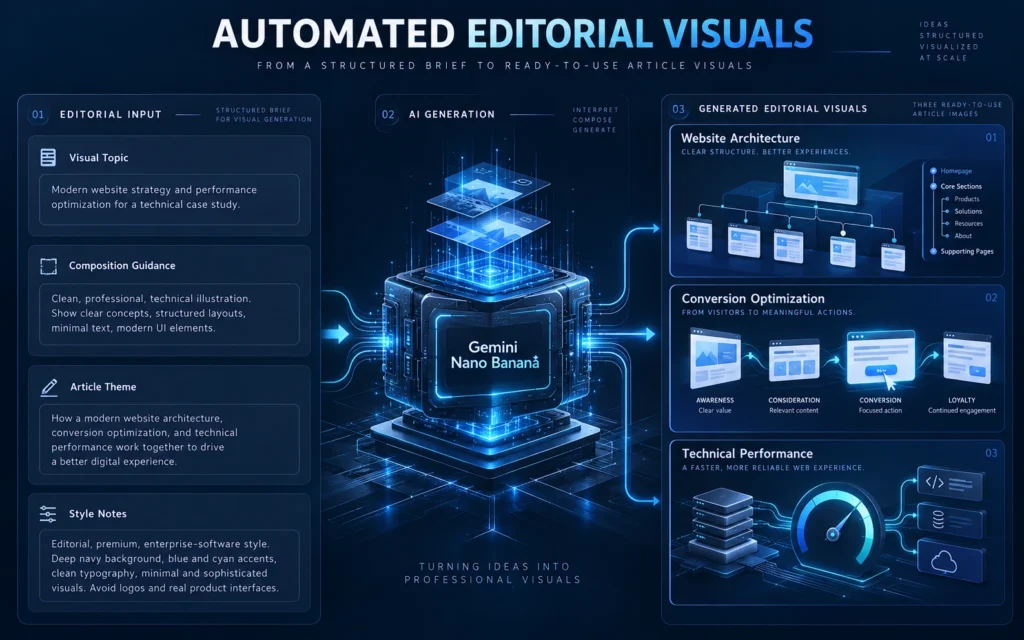
Visual production forms another part of the workflow.
Gemini Nano Banana generates supporting editorial illustrations using structured visual instructions. The briefs emphasize conceptual clarity, relevant article subjects and a consistent Mono Digital design language.
Deep navy backgrounds, restrained electric-blue accents and premium technical compositions help maintain visual consistency across the Insight library.
The objective is to prepare visuals that explain ideas, rather than repeatedly relying on unrelated stock imagery.
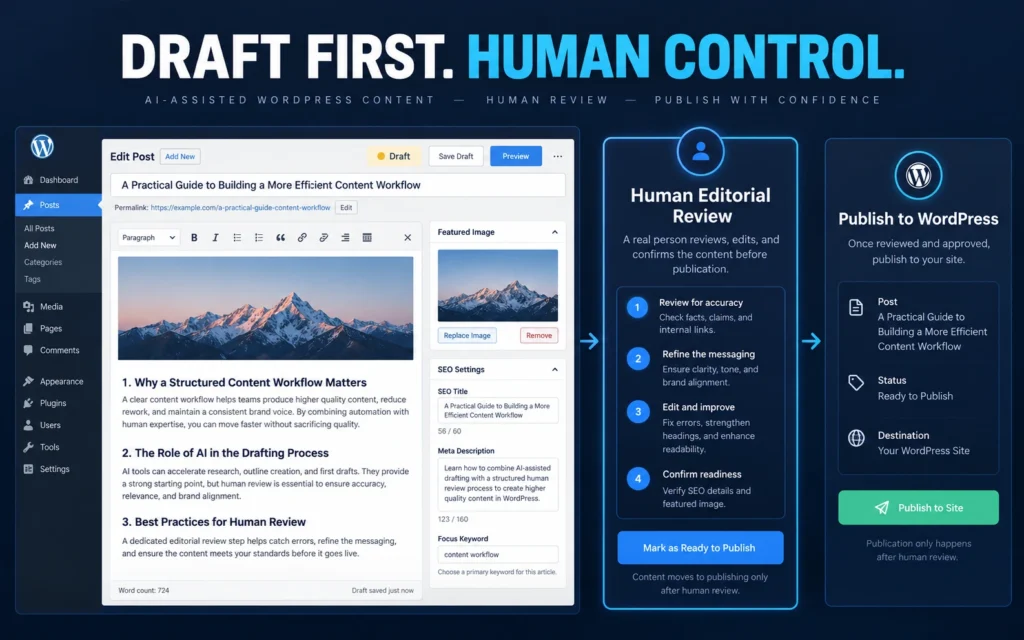
Once the article package and corresponding visuals have been prepared, Mono AI creates a WordPress post in draft status.
The editorial output includes article content and supporting SEO information prepared for the WordPress and Rank Math publishing environment.
The distinction between preparation and publication is intentional.
An editor remains responsible for reviewing factual accuracy, links, wording, visuals and SEO details before deciding whether the article should become publicly available in Mono Digital’s Insights library.
The automation prepares the work; it does not replace editorial accountability.
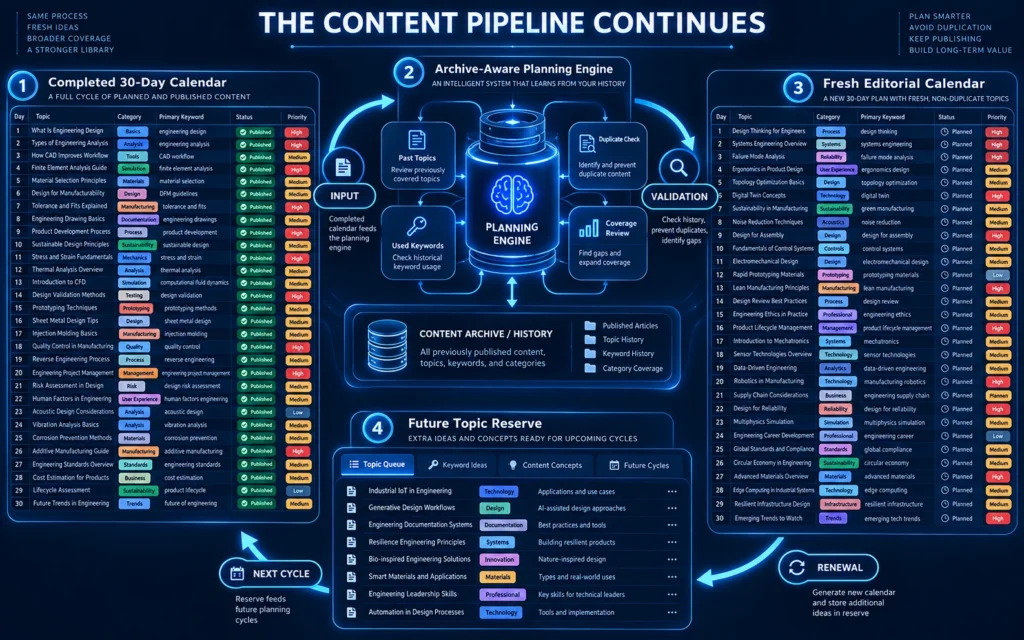
The system also addresses the limitation of a fixed editorial calendar.
When the current content queue has been exhausted, Mono AI initiates the next planning cycle using the workbook’s renewal instructions.
The planning process considers previous article topics, keyword history, the Published Archive and unused opportunities retained in the Future Queue.
This helps the next editorial calendar build upon previous coverage instead of simply reproducing another generic list of blog ideas.
The renewal mechanism connects ongoing content preparation with the accumulated history of the website’s editorial program.
Mono Digital established a repeatable SEO content production workflow connecting planning, AI-generated articles, editorial visuals and WordPress draft management.
The system supports one scheduled article preparation cycle per day, with a mechanism for renewing the editorial plan when its available topics are exhausted.
Its value lies in the structure of the operation: editorial inputs remain organized, content requirements are standardized, visual creation is incorporated into the workflow, and publishing responsibility stays with a human editor.
This project demonstrates Mono Digital’s approach to AI automation. Rather than deploying a standalone content-writing tool, Mono engineered a connected editorial process that combines SEO strategy, AI orchestration and WordPress operations under one system.
The implementation establishes a foundation for sustained content production without depending on unsupported claims about search rankings, traffic growth or financial returns.