Necessary
Always activeSupports security, form reliability and remembering your privacy choice. It is not used for advertising.

A business website creates value when visibility, decisions, enquiry handling, automation, and measurement operate as one maintained system.

A business website strategy defines how a website contributes to commercial and operational goals before layouts, campaigns, or features are chosen. It connects discovery, evaluation, enquiry, response, and measurement into one deliberate journey. Without that connection, a site can attract attention yet leave visitors uncertain and teams dependent on manual work.
Start by naming the primary business function. The website may need to generate qualified enquiries, support a considered B2B sale, enable bookings, explain complex services, or create demand in specific markets. That function determines the page architecture, evidence, calls to action, data capture, and operational handoff.
Separate outcomes from features. “Add a chatbot” is a feature; “answer routine pre-sale questions and route complex enquiries with context” is an outcome. “Publish more pages” is activity; “help searchers find the right service and take a suitable next step” is a useful objective. Mono’s overview of core business website systems shows how several functions can work together without becoming one vague project.

First, audience intent guides structure. A b2b website strategy must support multiple stakeholders, longer evaluation, and requests for evidence. Second, search visibility connects to decisions. SEO for business website planning should map important queries to pages with a defined role, rather than treating rankings as the final outcome.
Third, location content earns its place. A local SEO website needs useful service-area context, credible local evidence, and a relevant contact route. SEO location pages should not be cloned templates with place names exchanged. Google’s SEO Starter Guide emphasizes organizing a site for users as well as search discovery, which reinforces the need for coherent page purpose.
Fourth, conversion is designed across pages. A conversion-focused website anticipates questions, reduces perceived risk, and offers the right commitment at the right point. Use a conversion rate diagnosis to identify evidence gaps and broken actions before assuming the interface needs a full redesign.
Fifth, enquiries have operational ownership. Forms should capture enough context, confirm what happens next, and reach a responsible person. The principles behind a lead generation website system help connect frontend choices to qualification and response.
Sixth, automation serves a known process. A website automation system can create records, send confirmations, assign tasks, and preserve source context. Lead flow automation is valuable when it reduces delay and ambiguity, not when it adds messages or software without clear responsibility.
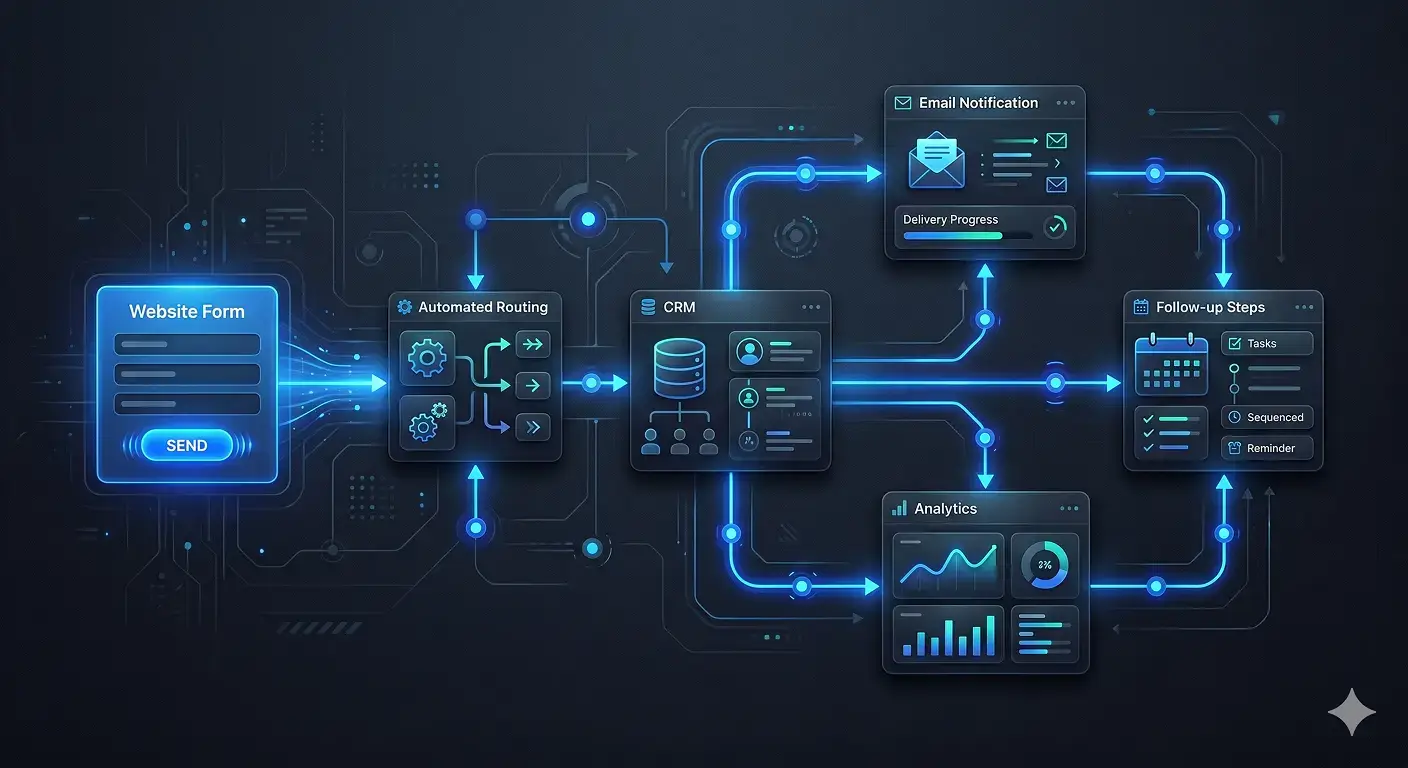
Seventh, measurement follows the customer journey. Useful reporting connects source, page, action, qualification, response, and outcome. Traffic totals alone cannot show whether the system attracts appropriate prospects or helps the team serve them effectively.
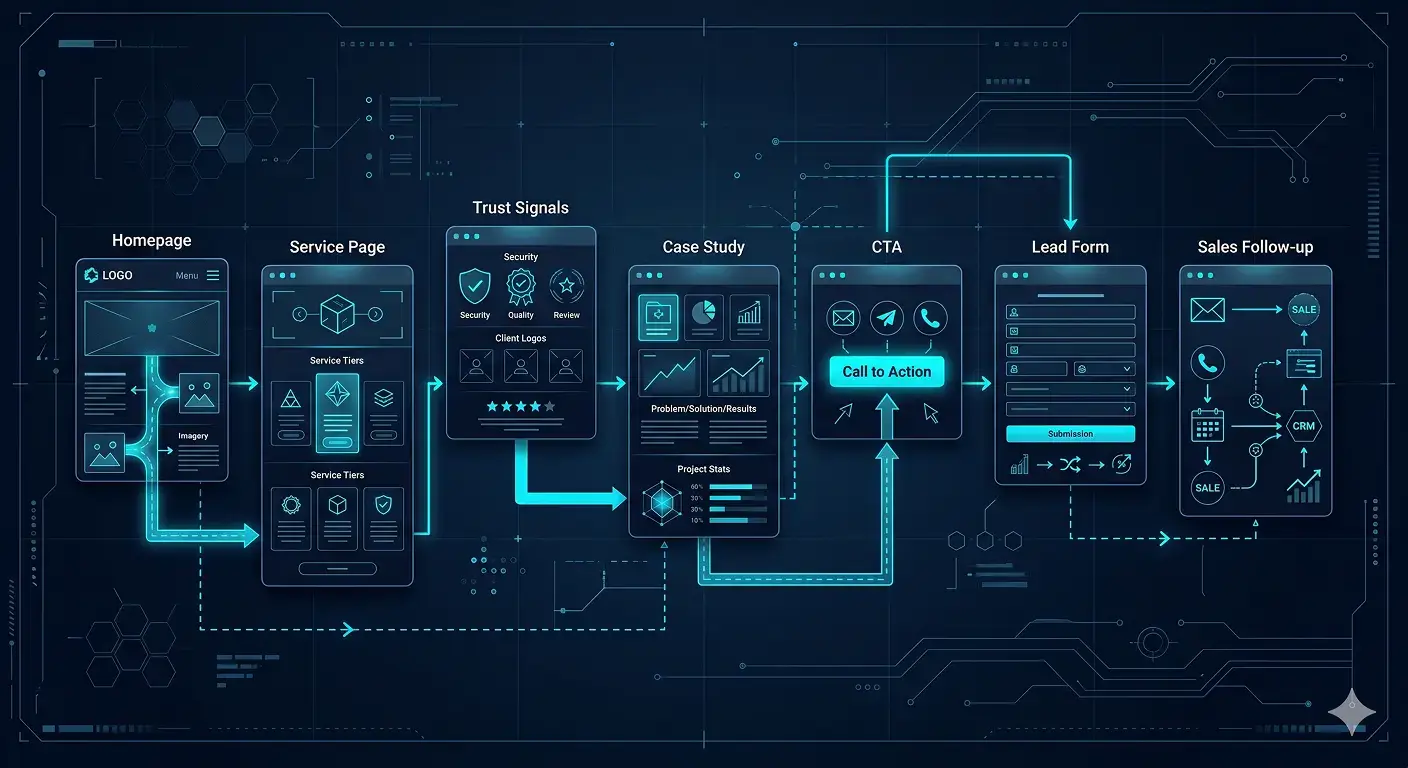
Map the questions a visitor must resolve in sequence: Is this relevant? Is the provider credible? Does the approach fit? What will happen after contact? Then assign each page and section a specific role. Within a business website strategy, practical website structure strategy prevents service pages, Insights, proof, and contact routes from operating as disconnected destinations.
Trust must continue through interaction. Claims need nearby evidence; forms need clear labels and expectations; confirmation pages need useful next steps. Review current website trust signal examples to see how identity, proof, consistency, and reliability support decisions. If the existing site has valuable content but weak journeys, a website redesign strategy should preserve useful equity while correcting structure.
Include technical quality in the strategy without letting technology become the strategy. Responsive behaviour, accessibility, performance, security, and resilient form delivery are baseline requirements because defects can interrupt every commercial goal. Define acceptance criteria and test on real devices, common entry pages, and the actions that matter most to customers.
Content governance also affects long-term value. Assign owners for service accuracy, proof, contact details, location information, and conversion routes. Establish when pages should be reviewed and what evidence justifies a change. A well-planned launch will still decay if outdated claims, broken links, or abandoned forms remain invisible to the responsible team.
Audit current search entry points, navigation paths, form completion, lead quality, response handling, and measurement gaps. Interview the people who receive enquiries; analytics cannot reveal every manual workaround. Their evidence can expose delays that dashboards classify as successful submissions. Rank improvements by user impact, business value, implementation risk, and dependency.
Choose the smallest release that proves the direction. That might mean restructuring one priority service journey, repairing capture and tracking, or connecting one response workflow. The Website Conversion System is relevant when traffic exists but the decision path is weak, while conversion-focused web development fits a broader build requirement.
A business website strategy is successful when teams can explain the site’s job, visitors can progress without guessing, and outcomes can be observed from search or campaign through response. Treat the website as maintained infrastructure: review assumptions, measure real journeys, and refine the system as services, markets, and operations change.
Review the complete journey before investing in isolated pages, features, or campaigns.
Request a System ReviewSee Web DevelopmentArticle FAQ
It should define the primary business function the website must perform, the audience and decision journey it serves, and the operational outcome that follows a visitor action.
A marketing site may focus mainly on attention and awareness. A business website also connects evaluation, conversion, data capture, team response, and measurement.
Yes. Page roles, user questions, evidence, actions, data requirements, and operational ownership should be clear before visual design decisions are finalized.
Create them when location changes the service context, evidence, availability, or customer need. Avoid cloning generic text across many place names without useful local relevance.
Connect acquisition and page behavior with enquiry quality, response handling, and business outcomes, then review complete journeys rather than traffic or form totals alone.