Necessary
Always activeSupports security, form reliability and remembering your privacy choice. It is not used for advertising.

Diagnose conversion performance as a connected journey across message clarity, trust, mobile experience, speed, lead capture, and follow-up.

A conversion rate diagnosis replaces guesswork with evidence. When a low-converting website still attracts relevant visitors, the problem is often not traffic or visual polish. It is a break between what people expect, what the page communicates, and what happens after they show intent. The seven checks below examine that journey as one connected business system.
Start with observed behavior, page structure, form outcomes, and response processes. A redesign may eventually be justified, but diagnosis should identify the constraint first. This avoids treating symptoms while the underlying message, trust, performance, or operating flow remains weak.
Use analytics and session evidence as indicators, not as automatic explanations. A short visit may reflect poor message fit, while a form abandonment may come from unclear requirements or a technical error. Combine quantitative patterns with direct page inspection, device testing, and feedback from the team handling inquiries. Agreement across those sources creates a stronger basis for action.
The first screen should quickly explain the offer, intended audience, practical value, and next action. Vague positioning creates website conversion problems before visitors reach supporting details. Compare the headline and CTA with the intent that brought someone to the page. If the language describes the company but not the reader’s problem, rewrite for relevance before changing the design.
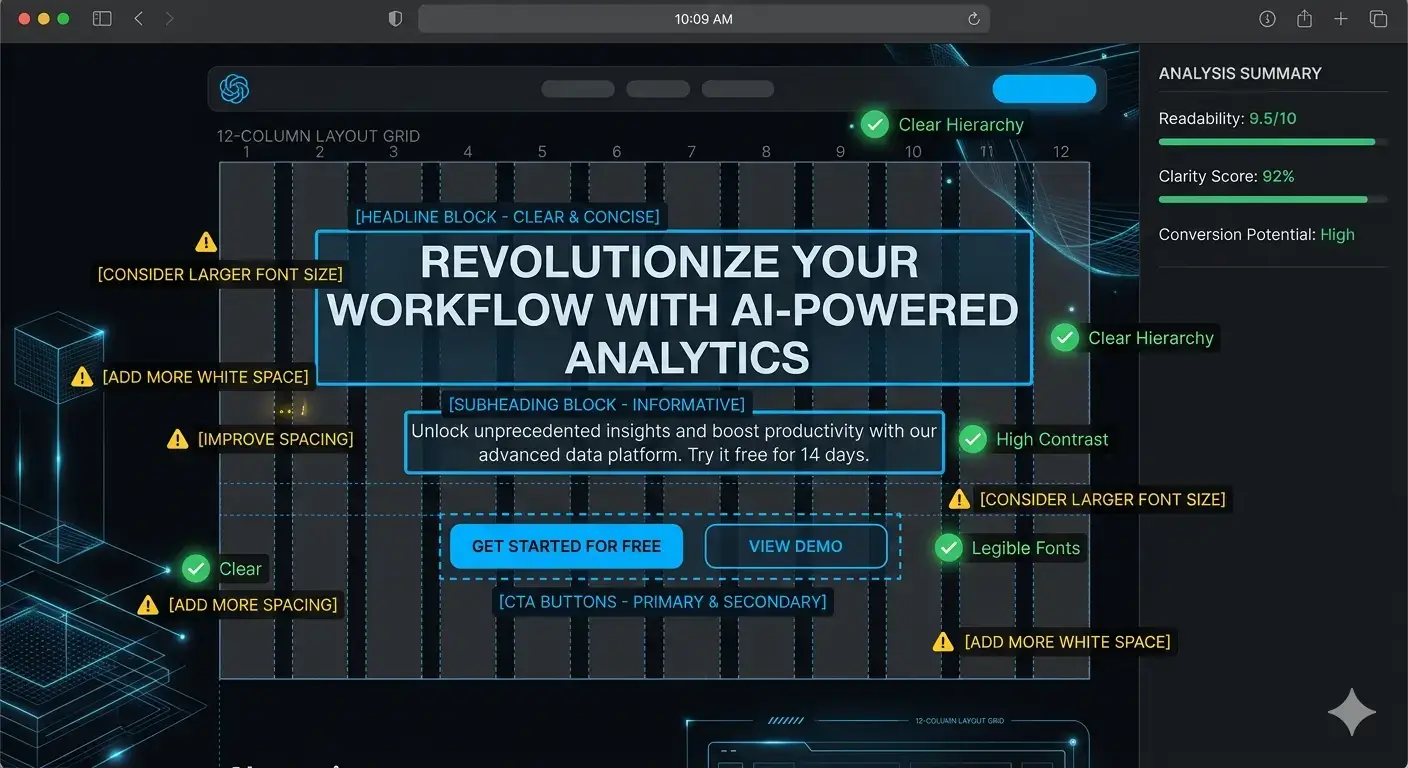
Effective website system architecture arranges information in the order a decision requires: orientation, relevance, evidence, risk reduction, and action. Review the website user flow from landing page to confirmation, including menus, repeated CTAs, and dead ends. A visitor should not need to infer which service fits, search for proof, or wonder what follows a form submission. The broader model of connected business website systems helps expose gaps that a page-by-page review misses.
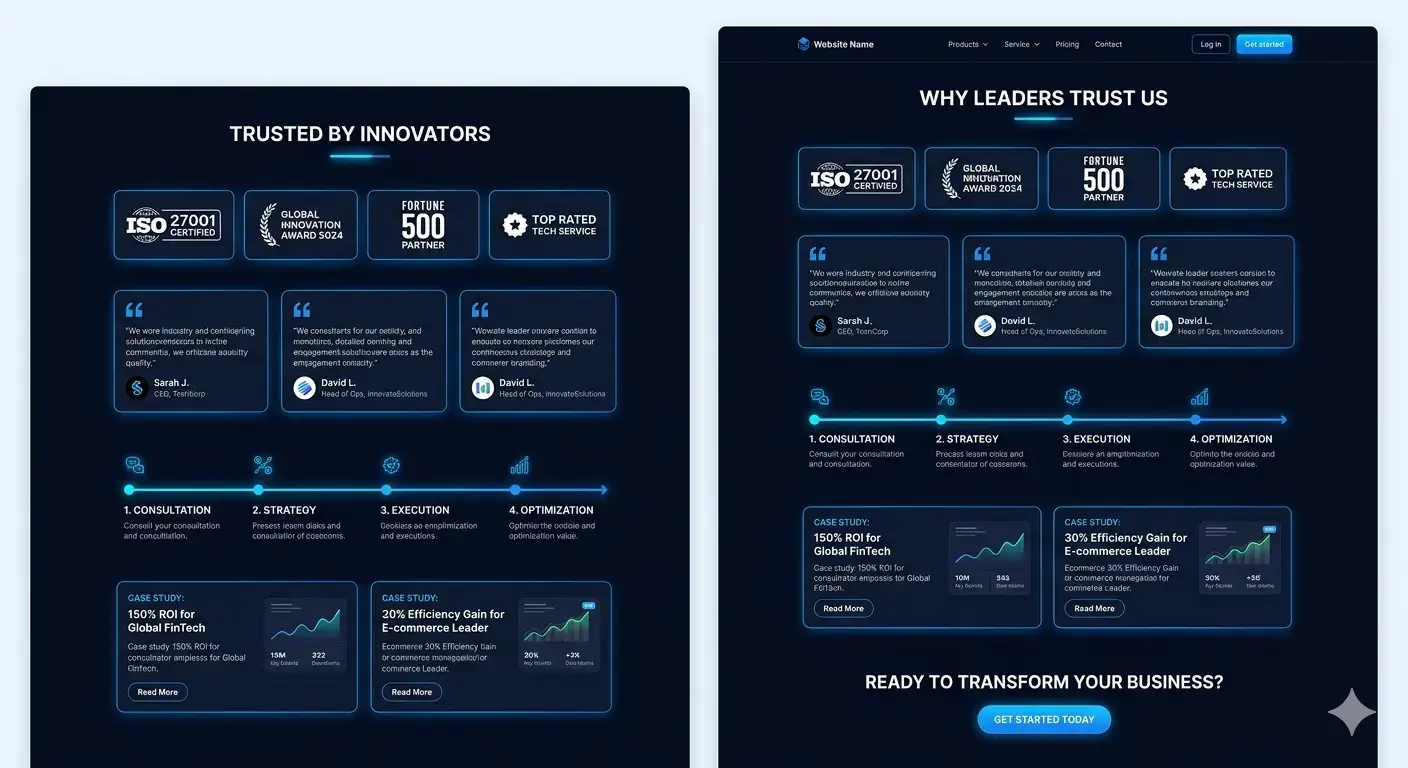
People evaluate risk before sharing details or booking time. Inspect whether trust signals on a website answer the doubts created by the offer. Relevant work, a transparent process, specific testimonials, clear business identity, and realistic expectations are stronger than decorative badges. Place proof beside the claim or action it supports. Evidence shown only near the footer cannot resolve hesitation earlier in the journey.
Do not assess mobile by shrinking a desktop browser. Use a phone to follow the real path from entry to submission. Check readable text, button spacing, menu behavior, overlays, form keyboards, validation messages, and confirmation states. Google’s page experience guidance also emphasizes mobile display, secure delivery, and non-intrusive content. Record friction by step so the team can distinguish a content problem from an interaction or implementation defect.
Repeat the test on common screen sizes and realistic network conditions. Confirm that sticky controls do not cover fields, telephone and email inputs use appropriate keyboards, and returning after an error preserves completed information. These details reduce avoidable effort at the moment a visitor is deciding whether to continue. Document test conditions so later comparisons remain meaningful across devices and release cycles.
Generic speed scores can hide delays where intent is strongest. Examine website performance issues on service pages, CTA transitions, forms, and confirmation screens. Watch for unstable layouts, delayed controls, slow third-party scripts, and assets that block interaction. The official Web Vitals guidance provides a useful framework for measuring loading, responsiveness, and visual stability. Connect each finding to an affected user action rather than optimizing metrics without context.
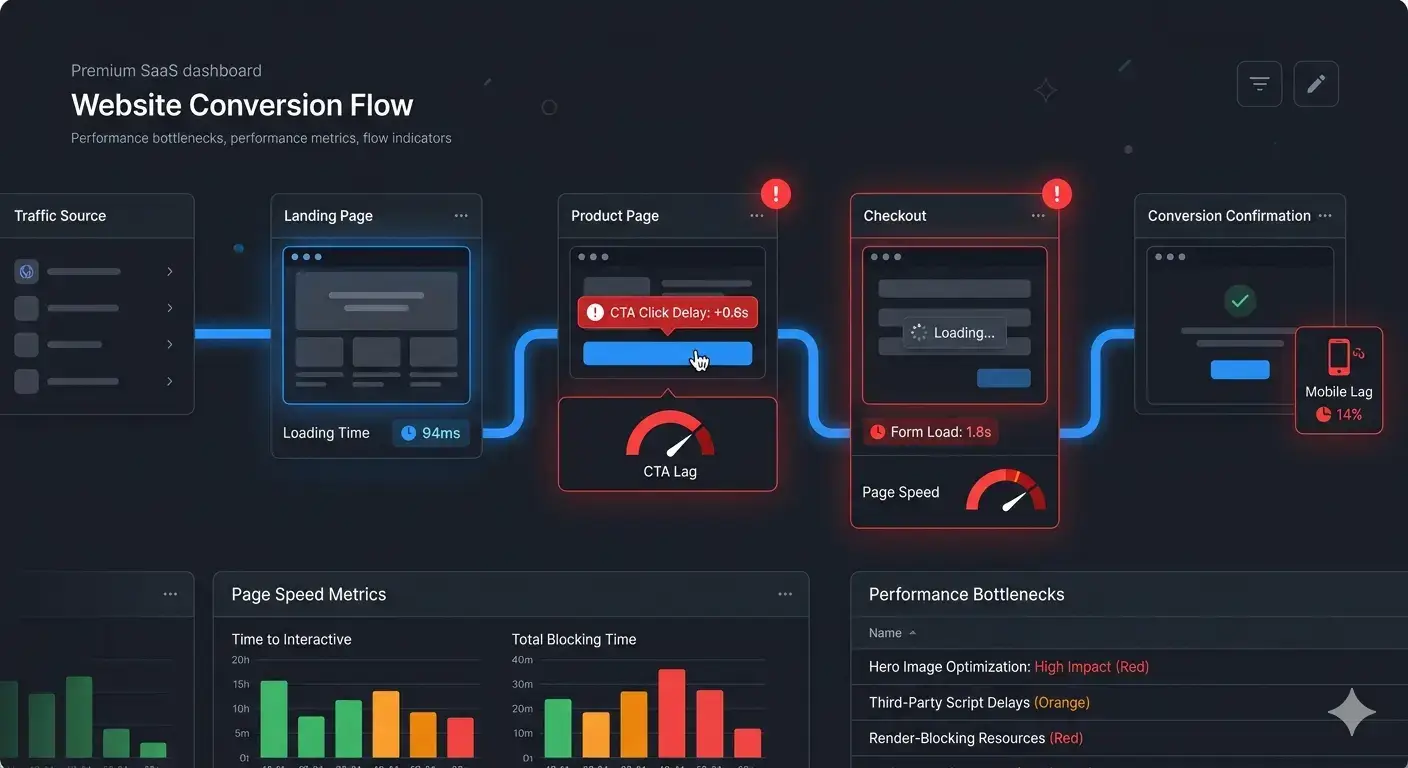
A website conversion audit is incomplete if it stops when the form submits. During the third use of conversion rate diagnosis, verify that fields match the visitor’s stage, errors are understandable, consent is clear, and the confirmation sets expectations. Then trace the record into its destination: who receives it, how it is qualified, and when follow-up begins. A lead generation website system should preserve inquiry context instead of leaving staff to reconstruct it from an email.
Small faults compound. Unclear copy may reduce trust; weak proof may make a long form feel riskier; slow validation may turn hesitation into abandonment. Map these conversion leaks across the journey, then rank them by proximity to a meaningful action, frequency, and business impact. If website traffic is not converting, fix the strongest supported constraint first and measure the result before moving to the next.
The final conversion rate diagnosis should produce a short, testable backlog rather than a broad redesign brief. Define the observed problem, affected journey step, evidence, proposed change, and success signal for each priority. This makes conversion rate optimization an operating discipline: diagnose, change, measure, and learn. The result is not simply a cleaner page, but a more coherent path from visitor intent to qualified inquiry and responsible follow-up.
Review the full journey before investing in disconnected fixes, then prioritize the smallest change supported by evidence.
Start a System ReviewSee Related WorkArticle FAQ
Begin with the visitor’s entry intent, the clarity of the first screen, the evidence supporting the offer, and the next action. These checks reveal whether the page creates understanding before asking for commitment.
Review whether relevant visitors reach the site and what they do afterward. If qualified traffic arrives but repeatedly hesitates, abandons forms, or misses the intended path, the stronger evidence points to a journey or conversion constraint.
A successful submission is only one step. Routing, ownership, response time, and preserved inquiry context determine whether captured intent becomes a useful sales conversation.
Not automatically. Diagnose the strongest constraint first. A targeted structural, content, performance, or process change may solve the problem without the cost and risk of a broad redesign.
Rank findings by evidence, frequency, proximity to a meaningful action, and business impact. Implement one controlled change at a time and compare outcomes before expanding the backlog.