Necessary
Always activeSupports security, form reliability and remembering your privacy choice. It is not used for advertising.

Invisible conversion faults appear when message clarity, trust, decision paths, forms, performance, and follow-up stop working as one connected journey.
Conversion optimization mistakes are difficult to spot because the website can remain attractive, functional, and busy. Traffic arrives, pages load, and forms exist, yet too few visitors take a useful next step. The loss usually sits between visible components: a promise that changes after the click, evidence that appears too late, an action without context, or a form that creates uncertainty. These are system faults, not simply weak button colors or isolated copy problems.
Broken software produces an error; weak conversion logic produces silence. A visitor who cannot confirm relevance, trust the offer, or understand the next step rarely explains why. They leave, postpone the decision, or submit an incomplete inquiry. Reviewing common website conversion leaks helps reveal where expectations, page structure, interactions, and operational response stop connecting.
That makes broad metrics easy to misread. A page can show healthy traffic and scrolling while hiding serious website conversion problems. Aggregate conversion rates may combine visitors with different intent, devices, sources, and entry pages. Useful diagnosis segments the journey and asks where qualified visitors hesitate, which actions fail, what information is missing, and whether completed requests reach an accountable person.
An actionable leak map combines quantitative and qualitative evidence. Analytics can show where progression changes, but page recordings, form error logs, search terms, customer questions, and sales-team feedback help explain the cause. Compare the promise that brought the visitor with the information and action offered next. Then separate lack of demand from failure to capture existing demand. This avoids redesigning pages when the real constraint is traffic quality, response handling, or an offer that has not been defined clearly enough.
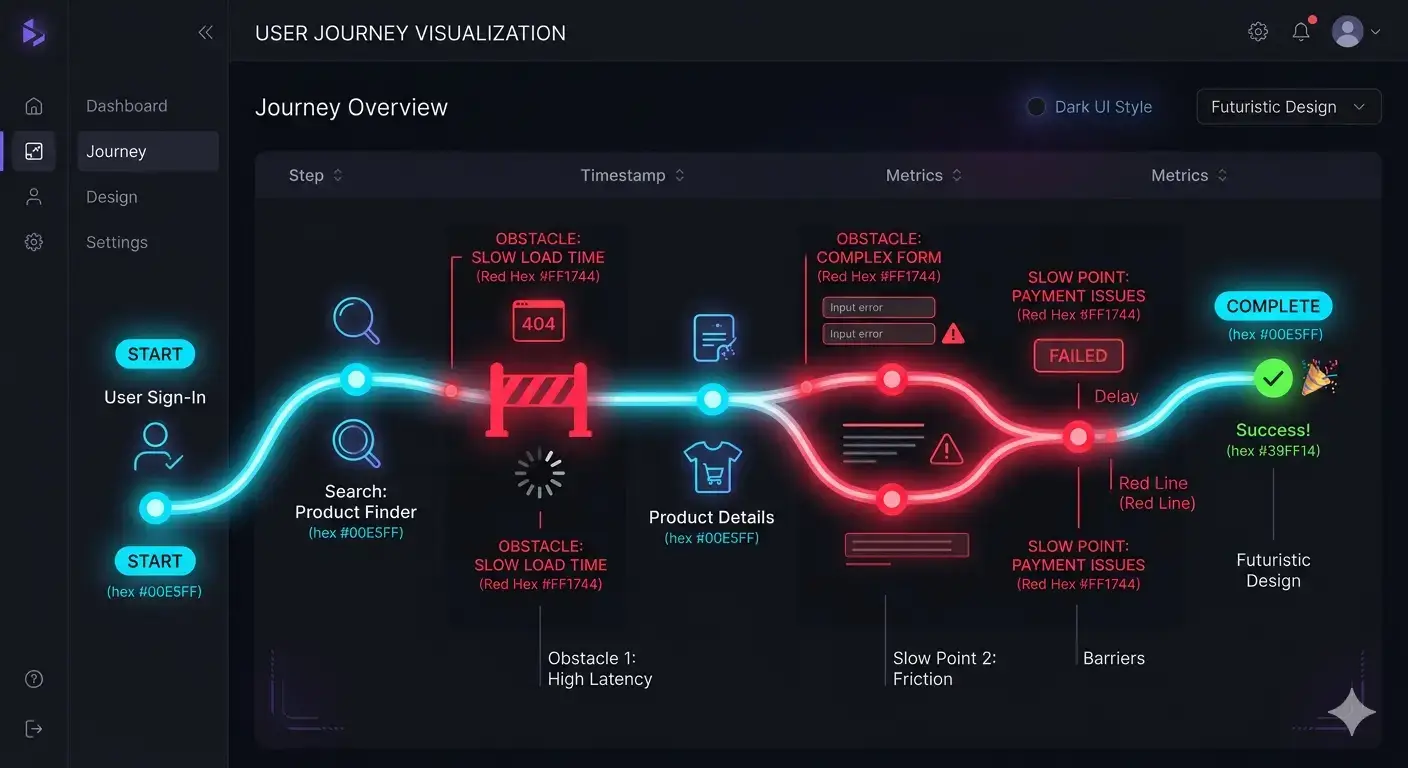
Many low conversion rate causes begin before the primary CTA. The page may describe the company without clarifying the customer problem, present several equal choices, or make visitors assemble the offer from disconnected sections. Nielsen Norman Group’s guidance on reducing cognitive load explains why unnecessary mental processing makes content and tasks harder to use. Clear hierarchy should reduce interpretation, not remove the detail needed for an informed choice.
Trust must also be positioned where doubt occurs. Relevant proof near a claim, transparent expectations before commitment, consistent terminology, predictable interactions, and visible contact paths help visitors assess risk. Mono’s framework for structural website trust signals treats credibility as part of the journey rather than a testimonial strip added at the end.

Conversion funnel issues often appear when each page is reviewed alone. The landing page may continue the source message but lead to a generic service page. The CTA may be clear but open a form that asks for unexplained information. A website conversion system coordinates message, evidence, CTA flow, capture, and measurement as one decision path.
Forms deserve particular attention because intent can be lost at the final step. Common UX conversion mistakes include ambiguous labels, hidden requirements, destructive validation, unnecessary fields, and no meaningful confirmation. The W3C’s form-label guidance explains how explicit labels identify controls and support completion. The right form asks for enough context to route and answer the request without turning the first interaction into an interrogation.
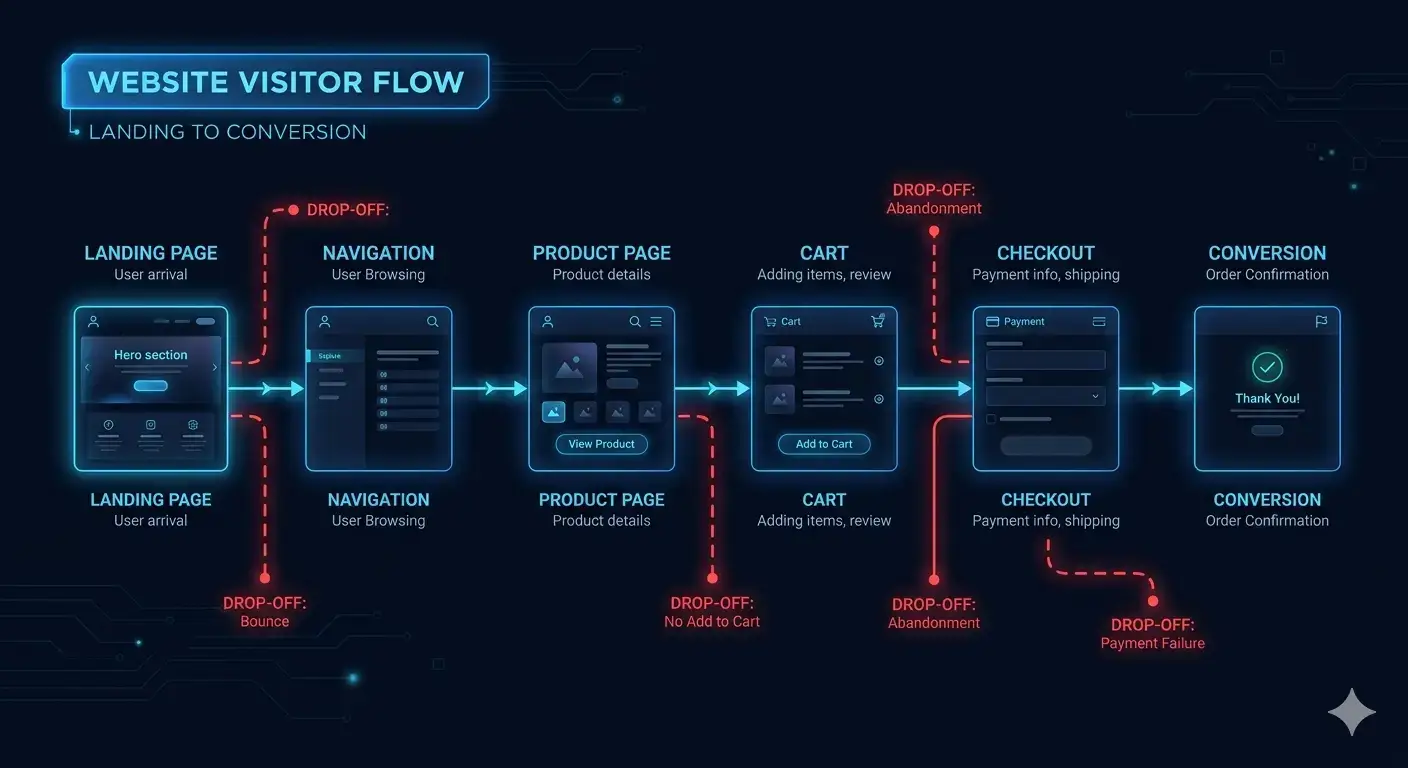
A completed form is not the end of conversion. If source context disappears, notifications fail, ownership is unclear, or response is delayed, the customer still experiences a broken journey. A lead generation system connects traffic, qualification, routing, and response. For appointment-led services, a booking and inquiry system can preserve service, timing, and customer context through confirmation and follow-up.
This operational view explains why a website not converting cannot always be repaired inside the page editor. Performance faults, unreliable templates, broken tracking, or difficult mobile behavior may require website repair and optimization. When the underlying structure cannot support clear content, accessible interactions, reusable components, and dependable measurement, conversion-focused web development may be the safer long-term route.
The best conversion rate optimization tips are useless without a baseline and a defined business outcome. Map priority entry pages, decisions, CTAs, form starts, completions, qualified inquiries, and response ownership. Observe where confusion occurs, form a specific hypothesis, change the smallest relevant layer, and verify the complete journey. This is how teams improve website conversions without replacing useful assets or introducing several uncontrolled changes at once.
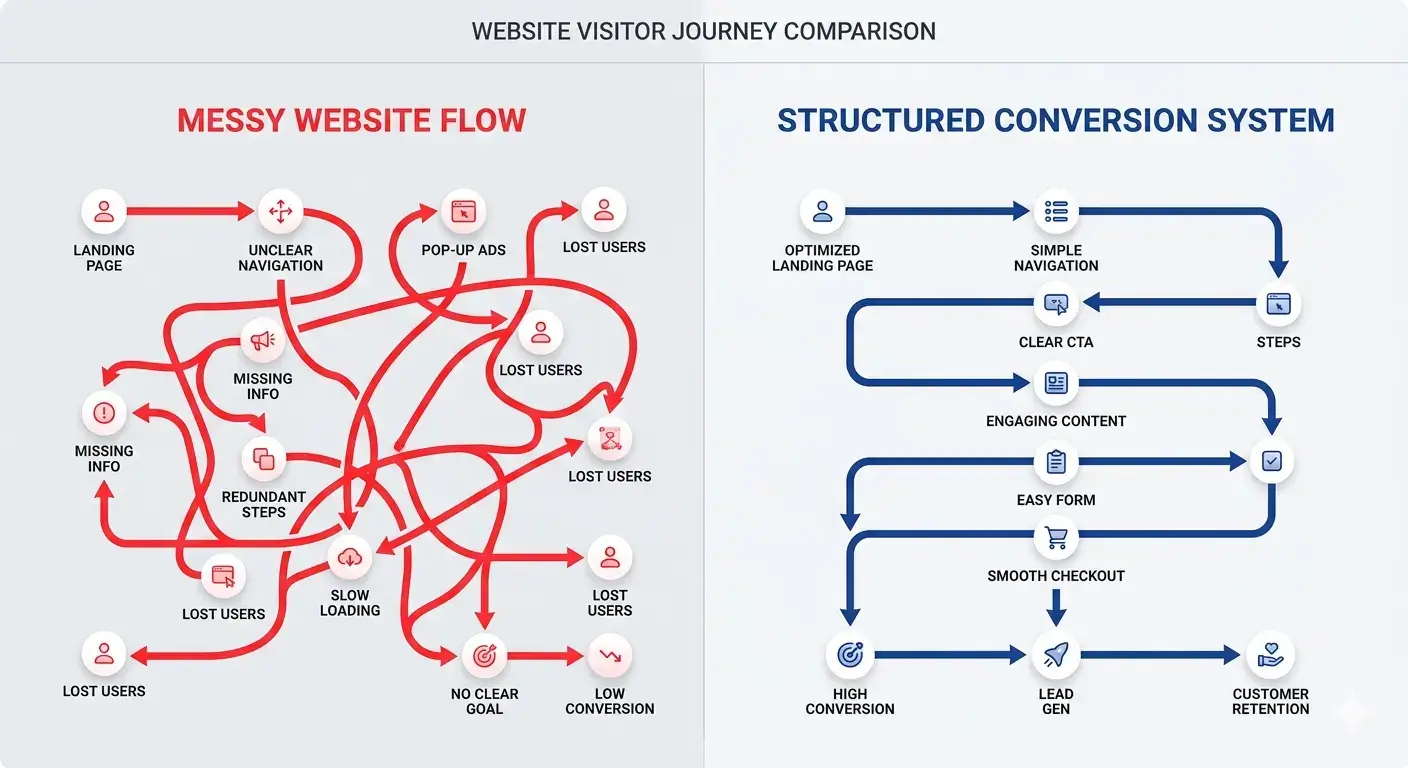
These conversion optimization mistakes should be ranked by commercial impact, confidence in the evidence, and effort to repair. A high-traffic service page with a broken inquiry route deserves priority over a cosmetic inconsistency on a low-value page. Where several systems contribute to the leak, digital growth infrastructure can connect demand, customer actions, operations, and reporting.
Treating conversion optimization mistakes as connected journey failures turns vague underperformance into an actionable sequence. Clarify the promise, place trust where risk rises, reduce unnecessary effort, preserve context through capture, and verify the response path. A focused System Review can identify the first constraint before the business invests in more traffic or a larger rebuild.
Review message clarity, trust, CTA flow, forms, routing, and measurement as one journey, then prioritize the smallest useful repair.
Start a System ReviewSee Web DevelopmentArticle FAQ
Visual quality does not resolve an unclear offer, weak proof, confusing decisions, form friction, unreliable mobile behavior, missing tracking, or broken follow-up. The complete journey must support a useful action.
Review traffic intent, message continuity, page hierarchy, trust placement, CTA clarity, form behavior, device experience, analytics, lead routing, and response ownership before deciding whether the page or a wider system needs repair.
Visitors have limited attention. Unnecessary choices, inconsistent labels, clutter, and information they must remember consume mental effort without helping the decision, making abandonment more likely.
Forms can create silent friction through unclear labels, unexplained requirements, too many fields, poor validation, inaccessible controls, missing confirmation, or requests that do not reach an accountable owner.
No. Focused changes to messaging, proof, CTAs, forms, performance, tracking, or routing may be enough. A rebuild is appropriate when the underlying structure cannot support reliable improvement.