Necessary
Always activeSupports security, form reliability and remembering your privacy choice. It is not used for advertising.

A website becomes a conversion system when visible journeys, captured context, operational ownership, and measurement support the same outcome.

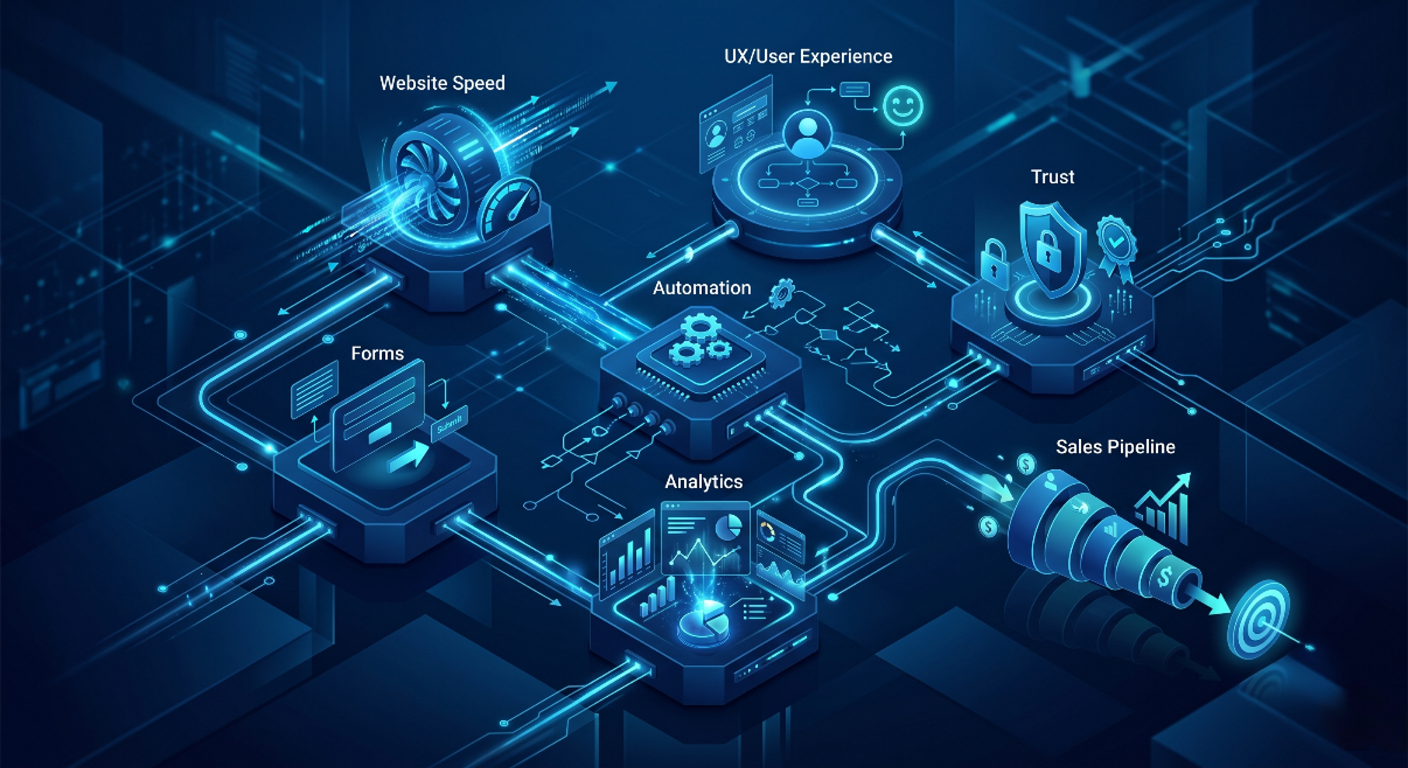
A conversion system website connects what visitors see with what the business must do next. Message, evidence, interaction, forms, routing, response, and measurement operate as one journey. This is different from assembling pages and hoping that traffic, plugins, or a visible call to action will create qualified opportunities.
A brochure explains. A system also guides, captures, assigns, and learns. The visible interface is only one layer; data definitions, operational ownership, and failure handling determine whether an enquiry becomes usable. Mono’s analysis of systems versus disconnected pages provides the architectural context.
1. Intent and offer alignment. Define who the journey serves, which problem it addresses, and what appropriate outcome the visitor can pursue. A conversion-focused website avoids broad claims and gives each priority page a specific role. Traffic without relevance increases activity, not necessarily useful demand.
2. Decision structure. The conversion flow should answer questions in sequence: relevance, approach, evidence, risk, and next step. Use headings, anchors, and calls to action that match the reader’s current commitment. Mono’s conversion psychology guidance helps identify where uncertainty interrupts progress.
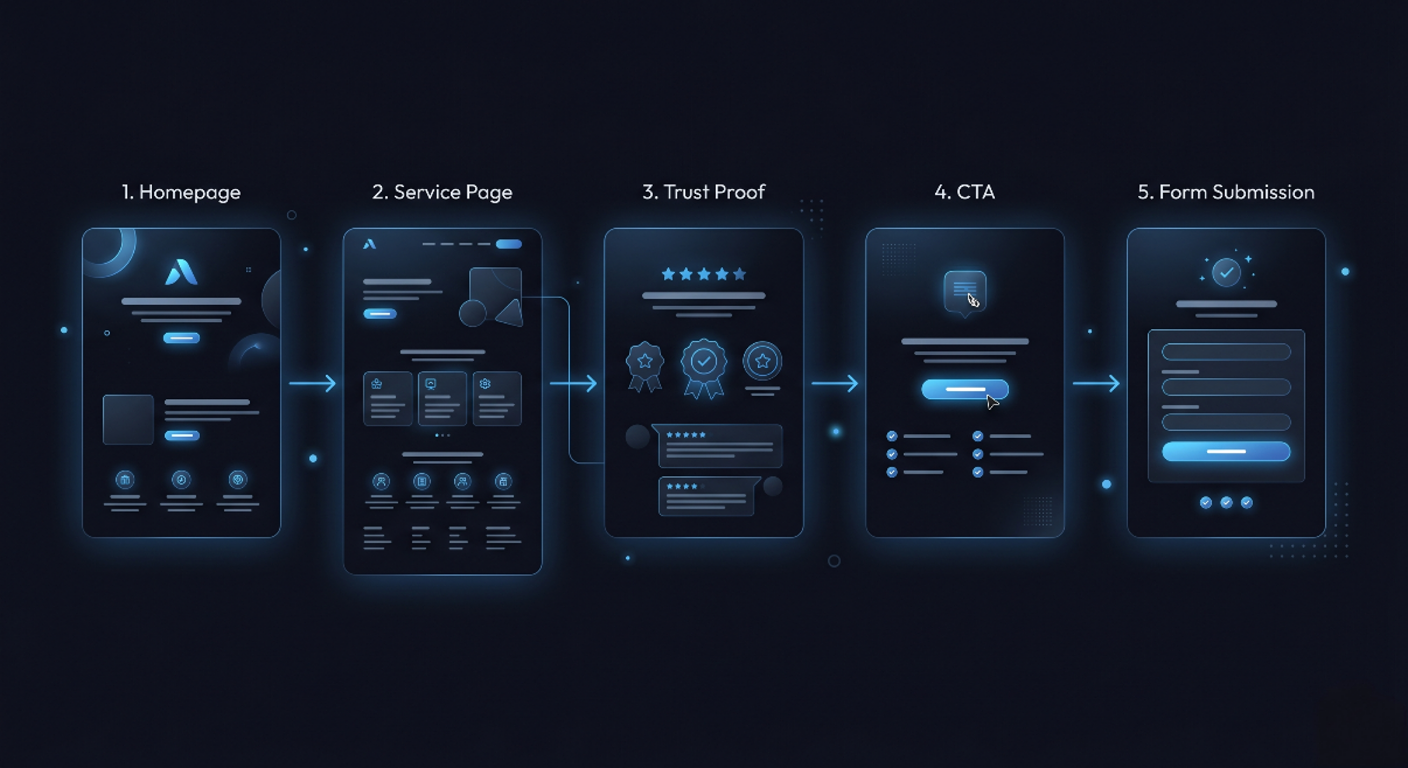
3. Trust and evidence. Put proof beside the claim it supports. Explain process, responsibilities, relevant work, constraints, privacy, and response expectations. Current website trust signals show that confidence comes from consistent layers rather than one testimonial block.
4. Proportionate lead capture. Ask only for information required for the next decision. Use clear labels, accessible controls, meaningful validation, and a confirmation that explains what happens next. Customer handling improves when service interest, source, consent, and important context reach the responsible team without forcing the prospect to repeat everything.
5. Operational routing. Lead flow automation can acknowledge the request, apply a clear rule, create an owned task, and record exceptions. CRM integration should preserve context and status without creating duplicate records. A lead generation website system joins frontend action to internal responsibility.
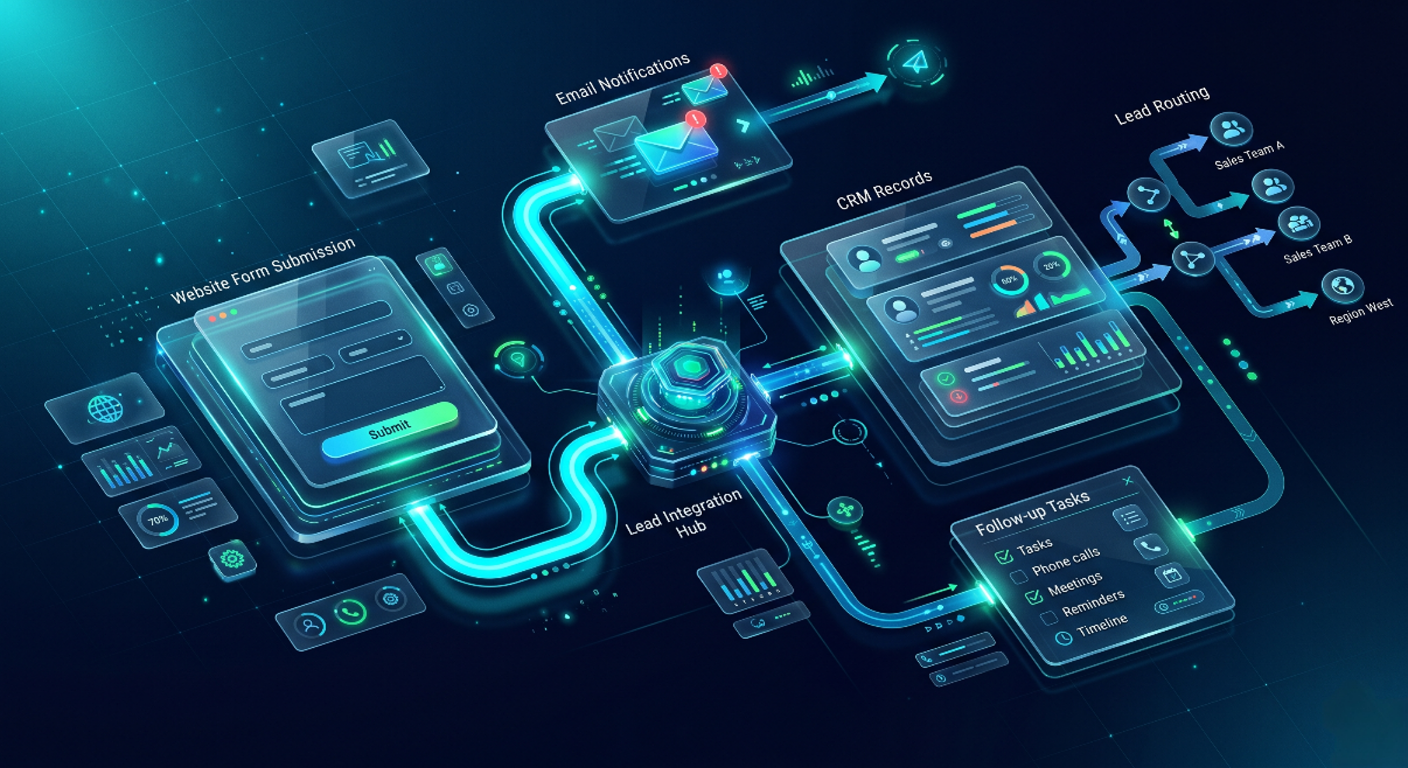
6. Useful automation. A website automation system should execute stable rules, reduce repeated handling, and surface failures. It should not hide an undefined process beneath more software. Map decisions and exceptions first, then use the website automation framework to connect customer actions with appropriate business actions.
7. Measurement and learning. Connect source, page, action, qualification, response, and outcome using consistent definitions. Website performance optimization supports loading and interaction, while Google’s Core Web Vitals describe important user-experience dimensions. Business measurement must continue beyond those technical signals.
Map one priority journey from entry to resolved outcome. Identify the question at each stage, the data created, the system receiving it, and the owner responsible for moving it forward. Include failure states such as invalid input, unavailable appointments, duplicate records, delayed APIs, and missing notifications.
Decide what should remain human. Qualification, sensitive discussions, complex exceptions, and relationship-building may require judgment. Automate repeatable transfer and administration around those moments. Define response expectations honestly so confirmation messages do not promise timing that the team cannot maintain.
Apply data minimization and access control. Collect only what supports the next step, protect sensitive fields, avoid exposing private details in email subjects or URLs, and document retention responsibilities. A connected system should improve visibility without spreading customer information unnecessarily across platforms.
Test accessibility, mobile use, performance, and recovery on the actual action path. Keyboard navigation, clear labels, preserved form input, useful errors, and resilient delivery are commercial requirements because an inaccessible or failed action produces no usable lead. Within a conversion system website, slow website issues must be reviewed alongside workflow evidence and real website performance.
Audit analytics, form logs, integration exceptions, lead quality, response status, and staff workarounds. Rank constraints by visitor impact, frequency, business consequence, evidence quality, and implementation risk. A focused fix to one service journey may provide more value than a broad redesign without operational changes.
Review governance as part of the repair. Assign owners for offer accuracy, proof, form delivery, automation rules, CRM status definitions, and response standards. Document the expected path and the safe recovery procedure when a dependency fails. Without ownership, small changes to content, campaigns, or tools can quietly break the connections that made the journey reliable.
Keep reporting practical. A compact view of qualified enquiries, failure states, ownership, response progress, and final outcomes is more useful than a large dashboard nobody maintains. Reconcile definitions between analytics and operational systems before comparing totals, and protect customer data while creating that visibility.
Establish a baseline and acceptance criteria before changing the journey. Verify page behaviour, delivery, context, ownership, and reporting after release. Monitor after campaign, content, integration, or staffing changes because a workflow that once worked can degrade silently.
The Website Conversion System is relevant when existing attention does not become enough useful enquiries; Digital Growth Infrastructure fits several connected channels and platforms. A conversion system website succeeds when every important action is understandable, observable, owned, and maintainable.
Review intent, proof, capture, routing, response, and measurement before adding isolated features.
Request a System ReviewExplore Growth InfrastructureArticle FAQ
It connects visitor intent, decision support, usable capture, operational routing, response ownership, and outcome measurement as one maintained journey.
No. Use the smallest reliable automation that supports clear rules and ownership, while keeping human judgment where context matters.
Only the context required for the next decision, such as service interest and contact details, with clear purpose, consent, and response expectations.
Preserve useful source and enquiry context, create an owner and status, handle duplicates and failures, and avoid distributing unnecessary sensitive data.
Trace one priority journey, identify the highest-impact observable bottleneck, define acceptance criteria, and verify a focused repair before expanding scope.