Necessary
Always activeSupports security, form reliability and remembering your privacy choice. It is not used for advertising.

LCP, INP and CLS measure different parts of the real user experience. The business value comes from understanding what each signal reveals, why it becomes weak and how performance problems affect the customer journey.
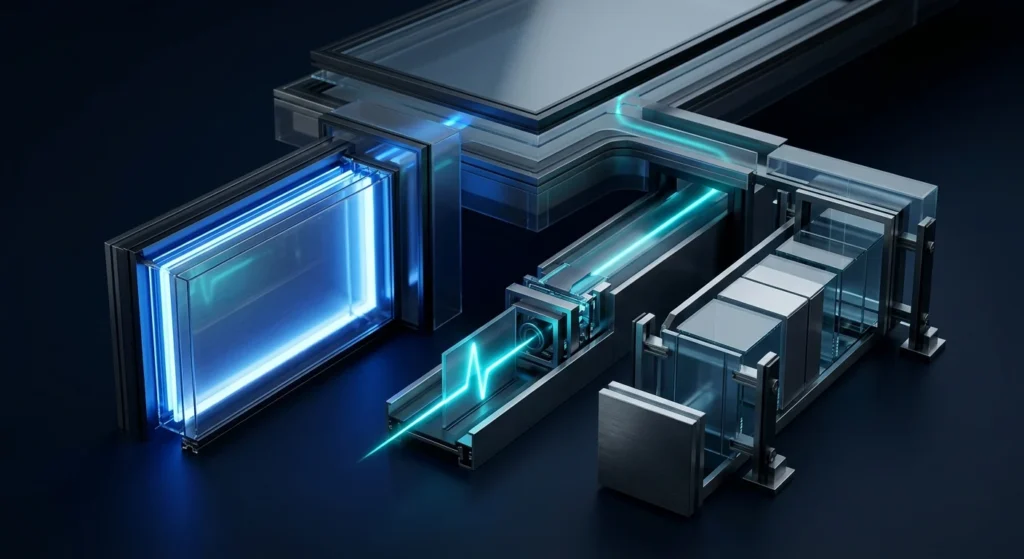
Core Web Vitals 2026 matters because performance is no longer just a developer scorecard. For a business website, loading, responsiveness, and visual stability shape whether visitors can understand the offer, trust the interface, and complete an important action without friction. Google describes Core Web Vitals as real-world measures of loading performance, interactivity, and visual stability, so the practical question is not “How do we chase a perfect score?” but “Where does the experience break for real users?”
Mono’s own Website Repair & Optimization approach treats performance as one layer of a broader system: technical reliability, customer journey, and measurement should be reviewed together. That is the right frame for business teams.
Largest Contentful Paint measures when the largest meaningful content element in the viewport is rendered. Google’s current guidance defines a good LCP as 2.5 seconds or less for most visits. If the hero image, headline area, or another dominant element arrives late, users experience delay before they can properly orient themselves.
Common causes include slow server response, oversized images, render-blocking resources, and poor loading priority. That makes LCP a useful starting point for technical optimization, but not an isolated target. A page can become visually available quickly and still fail if the message, CTA, or form path is unclear.
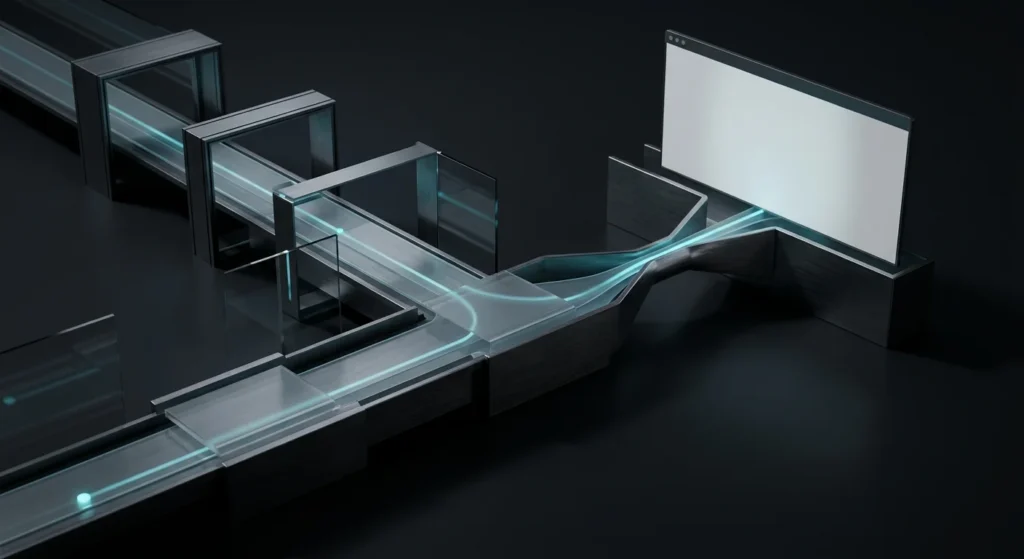
Interaction to Next Paint measures how quickly a page responds visually after user interaction. Google currently recommends an INP below 200 milliseconds for a good experience. This matters because the user may already trust the page enough to act; a delayed menu, filter, form control, or button creates friction at the exact moment intent becomes interaction.
Heavy JavaScript, long main-thread tasks, complex third-party scripts, and inefficient event handling can all contribute. A strong web development foundation should therefore treat interaction quality as part of the frontend architecture, not a late-stage speed patch.
Cumulative Layout Shift measures unexpected movement of visible page content. Google’s current good threshold is below 0.1. For a business website, this is not merely aesthetic. If a CTA moves while someone tries to tap it, a form jumps as assets load, or content shifts after a banner appears, the interface feels unreliable.
Typical fixes include reserving dimensions for images and embeds, controlling late-loading components, and preventing layout changes caused by fonts, scripts, or dynamic content. This connects performance directly with visual hierarchy and trust.

The most useful performance decisions come from real user monitoring and field data, because real devices, networks, browsers, locations, and interaction patterns create conditions that a single lab test cannot fully reproduce. Google evaluates Core Web Vitals using field experience and recommends looking at the 75th percentile rather than relying on an average.
That means a fast office connection can hide problems experienced by mobile users or visitors farther from the server. Use the official Web Vitals guidance and Google’s Core Web Vitals documentation as technical references, then compare those signals with business actions such as CTA clicks, form starts, completions, and failed interactions.
Core Web Vitals 2026 should sit inside website performance optimization, not replace it. A passing score does not guarantee a clear offer, strong trust, useful navigation, or a reliable inquiry path. Google itself notes that good Core Web Vitals do not guarantee top rankings; page experience is broader than these metrics.
This is where performance, SEO, and conversion should meet. SEO Services can address crawlability, technical access, page ownership, and measurement, while a Website Conversion System addresses message, proof, CTA flow, and decision friction.
For leadership teams, the better question is therefore not “Are our scores green?” It is “Can users load, understand, interact, and complete the next step reliably?”
Start with the pages closest to revenue: service pages, landing pages, lead forms, booking steps, and other high-intent routes. Review LCP, INP, CLS, then connect those findings to real user monitoring, field data, page experience, and conversion events. Prioritize issues by customer impact, reproducibility, and implementation risk so the team fixes the constraint that affects the journey instead of optimizing whatever metric is easiest to change.
If several issues overlap, a System Review is more useful than another isolated plugin change. Core Web Vitals 2026 becomes commercially useful when it helps identify the real bottleneck, prioritize the safest fix, and verify that the website works better for both users and the business. Mono’s current System Review explicitly examines UX, SEO, conversion, analytics and connected operational symptoms before recommending a direction.
If important pages feel slow, unstable or delayed during real customer interactions, review the technical foundation, user journey and measurement layer together before applying another isolated speed fix.
Review PerformanceGet System ReviewArticle FAQ
The three metrics are Largest Contentful Paint for loading performance, Interaction to Next Paint for responsiveness, and Cumulative Layout Shift for visual stability.
Google currently recommends that Largest Contentful Paint occur within 2.5 seconds of the page starting to load.
Google's current guidance recommends Interaction to Next Paint below 200 milliseconds for a good user experience.
No. Google uses Core Web Vitals within its ranking systems, but explicitly states that good scores alone do not guarantee top rankings. Overall page experience and other search signals still matter.
Lab tests run under controlled conditions, while field measurements capture actual devices, networks and interactions. Google therefore recommends combining lab diagnostics with field evidence when investigating performance.