Necessary
Always activeSupports security, form reliability and remembering your privacy choice. It is not used for advertising.

Mono rebuilt Azsertus as a multilingual WordPress platform with stronger SEO, content publishing, analytics and inquiry infrastructure for sustained digital growth.
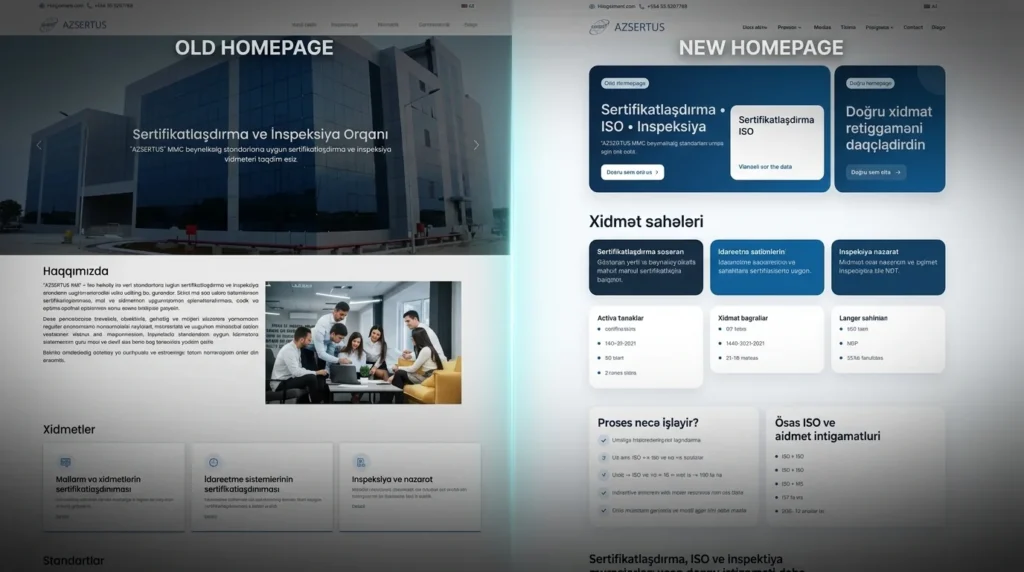
Azsertus needed its website to do more than present company information. The existing HTML-based site communicated the organisation’s certification and inspection services, but its role was largely brochure-like: content management was limited, the customer journey was relatively shallow, and the platform lacked the broader infrastructure needed for ongoing SEO, editorial publishing, analytics and conversion measurement.
Mono Digital approached the project as an evolution of the existing digital foundation rather than an unnecessary reset. Research into the business, its sector, local-search opportunities and the surrounding competitive environment informed the new direction, while the established sitemap and URL logic were retained wherever practical.
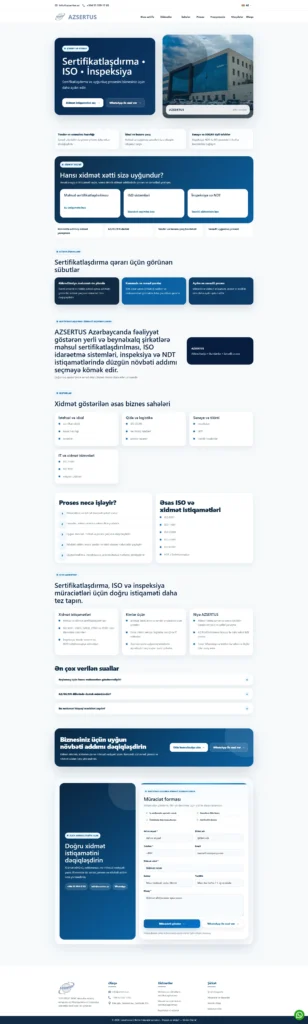
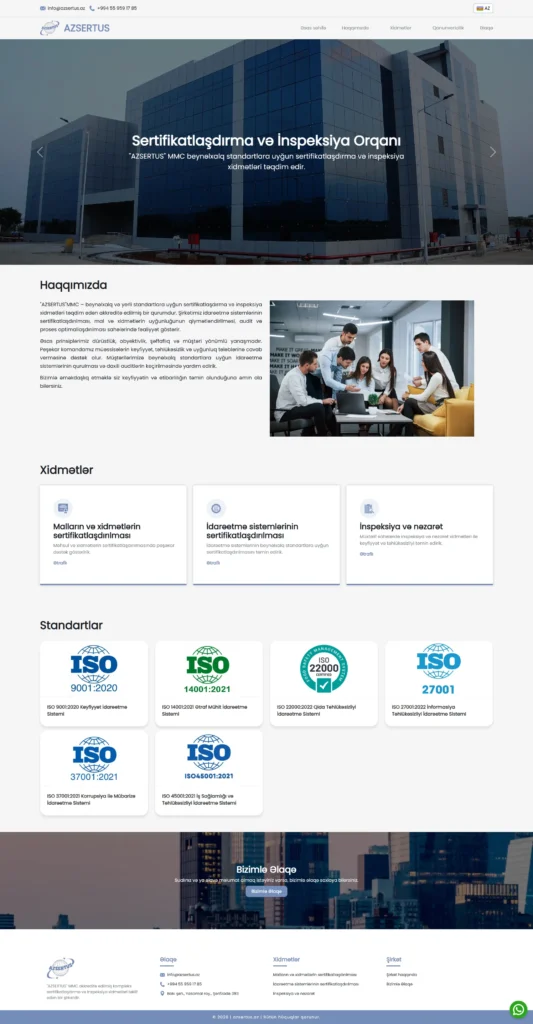
The original website already contained the company’s core information, services and standards, but the platform had limited scope for continued digital growth. It was built in HTML, content was presented through a relatively simple corporate structure, and important user journeys were not designed around the different ways prospective clients might evaluate certification, inspection or compliance services.
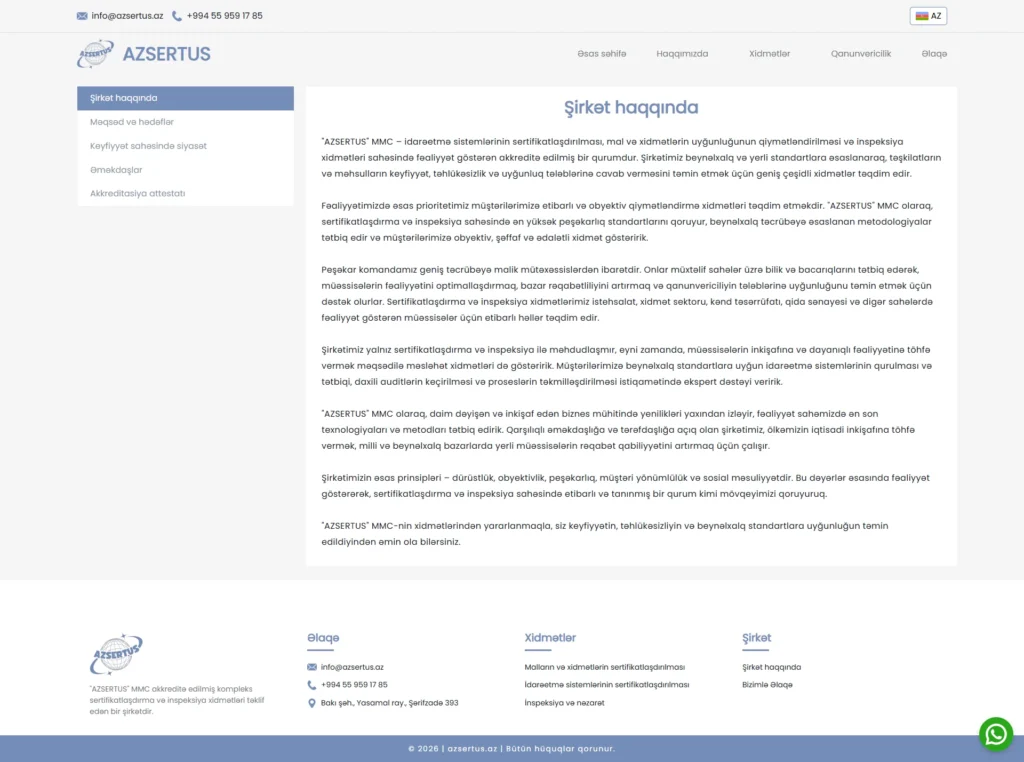
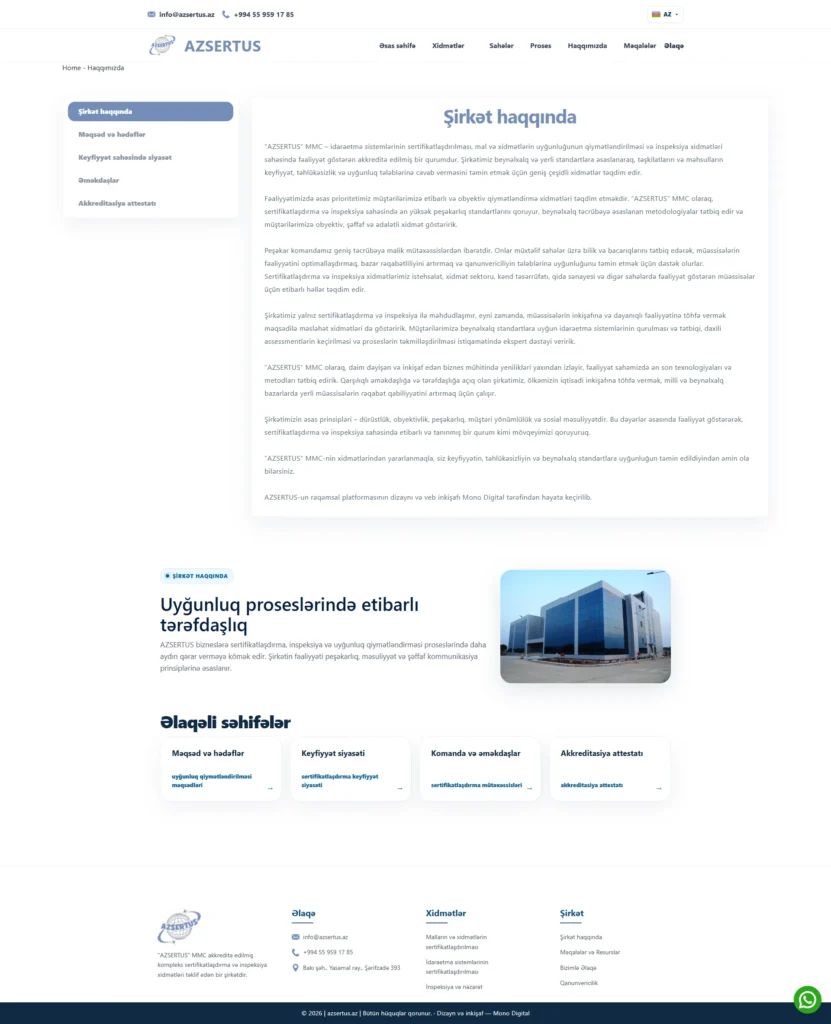
The existing About section illustrates the same limitation. Useful company information was available, but the experience remained predominantly text-based, with fewer pathways into related information or commercial actions.
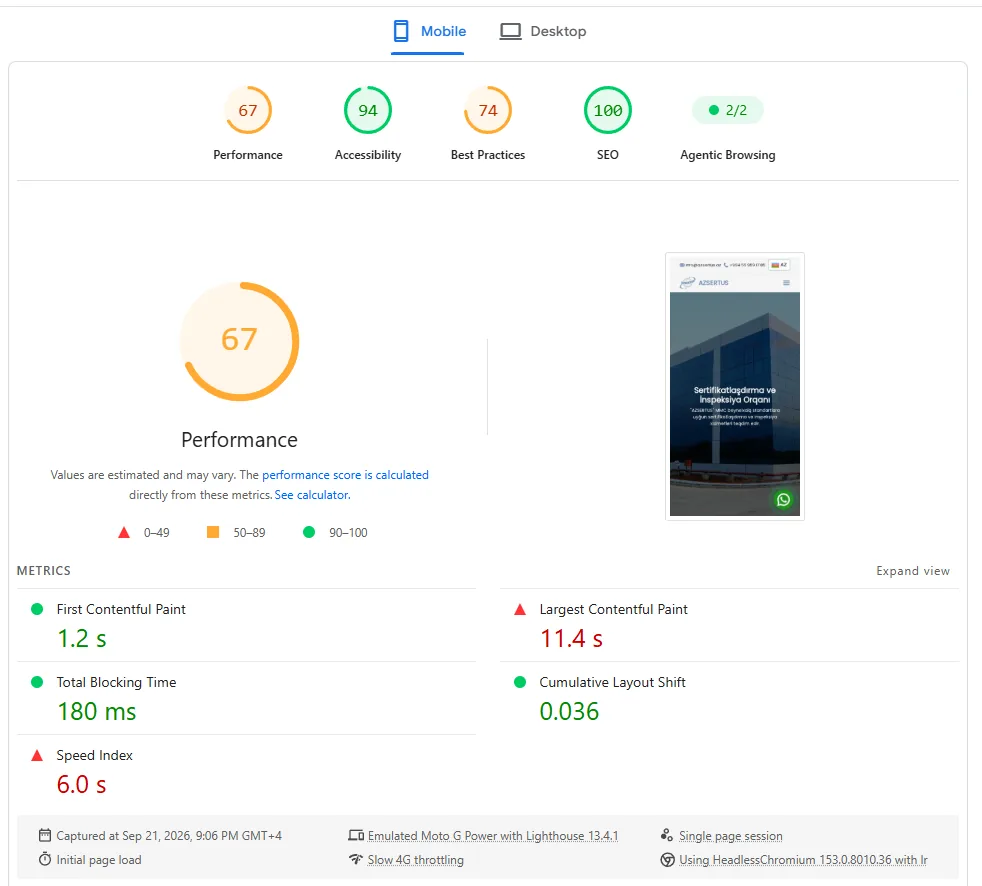
Performance also formed part of the technical baseline. The supplied pre-project mobile PageSpeed capture recorded a Performance score of 67 and a Largest Contentful Paint of 11.4 seconds. Speed optimisation was not the project’s primary objective, but the baseline provided another area where the rebuilt platform could improve.
The requirement was therefore broader than a visual redesign. Azsertus needed a website capable of supporting search visibility, multilingual communication, structured content publishing, analytics and clearer inquiry journeys without unnecessarily discarding the site’s existing information architecture.
The website was rebuilt on WordPress as a three-language platform with a substantially broader operational role.
Service presentation was expanded so visitors could understand not only what Azsertus offers, but also which service direction may apply to their organisation, what information is required and what the next step in the process looks like. Dedicated service structures combine explanatory content, suitability guidance, process information, related standards, FAQs and inquiry functionality.
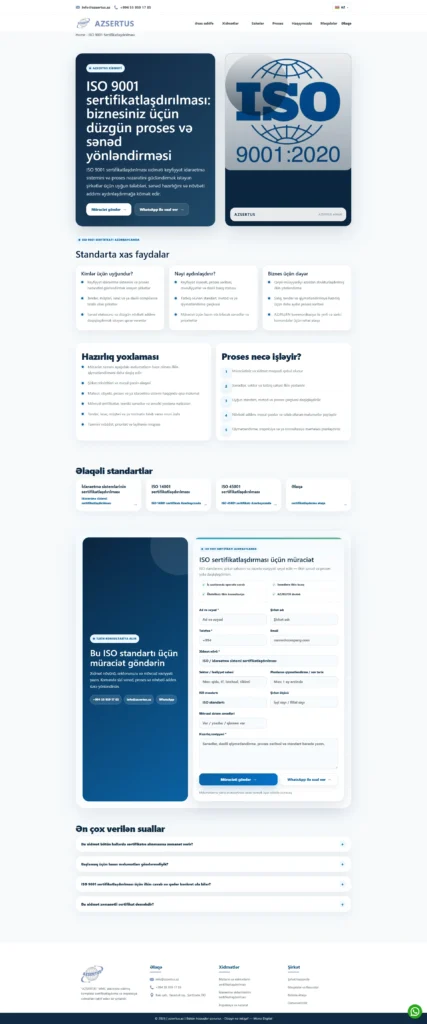
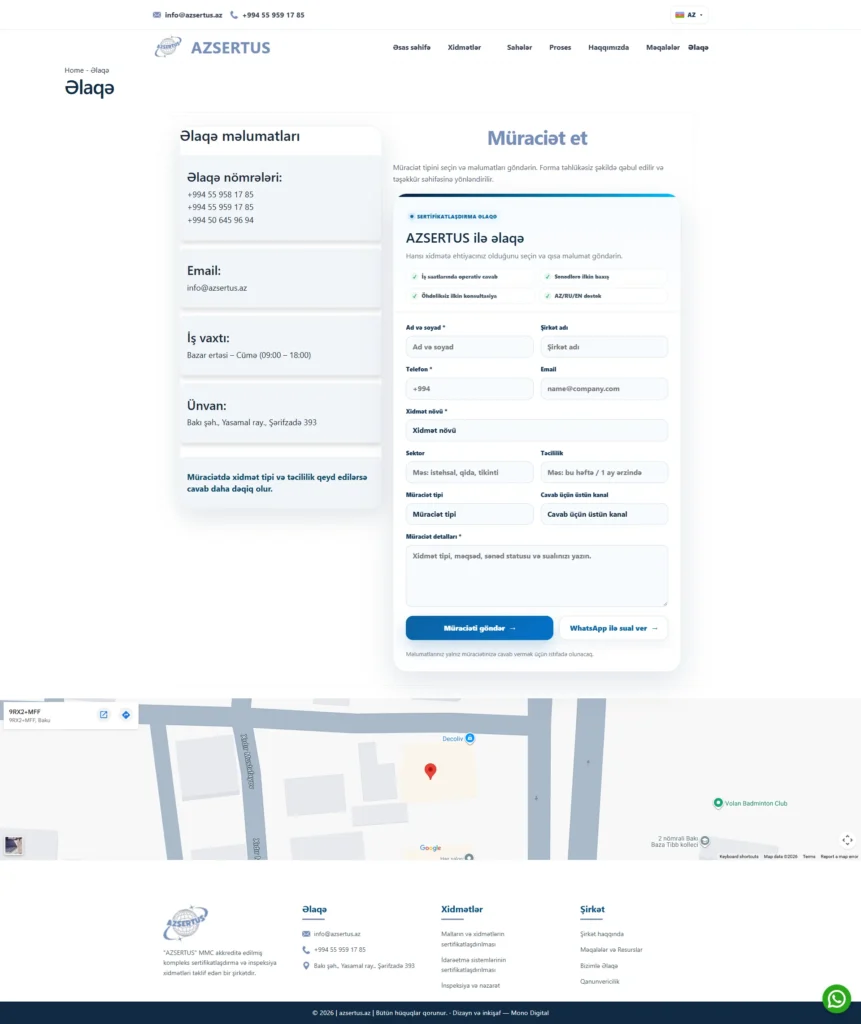
Conversion pathways were also redesigned across the site. CTAs were placed closer to decision points, mobile users received more direct action options, and inquiry experiences were structured around useful commercial context instead of relying only on a generic contact route.
The redesigned Contact page, for example, allows prospects to provide service type, sector, urgency, inquiry type and preferred response channel while retaining direct telephone, email and WhatsApp options.
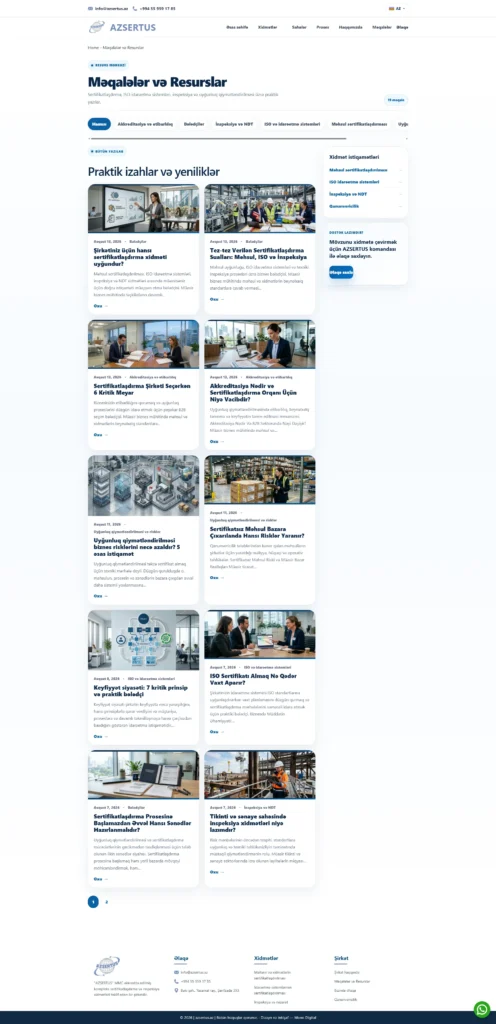
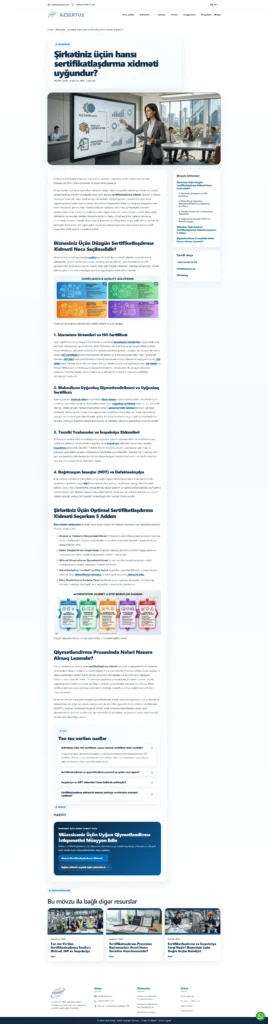
A significant addition was a new editorial publishing layer. The previous site did not include a comparable blog infrastructure, so Mono introduced an Articles and Resources system designed around Azsertus’s areas of expertise.
The archive provides category-based discovery and structured content cards rather than functioning as an undifferentiated list of posts.
Individual resources use a consistent long-form format that can combine editorial content, supporting visuals, FAQs, related service context and further reading. This gives the business a maintainable framework for publishing useful certification, ISO, inspection and compliance content over time.
The same principle guided the broader information architecture: preserve established URLs and site logic where useful, then strengthen the depth and relationships between services, sectors, processes, company information and resources.
Development followed a predefined architecture and phased implementation workflow created by Mono Digital.
AI coding agents were used as part of that workflow, but within a controlled engineering process. Architecture, implementation rules and technical direction were established first; agents then worked against those requirements in defined stages. Each stage was reviewed and corrected where necessary, with regression and quality checks completed before production release.
This allowed AI-assisted development to accelerate execution without transferring architectural control away from the project team.
The implementation also established an analytics foundation through Google Tag Manager. Tracking structure, relevant triggers and events were configured so the platform could support GA4 analysis and future conversion measurement.
SEO considerations were incorporated alongside the technical rebuild and content architecture. Work was also carried out for AI and generative-search visibility, with the project reporting early appearances of Azsertus information in responses from platforms such as GPT and Gemini.
The result is no longer simply a corporate website. Azsertus now has a multilingual WordPress platform that can support ongoing service development, editorial publishing, SEO, analytics and structured inquiry generation from a single digital foundation.
Existing corporate information was retained where appropriate but presented through a clearer hierarchy and stronger internal pathways.
The project also recorded a performance improvement at handover: according to the supplied project information, PageSpeed results were approximately 25% better than the previous version despite the new website carrying substantially more functionality.
Commercially, Azsertus reports that the website has begun producing inquiries from foreign companies and approximately three to five phone calls per week. These figures are treated as reported post-launch business signals rather than isolated attribution to any single SEO, content or conversion component.
The larger outcome is the infrastructure behind those signals: Azsertus moved from a predominantly static website to a platform capable of supporting content publishing, multilingual growth, measurement, search visibility and more deliberate customer journeys.