Necessary
Always activeSupports security, form reliability and remembering your privacy choice. It is not used for advertising.

Small failures in clarity, trust, speed, capture, response, and measurement can quietly reduce the value of every website visit.
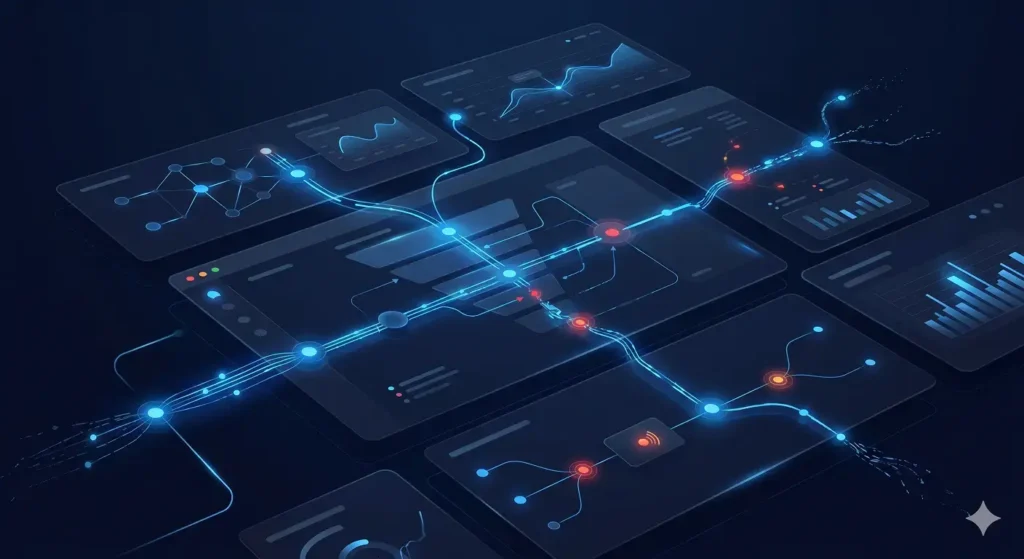
A website losing money may still attract visitors and submit occasional enquiries. The loss is usually distributed across the journey: unclear positioning reduces action, slow interaction weakens intent, forms lose context, and delayed follow-up wastes the commitment that remains. Diagnose the system before buying more traffic or assuming a redesign is the only answer.
Revenue depends on a sequence, not a page view. A visitor must recognize relevance, understand the offer, trust the provider, choose an action, complete it, and receive an appropriate response. A failure at any stage lowers the value of every earlier marketing investment. The analysis of traffic that does not convert is a useful starting point for separating acquisition volume from journey quality.
1. The page does not resolve the next decision. A conversion-focused website creates a clear path from problem to evidence and action. When every section competes for attention, the customer decision flow becomes guesswork. Review message hierarchy and behavioural friction using Mono’s guide to conversion psychology.
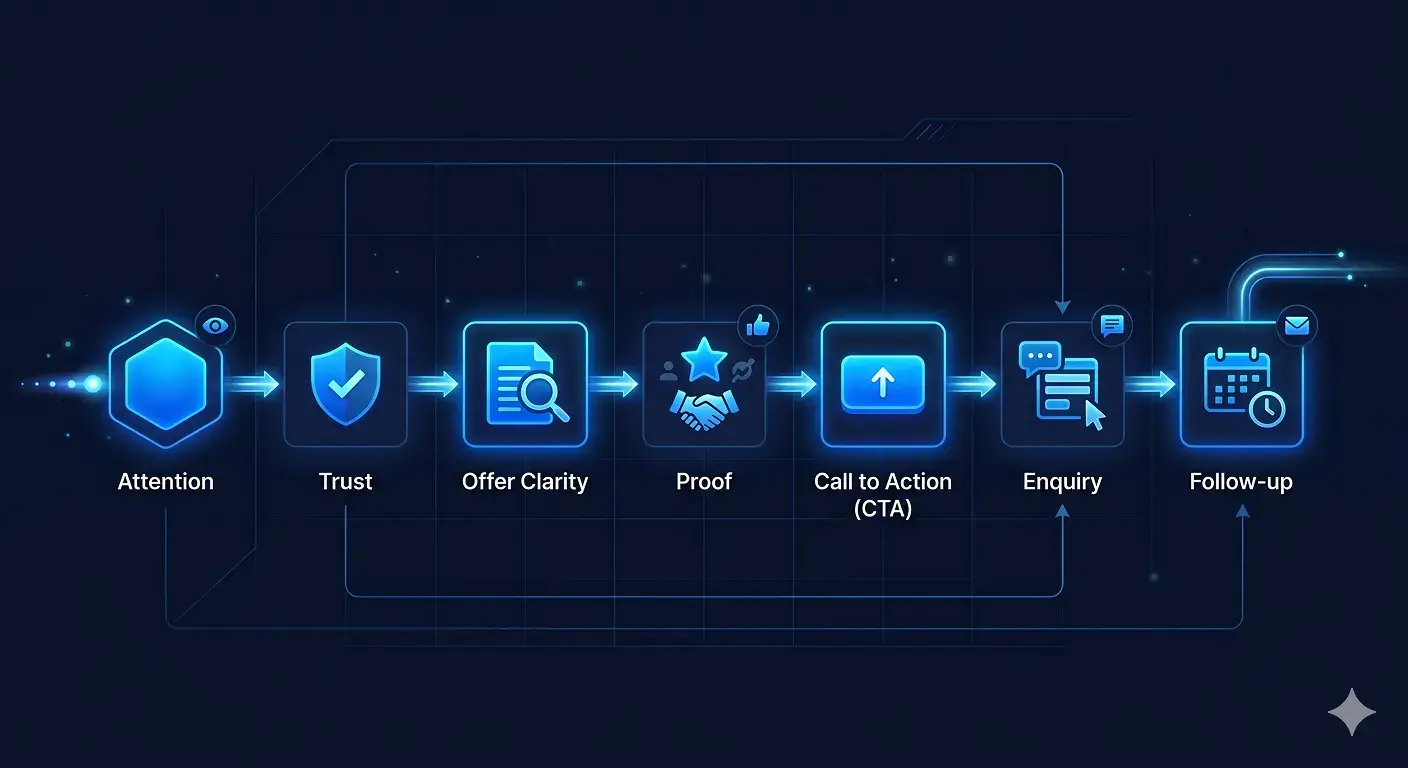
2. Trust breaks near commitment. General testimonials cannot compensate for vague service details, inconsistent interfaces, or a form that does not explain what happens next. Effective website trust signals appear where uncertainty arises: beside claims, prices, forms, and response expectations.
3. Website performance interrupts intent. Test the actual mobile path, not only the homepage score. Heavy hero media, delayed buttons, layout shifts, and slow third-party tools can prevent action. PageSpeed Insights provides technical evidence, while a broader pagespeed optimization guide helps connect speed with usability and conversion.
4. Capture does not preserve context. A form submission needs source, service interest, consent, and enough detail for the next responsible person. If everything arrives in a shared inbox, qualification starts again and response quality varies. These are conversion leaks even when analytics records a successful event.
5. Follow-up depends on memory. Lead flow automation can create an owned record, confirm receipt, route urgency, and set a response task. It should support a defined process rather than send generic messages. A well-scoped lead generation website system joins the customer-facing action to internal responsibility.
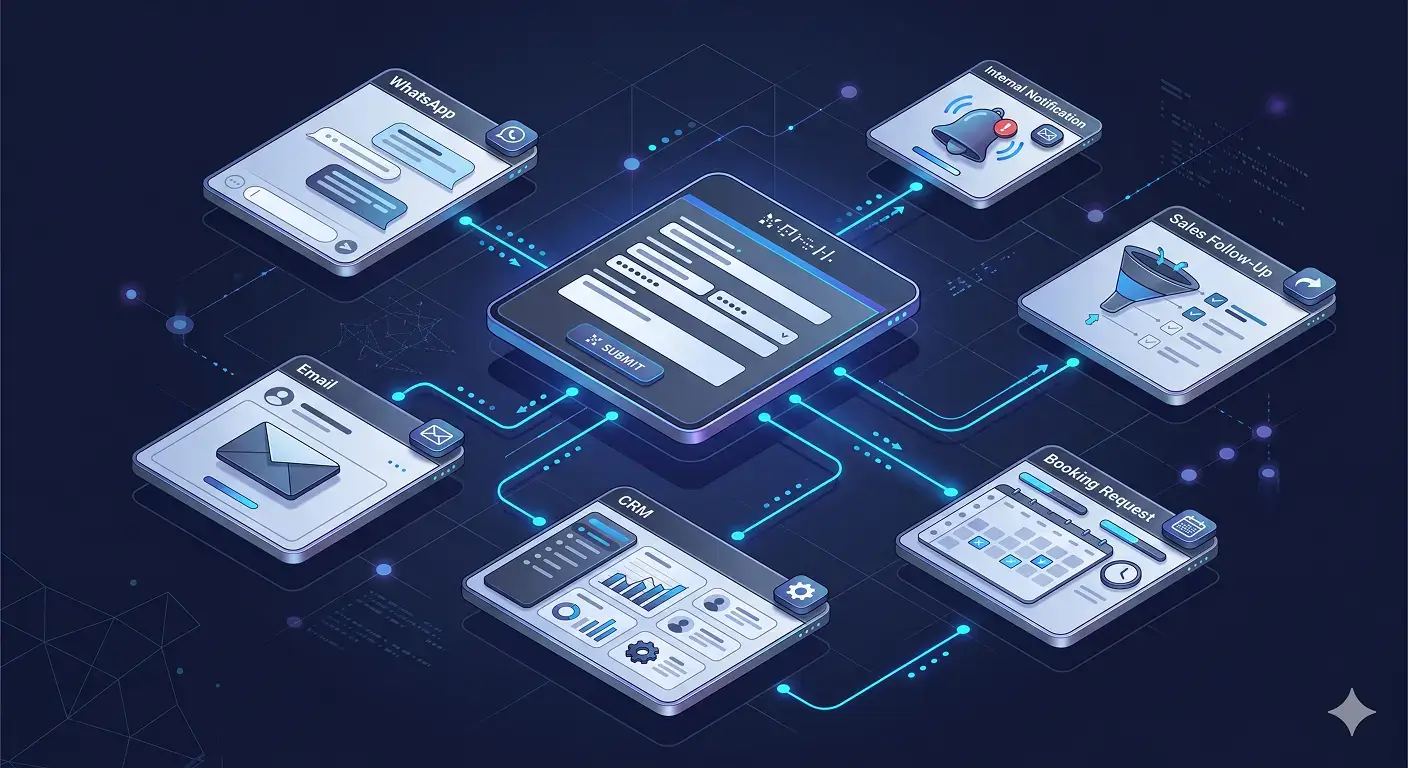
6. Disconnected tools hide failure. A website automation system may connect forms, scheduling, CRM, email, and reporting, but each handoff needs error handling. When APIs fail silently or duplicates appear, teams trust incomplete data. Review the broader principles in website automation and document retry, exception, and ownership rules.
7. Measurement stops too early. Page views and submissions cannot reveal lead quality, response time, or outcome. Track form starts, completion, validation errors, contact channel, qualification, and the abandoned enquiry flows that indicate friction. Use consistent identifiers so analytics and operational records can be reconciled without exposing sensitive customer information.
Begin with one important journey and observe it from landing page to final response. Test common devices, valid and invalid form inputs, unavailable appointment states, and notification failure. Interview the team receiving enquiries; dashboards may call a transfer successful even when the record lacks enough context to act.
Review offer clarity separately from interface quality. Visitors need to understand who the service suits, which problem it solves, what evidence supports the promise, and what commitment is being requested. If those answers remain vague, faster pages and better tracking will measure confusion rather than solve it.
Check the cost of internal handling as well as lost enquiries. Repeated data entry, manual reminders, duplicate records, and status chasing consume capacity that could support customers. Document the current workflow before automating it so unnecessary steps are removed instead of reproduced by software.
Protect privacy while improving visibility. Capture only information required for the next decision, restrict access to appropriate roles, and avoid placing sensitive details in notification subjects or tracking URLs. Measurement should explain the journey without creating another operational or compliance risk.
Estimate each leak by frequency, customer impact, operational effort, and confidence in the evidence. Repair high-impact constraints before cosmetic details. A weak message or broken form deserves attention before small visual refinements. This evidence shows whether a website losing money needs a focused repair, process change, or wider rebuild. Mono’s review of conversion leaks across business websites explains why several small faults often compound.
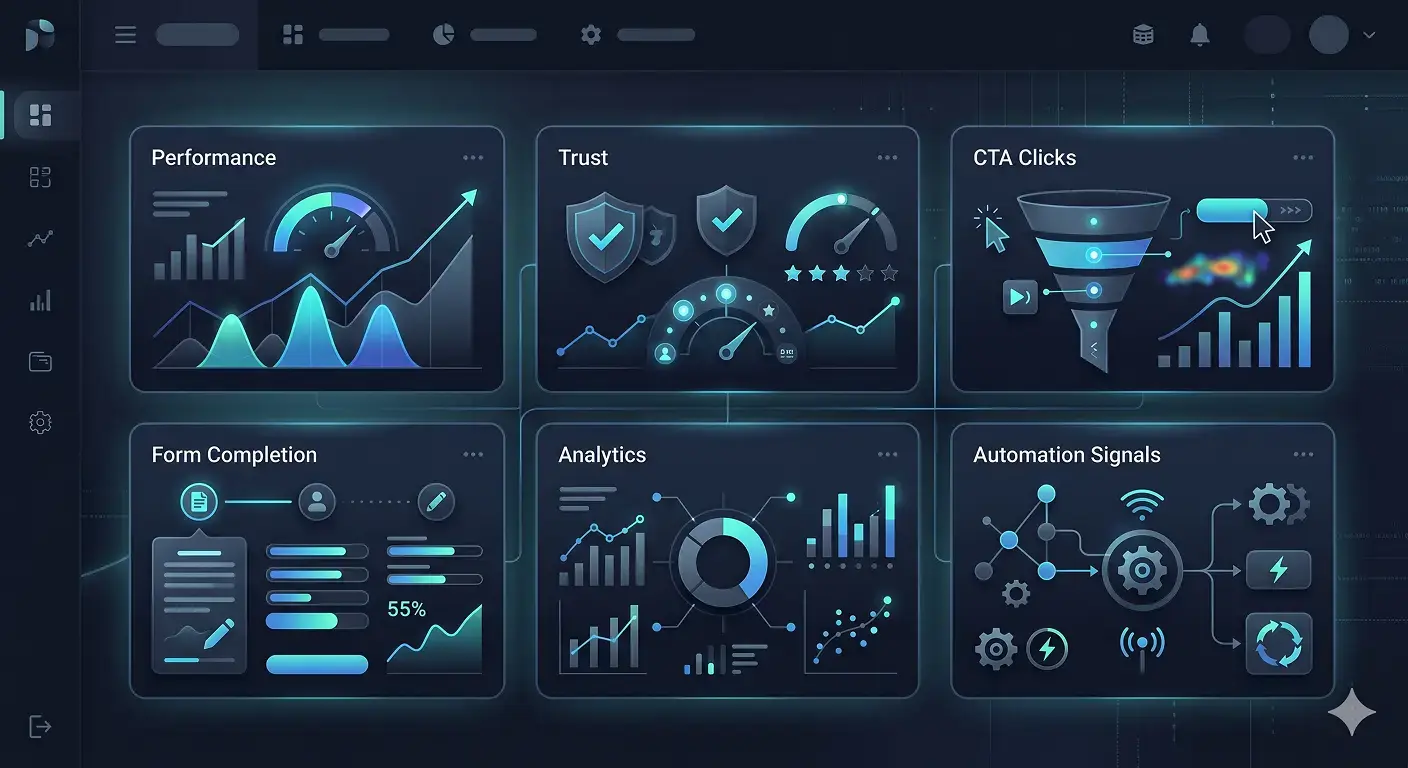
Not every site needs replacement. A focused release might clarify one priority offer, simplify its action path, repair form delivery, and connect response measurement. Test the result before expanding. The Website Conversion System fits traffic-without-action problems; broader website structure strategy helps when journeys are fragmented across pages.
Govern the repaired path after launch. Assign owners for content accuracy, form testing, integrations, response standards, and reporting definitions. Schedule checks after tool, campaign, or staffing changes. A website losing money becomes measurable when every important action has an expected outcome, observable failure state, and responsible owner.
Trace one complete customer journey and repair the highest-impact break with evidence.
Request a System ReviewSee Conversion SolutionsArticle FAQ
Small losses can compound across unclear messaging, weak trust, slow interaction, form friction, delayed response, and incomplete measurement even when every page appears available.
Usually not. Confirm that priority journeys can turn existing attention into useful, owned enquiries before increasing acquisition spend.
Track source, form start and completion, qualification, response ownership, response time, failure states, and the final business outcome using consistent definitions.
No. Many sites benefit first from a focused repair to one message, journey, form, integration, or response workflow.
Test them after important content, campaign, tool, or staffing changes and on a regular schedule appropriate to enquiry volume and business risk.