Necessary
Always activeSupports security, form reliability and remembering your privacy choice. It is not used for advertising.

Traffic cannot compensate for a fragmented journey. Revenue improves when message, UX, performance, trust and lead capture work as one connected website system.
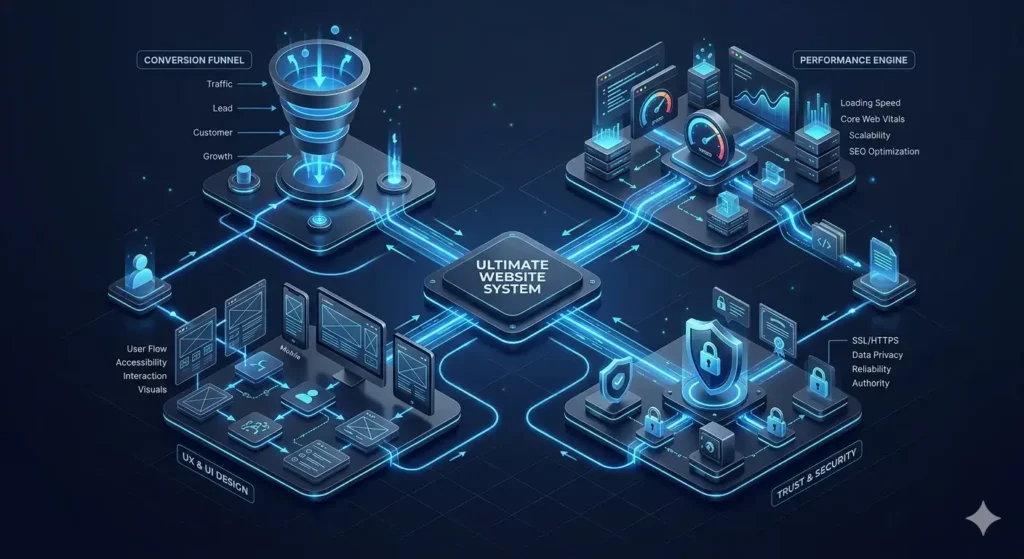
Website revenue problems rarely begin with a shortage of visitors. They begin when the website fails to turn existing attention into a clear, credible path toward action. A business may have a polished interface, useful services and steady demand, yet still see inconsistent inquiries because the journey between arrival and decision is fragmented.
When a website not converting becomes the main symptom, buying more traffic usually magnifies the loss. The better first question is whether messaging, navigation, proof, performance and lead capture operate as one connected website system. Each element can appear acceptable alone while the combined experience still makes decisions difficult.
A revenue-producing site is more than a set of pages. Its website system architecture must connect visitor intent, relevant information, a meaningful next step and an operational response after submission. If one connection is missing, users pause, leave or submit low-context inquiries that are harder for the business to handle.
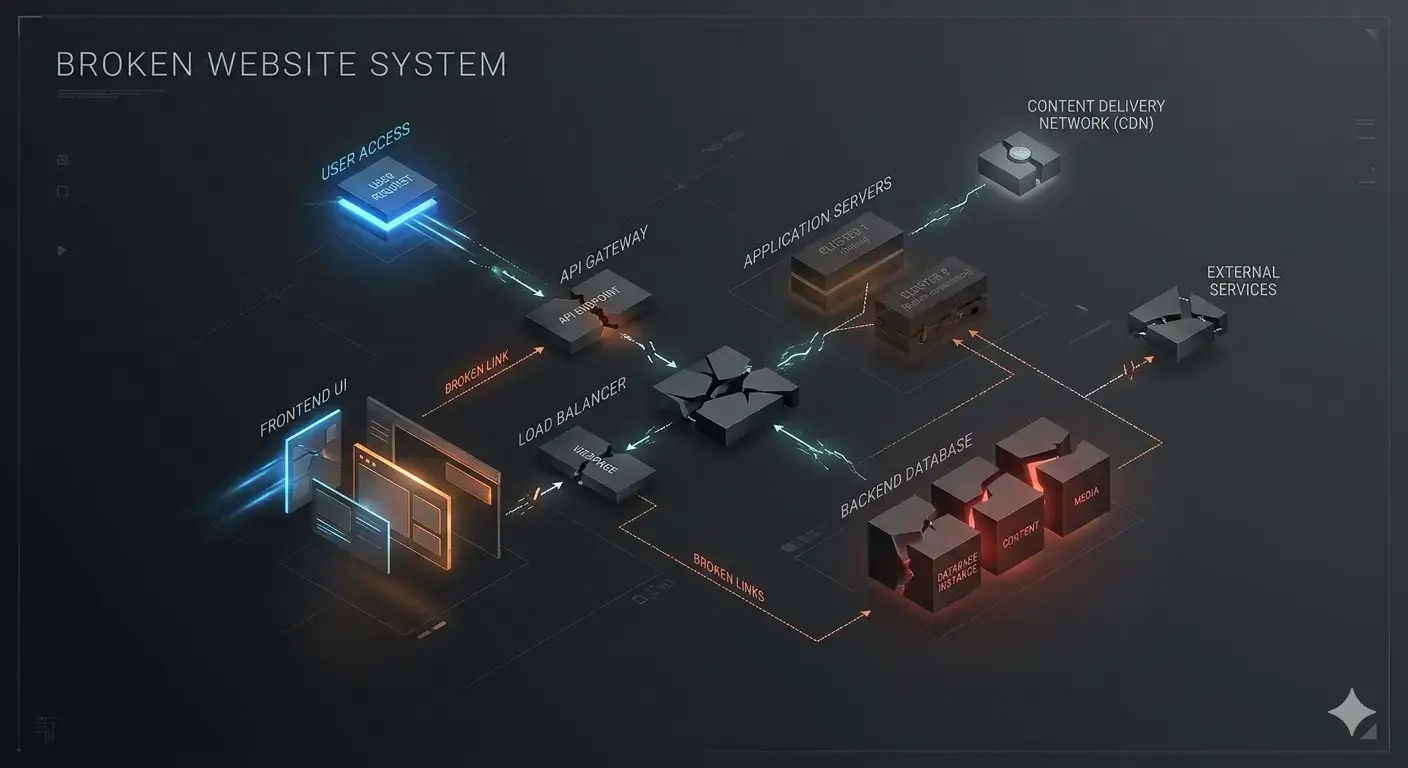
Visitors need to understand where they are, whether the offer fits and what happens next. Weak page hierarchy, competing calls to action and disconnected forms force them to design their own route. A deliberate conversion system removes that burden by matching each page to a decision stage and giving every important action a clear destination.
This does not mean pushing every visitor toward the same form. A considered lead generation website system can separate research, evaluation and inquiry paths while preserving continuity between them. The business then receives clearer intent instead of anonymous traffic or poorly qualified requests.
A visitor should quickly recognize the problem being solved, the audience served and the value of continuing. Broad claims, internal terminology and feature lists make the reader translate the offer for themselves. Even an attractive redesign cannot repair that strategic gap; effective website design strategy establishes message hierarchy before visual polish.
Review priority landing pages against the search, referral or campaign promise that brought people there. Align the opening message, supporting proof and primary action with that expectation. This creates continuity and helps users decide without unnecessary interpretation.
Friction is often cumulative rather than dramatic. Ambiguous labels, crowded navigation, hidden contact details, long forms and weak mobile spacing each add a small decision cost. Together, they create hesitation at precisely the moment a visitor should feel confident. Practical conversion-focused UX improvements should simplify the path without removing information people need.

Strong conversion rate optimization starts with observed behavior and journey evidence, not random button changes. Review where users stop, which questions remain unanswered and whether form completion leads to a clear confirmation and response process.
Performance shapes the experience before a visitor evaluates the offer. Slow responses, unstable layouts and delayed interactions break concentration and make key actions feel unreliable. The Web Vitals guidance frames loading, interactivity and visual stability as measurable aspects of user experience, while Google explains how Core Web Vitals relate to Search.

Diagnose website performance issues across real templates and actions, not only the homepage. The commercial impact of a slow website experience depends on where the delay occurs: a stalled service page, menu or form can obstruct an otherwise motivated visitor.
Trust is not one testimonial block near the footer. It develops through clear claims, consistent design, relevant evidence, transparent expectations and reliable interactions. Place proof beside the decision it supports: credentials near specialist claims, process details before commitment and privacy reassurance beside data collection. A broader website trust signals framework helps evaluate these layers as a system.
When website revenue problems persist, inspect contradictions as well as omissions. A premium promise beside outdated content, an easy-process claim followed by a complicated form, or a fast-response promise without confirmation can weaken credibility more than missing decoration.
Begin with the business action the website must support. Map the visitor’s route from entry page to inquiry, then trace what happens after submission. Review message alignment, page hierarchy, interaction friction, technical performance, proof placement and measurement together. This creates a prioritized diagnosis rather than an unrelated list of design requests.
The objective is not to optimize every page equally. Focus first on routes carrying meaningful intent and on breakdowns closest to a business outcome. A dedicated Website Conversion System connects message, trust, calls to action and capture, while conversion-focused web development can implement the required structure and behavior.
Resolving website revenue problems requires coordinated changes, followed by measurement against real actions. That is how teams increase website revenue responsibly: not by assuming more traffic will compensate for structural loss, but by making the existing journey easier to understand, trust and complete.
Review the customer journey, conversion path and technical foundation before investing in more traffic or another surface-level redesign.
Start a System ReviewExplore Web DevelopmentArticle FAQ
The usual cause is a broken decision path: the message does not match intent, navigation creates friction, proof is missing at key moments, or the form and follow-up process are disconnected.
Usually not. Additional traffic sends more people through the same weak journey. Diagnose high-intent pages and conversion paths first, then invest in traffic once the structure can support it.
Map the journey from landing page to completed inquiry, review where users hesitate or leave, test important actions on real devices, and trace how each submission is confirmed, routed and measured.
Yes. If the existing platform is sound, focused changes to message hierarchy, calls to action, forms, proof placement or performance may repair the journey without replacing the whole website.
Visitors evaluate different risks at different stages. Relevant proof beside a claim, form or commitment resolves doubt when it arises instead of asking users to search elsewhere for reassurance.