Necessary
Always activeSupports security, form reliability and remembering your privacy choice. It is not used for advertising.

A polished website can still lose leads when its pages, forms, tools, data, and follow-up processes do not operate as one connected system.
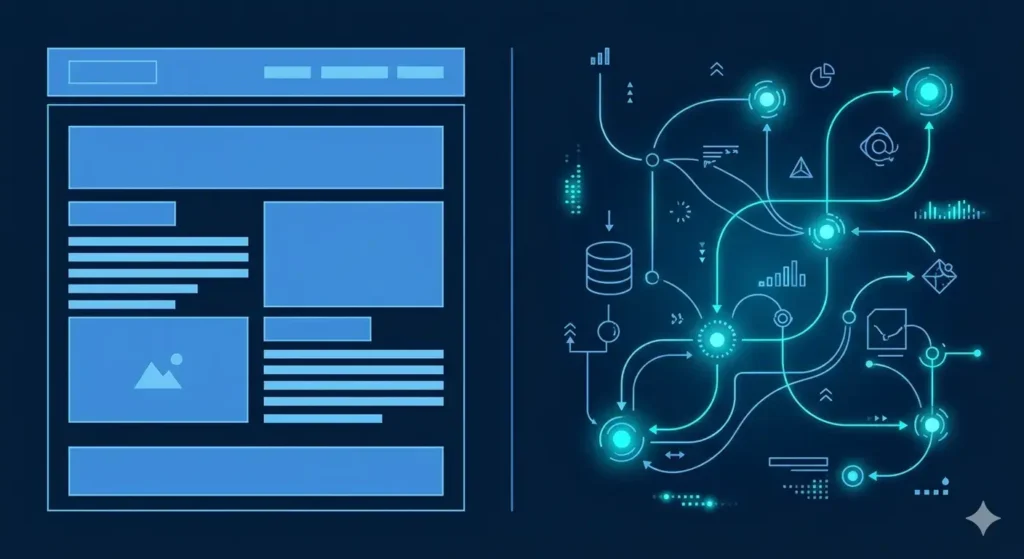
A website without a system can look polished while quietly creating operational drag. Pages may load, forms may submit, and campaigns may attract visitors, yet the business still loses context between interest, inquiry, follow-up, and measurement. The problem is not the visual layer alone. It is the absence of a deliberate operating model connecting content, conversion paths, people, tools, and data.
That distinction matters because a website is now part of how a service business sells and delivers. Sound website strategy planning should define what happens before a page is designed: who the journey serves, what action matters, where information goes, and who owns the next step.
Disconnected websites rarely announce a single dramatic failure. Instead, small gaps compound. A form reaches an inbox with no routing rule. A sales conversation starts without campaign context. A booking is confirmed, but another tool still requires manual entry. Analytics record page views without showing which journey produced a qualified inquiry.
These gaps force teams to compensate with memory, spreadsheets, and repeated checks. The result is slower response, inconsistent service, and limited visibility. By contrast, core business website systems connect each customer action to a defined operational response.

Effective website system architecture starts with decisions, not software. It maps the visitor’s intent, the required information, the conversion event, the destination for captured data, and the follow-up sequence. This makes conversion-focused web development an implementation discipline rather than a collection of isolated page requests.
A form is useful only when it feeds a reliable lead management system. Required fields should support qualification without creating unnecessary friction. Submission data should reach the right destination, trigger an acknowledgement, create a clear owner, and preserve source context. The W3C forms guidance also shows why labels, instructions, validation, and feedback are essential parts of a usable interaction.
For businesses that depend on inquiries, a lead generation website system makes the path from page visit to sales follow-up explicit and measurable.
Website workflow automation should remove predictable handoffs while preserving human judgment where it matters. Useful automation can route inquiries, send confirmations, create tasks, synchronize records, or notify the right team. The goal is not to automate everything; it is to prevent routine transitions from depending on someone noticing an email.
A well-designed website automation system follows the operating process instead of layering more tools onto an unclear one.
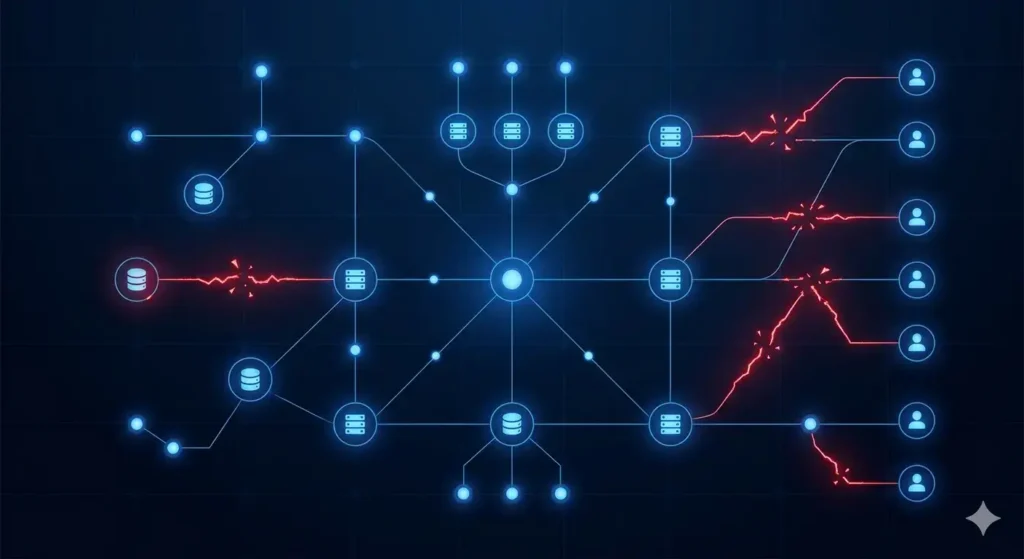
A website without a system weakens the website conversion flow at multiple points. Visitors encounter unclear choices, forms ask for the wrong information, confirmation pages provide no useful next step, and teams respond without the original context. Each gap may appear minor, but together they create the conversion leaks that reduce revenue.
The effect spreads across the customer journey. Marketing cannot confidently connect campaigns to outcomes. Sales spends time reconstructing intent. Operations manually transfer information. Leaders see activity but cannot distinguish useful demand from noise. This is why visual polish without website design strategy often fails to produce a dependable business asset.

Fixing the problem does not begin with a redesign brief or a software purchase. Begin by documenting the current path from discovery to inquiry, response, qualification, and handoff. A focused website audit can reveal where information disappears, where ownership is unclear, and where manual work hides recurring failures.
Document the real process, including exceptions and workarounds, before defining the future one. Interview the people who handle inquiries and review representative submissions from beginning to end. Compare what the website promises with what happens after a visitor acts. This exposes whether the gap comes from page structure, unclear messaging, missing integration, weak ownership, or an operational rule that was never defined. It also prevents teams from buying tools that duplicate capabilities while leaving the underlying handoff unresolved.
Links and navigation also need a clear structure. Google’s guidance on crawlable links reinforces a practical principle: destinations should be reachable through real, descriptive links that help users and search systems understand relationships.
Once the operating model is clear, technology can support it. The strongest website conversion system is not necessarily the most complex. It is the one that creates reliable movement from visitor intent to business action, produces useful data, and reduces avoidable handoffs.
Replacing a website without a system with connected infrastructure improves operational efficiency because responsibilities, transitions, and evidence become visible. The website stops acting like a static brochure and starts functioning as a coordinated part of marketing, sales, and service delivery.
Map the gaps between visitor intent, lead capture, follow-up, and measurement, then build a system your team can operate with confidence.
Start a System ReviewSee Web DevelopmentArticle FAQ
It means pages, forms, data, tools, ownership, follow-up, and measurement work through defined connections rather than isolated manual steps.
Leads can be lost when submissions reach the wrong place, context is not preserved, acknowledgements are missing, or no person owns the next action.
Not always. The right scope depends on whether the gaps are limited to workflows and integrations or originate in the website's underlying structure and conversion paths.
Start with predictable, high-value transitions such as inquiry routing, confirmations, task creation, record synchronization, and internal notifications.
Measure meaningful outcomes such as qualified inquiries, completed bookings, response ownership, follow-up completion, and the source path behind each conversion.