Necessary
Always activeSupports security, form reliability and remembering your privacy choice. It is not used for advertising.

Trace the journey from traffic to inquiry, identify the stage where qualified intent disappears, and fix the strongest supported conversion constraint first.
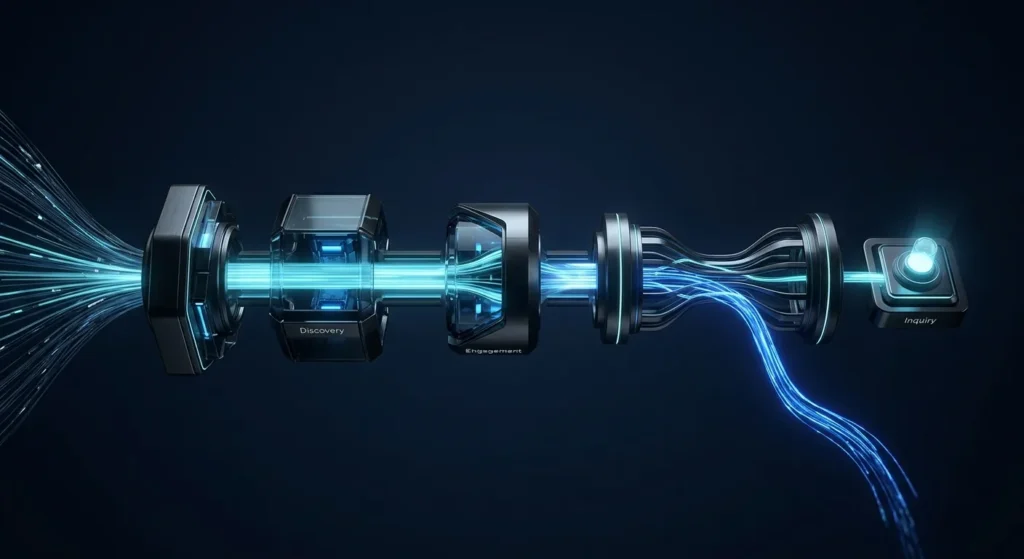
A traffic report can tell you how many people arrived. It cannot tell you why qualified prospects disappeared before contacting you. A website conversion funnel analysis turns that vague underperformance into a sequence you can inspect: arrival, understanding, trust, action, submission, and follow-up. The goal is not to blame one page. It is to identify the stage where intent weakens and determine whether the cause is messaging, UX, technical friction, measurement, or operations.
Start by defining the outcome that matters. For a service business, that may be a qualified form submission, booked consultation, phone call, or WhatsApp inquiry. Then map the customer journey backward from that action. A useful funnel should reflect real decision stages, not every pageview.
Google Analytics supports funnel exploration for analyzing journey steps, but analytics only becomes useful after those steps represent the business process. Mono’s guide to website structure strategy explains why isolated pages often hide the actual path visitors must complete.
A funnel can look weak because the wrong people enter it. Compare acquisition source, search or campaign intent, landing-page message, and the action offered. If an ad promises one problem while the page opens with a broad company introduction, the website user flow is already misaligned.
This is where digital marketing and landing-page alignment matters. Separate traffic-quality problems from page-conversion problems before changing layouts or CTAs. Compare branded, organic, referral, and paid entry paths separately when their intent differs. A blended site-wide conversion rate can conceal a strong journey for one audience and a weak one for another.
The next check is whether visitors can quickly understand the offer, who it is for, and what to do next. Review headings, section order, service distinctions, and navigation. A funnel drop-off between landing and deeper engagement often signals unclear relevance rather than weak demand.
Use the principles behind visual hierarchy and trust to inspect what people notice first. Then compare the page with Mono’s website trust signals guidance: proof must appear where uncertainty is created, not only near the footer.
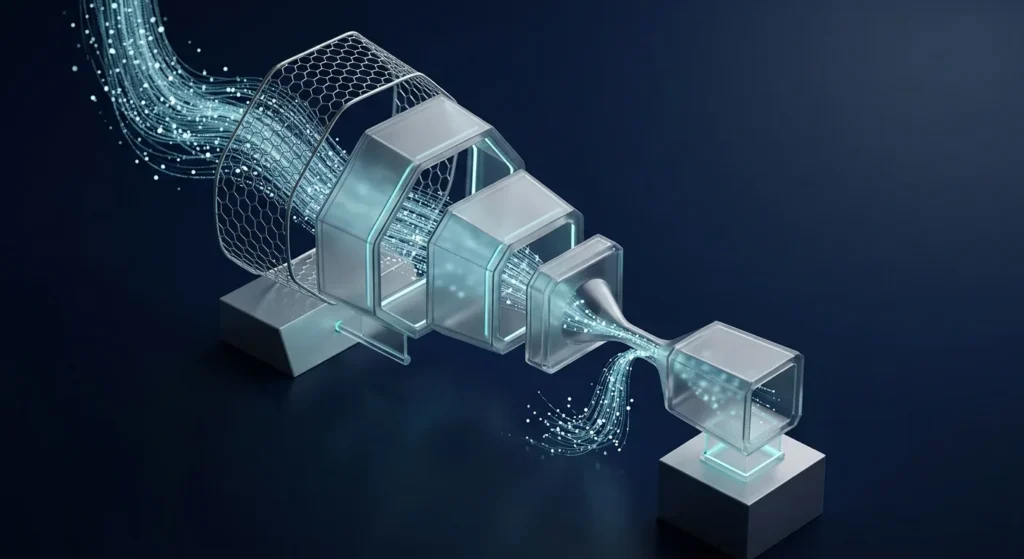
A strong CTA cannot repair a broken argument. Before asking for commitment, the page should build enough context: problem recognition, fit, approach, proof, risk reduction, and a logical next step. This is where conversion bottlenecks often appear even when the design looks polished.
A website conversion funnel analysis should therefore inspect transitions between sections and pages, not just button clicks. Mono’s conversion rate diagnosis provides a useful complementary framework for testing message clarity, proof, mobile interaction, and connected leaks.
Now inspect the moment of action. Check button labels, destination consistency, mobile states, form length, required fields, validation, consent, and confirmation behavior. Small UX defects can break a website user flow at the point where intent is strongest.
The practical fixes in conversion optimization tips are useful here, but diagnose before simplifying. Removing a field may reduce friction while also removing information the team genuinely needs to qualify the request.
Poor conversion tracking can make a healthy funnel look broken—or hide a real failure. Confirm that important actions fire only when they should, thank-you states are measurable, source context survives the journey, and duplicate events are controlled.
Google’s lead-generation funnel guidance shows how funnel exploration can measure stages from website visits through form submission. Use that data as evidence, then validate the actual experience on desktop and mobile. Reliable conversion tracking should describe real user actions, not merely tool activity.
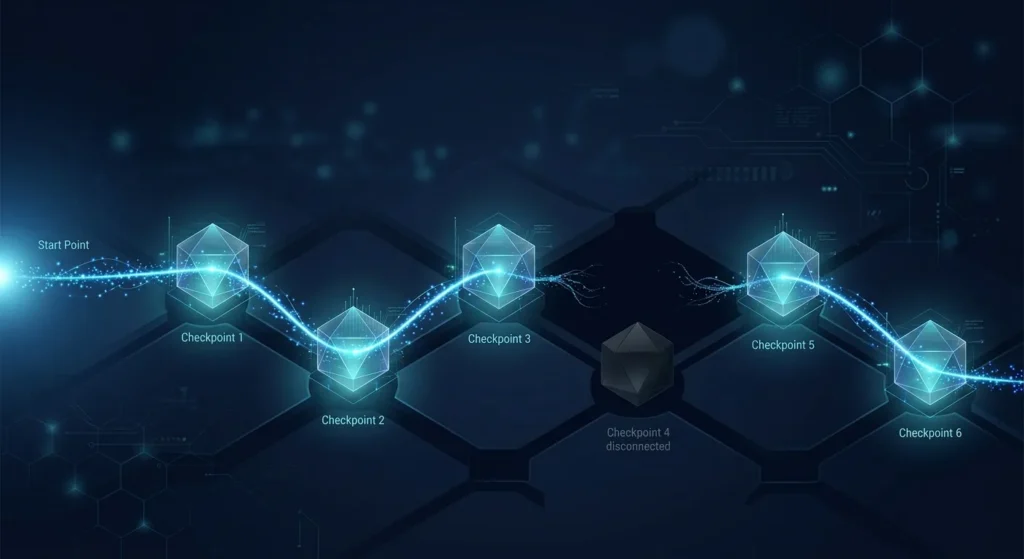
Lead capture is not the end of the funnel. A submitted request can still fail through missing notifications, unclear ownership, slow routing, duplicate records, or weak confirmation. That is a lead conversion problem even when the website reports a successful submission.
Mono’s conversion system website model connects forms with routing, response, and measurement. For businesses using several channels and tools, Digital Growth Infrastructure shows why source context and operational ownership need to remain visible after the click.
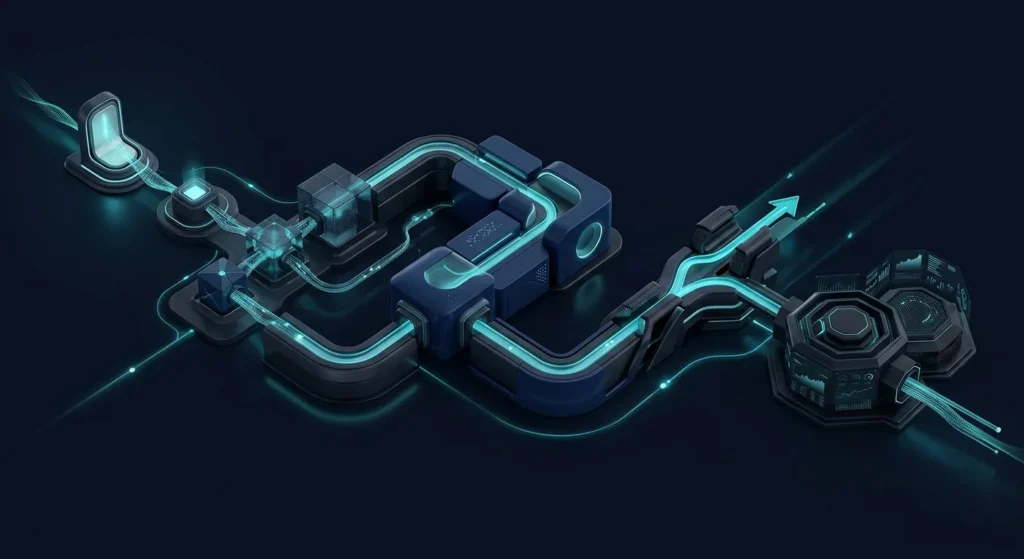
Do not fix every weak metric at once. Rank each issue by evidence, proximity to a meaningful action, frequency, and business impact. A funnel drop-off caused by irrelevant traffic needs a different response from one caused by form errors or delayed follow-up.
The final website conversion funnel analysis should produce a short improvement backlog: observed problem, affected stage, evidence, proposed change, owner, and success signal. That turns conversion bottlenecks into controlled tests instead of redesign opinions.
If several stages are unclear, a System Review can examine the journey, capture, response, and measurement together. The objective is simple: find where qualified intent disappears, fix the strongest supported constraint, and measure the complete path again.
Review the complete path from traffic and page clarity to form submission, routing, and measurement before committing to disconnected fixes or a full redesign.
Get System ReviewView Related WorkArticle FAQ
A website conversion funnel is the sequence a visitor follows from initial arrival through understanding, trust, action, inquiry, and the business response that follows.
Define meaningful funnel stages, verify the tracking behind them, compare progression between stages, and inspect the page or operational experience where intent begins to weaken.
At minimum, measure relevant entry traffic, engagement with priority pages, important CTA actions, lead-form or booking activity, successful submissions, and the handoff into the business response process.
Yes. GA4 Funnel Exploration can define journey steps and show how users progress or fail to progress between them. The funnel still needs to be designed around meaningful business actions rather than arbitrary pageviews.
Not automatically. First identify the strongest supported cause. A focused messaging, UX, form, tracking, performance, or routing correction may solve the problem without requiring a complete redesign.