Necessary
Always activeSupports security, form reliability and remembering your privacy choice. It is not used for advertising.

More traffic cannot repair an unclear journey or a broken lead handoff. Optimize the full path from visitor intent to response and measurement before expanding acquisition.

When revenue slows, buying more traffic feels like the fastest response. Yet additional visitors cannot repair an unclear offer, a hesitant journey, or a broken handoff after a form submission. website optimization revenue comes from improving how existing demand moves from arrival to inquiry, response, and measurement. The goal is not fewer marketing activities; it is a website system capable of making those activities commercially useful.
Traffic amplifies whatever already exists. If visitors meet vague positioning, competing calls to action, or disconnected forms, a larger campaign sends more people through the same weak path. This is Leaky bucket marketing: acquisition receives investment while the decision journey remains unresolved. Start by mapping the intended action on each priority page, then use a conversion rate diagnosis to locate hesitation before purchasing more exposure.
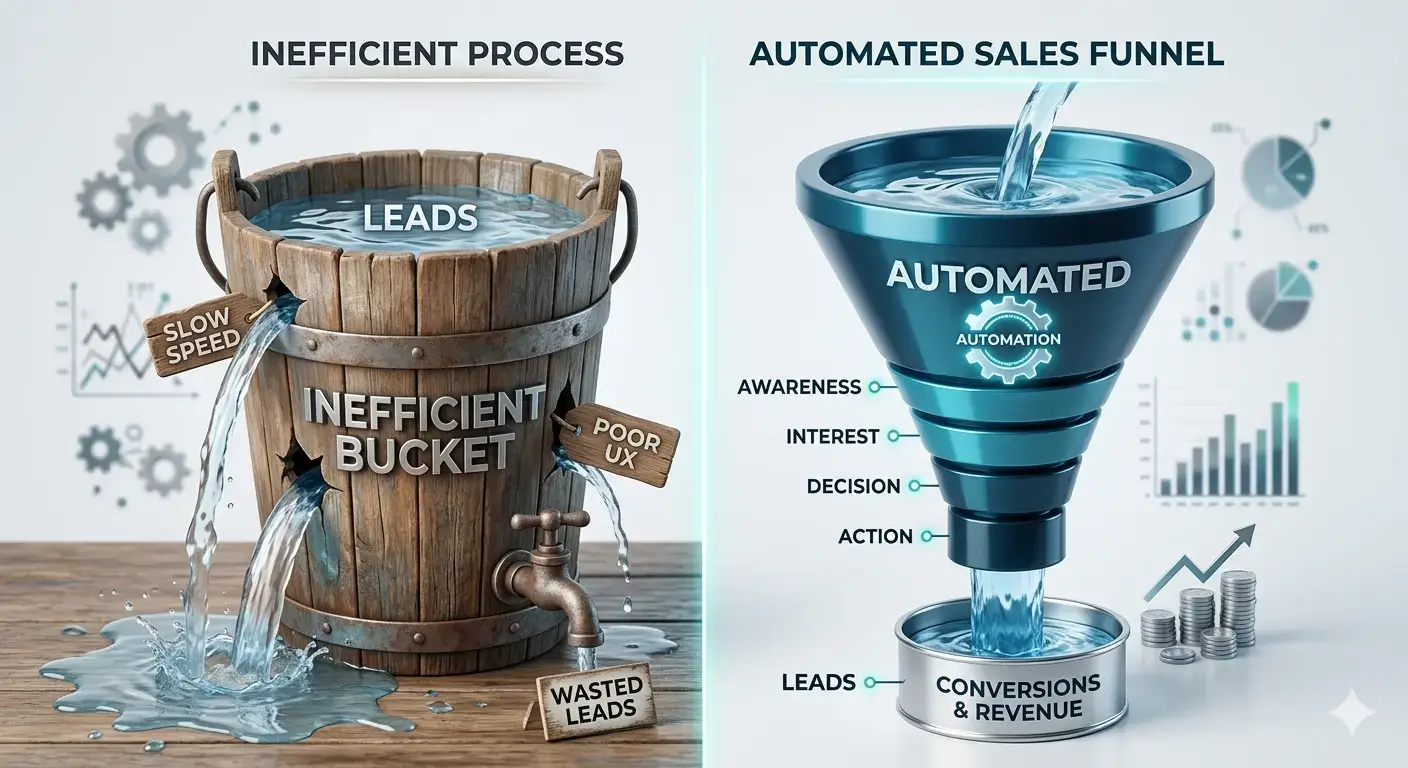
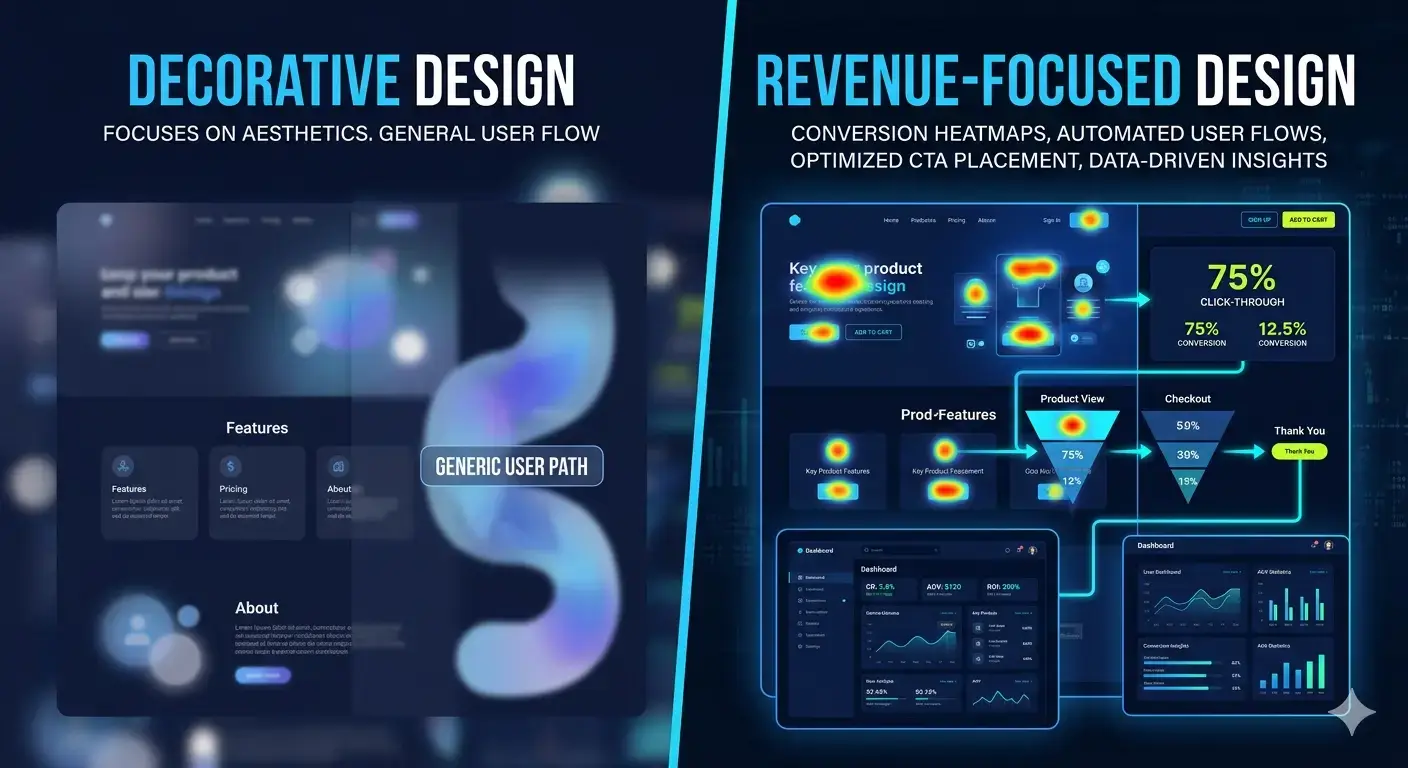
A high-performing page answers a sequence of business questions: Is this offer relevant, can this provider be trusted, what should happen next, and what commitment is required? Revenue-focused design organizes message, proof, and action around that sequence rather than visual novelty. Reviewing the common structural problems that reduce website revenue helps teams distinguish a journey problem from a simple traffic shortage.
Speed matters most where commercial intent is strongest: service pages, mobile navigation, forms, booking steps, and confirmation screens. A homepage score alone cannot reveal whether these moments remain responsive. Google’s Core Web Vitals guidance frames loading, responsiveness, and visual stability as measurable parts of user experience. Connect those measurements to the complete journey through a website performance impact review, not an isolated benchmark.
Prioritization should follow business exposure as well as technical severity. A delay on a low-traffic archive may matter less than an intermittent failure on a paid landing page or inquiry form. Test representative devices and network conditions, record a baseline, and retest after scripts, plugins, or content change. This makes performance work repeatable and keeps technical decisions connected to the customer journey.
Prospects hesitate when claims lack proof, processes feel unpredictable, or interfaces behave inconsistently. Relevant case studies, clear service boundaries, realistic next steps, secure interactions, and dependable performance reduce that uncertainty. A review of website trust signals should examine where reassurance appears, not merely whether a testimonial exists. Strong trust architecture supports B2B website performance ROI because more qualified visitors can evaluate the offer without unnecessary doubt.
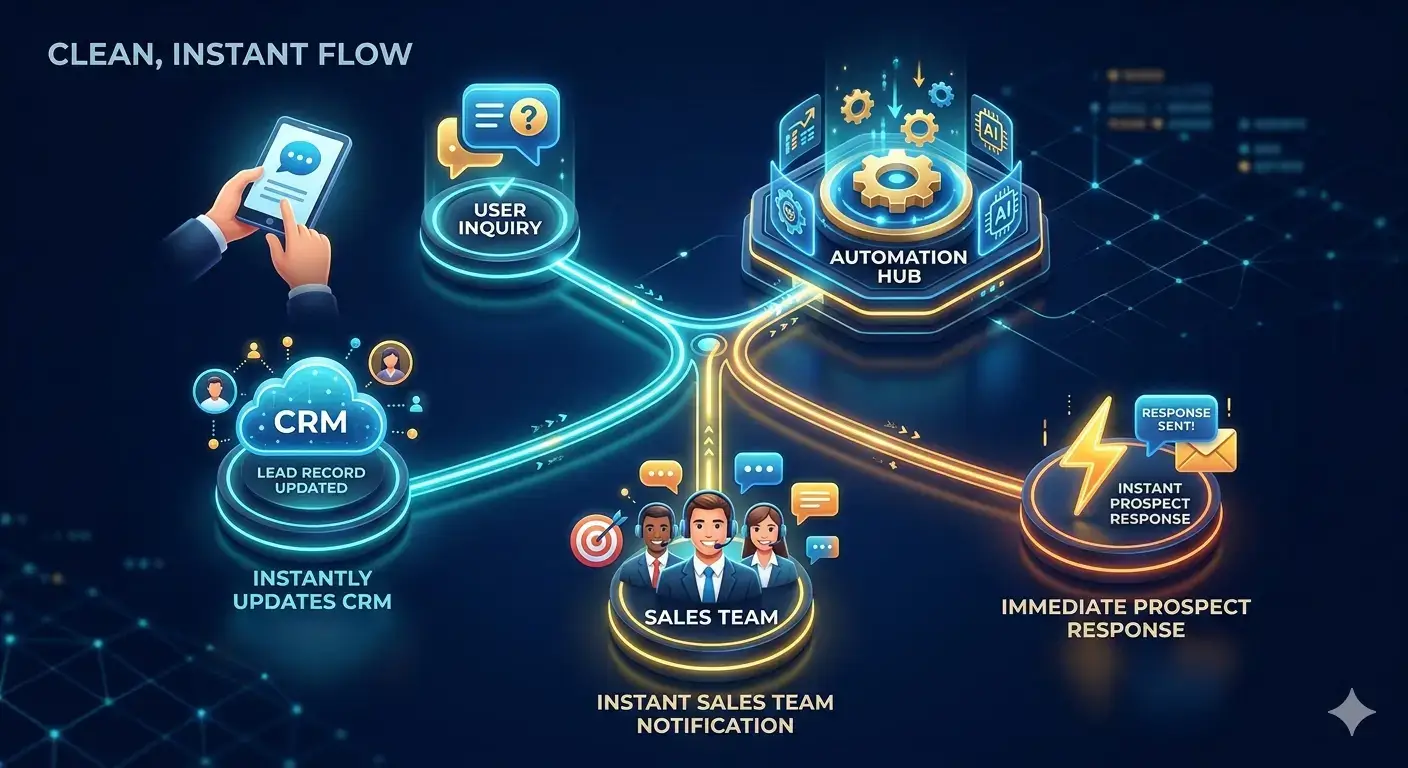
A successful form submission is only the beginning. The prospect needs confirmation, the request needs an owner, and the sales team needs enough context to act. Lead flow systems connect validation, notification, record creation, and follow-up. A practical website form automation sequence makes those responsibilities explicit instead of leaving valuable inquiries in an inbox.
Automated lead routing can assign an inquiry by service, location, urgency, or account type while preserving its source. This improves Sales handling efficiency without pretending every lead should receive the same response. The important design questions are who owns the next step, what information travels with the request, and how the team sees whether the handoff was completed.
Treating website optimization revenue as a system changes what teams measure. Page views and clicks remain useful, but they need links to meaningful events: qualified inquiries, completed bookings, response stages, and known outcomes. A clear website system architecture connects capture, routing, records, and reporting so teams can identify where value is created or lost. For more complex operations, digital growth infrastructure can connect those layers without requiring every tool to be replaced at once.
Measurement also needs operational definitions. Teams should agree on what counts as a qualified inquiry, when ownership begins, which outcomes are recorded, and how duplicate or test submissions are handled. Without shared definitions, dashboards can look complete while sales and marketing interpret the same event differently. A simple event map and named data owner make later optimization decisions more reliable.
Optimization does not replace demand generation. It prepares the destination, capture mechanism, and response path so campaigns have a fair chance to work. Before scaling spend, compare the advertisement promise with the landing-page message, confirm tracking, test the complete form journey, and verify follow-up ownership. Mono’s digital marketing service reflects this connected view by tying acquisition to focused pages, qualified inquiries, and measurement.
The strongest sequence is diagnose, prioritize, repair, measure, and then expand. A Website Conversion System can align message, trust, calls to action, and capture around one decision path. The resulting website optimization revenue model is more durable than treating design, advertising, automation, and reporting as separate projects. It gives leaders a clearer basis for deciding whether the next investment belongs in traffic, experience, infrastructure, or follow-up.
Review the customer journey, lead capture, follow-up, and measurement together so the next investment addresses the real constraint.
Start a System ReviewExplore Growth InfrastructureArticle FAQ
Usually, yes. If high-intent pages, calls to action, forms, or follow-up are weak, additional traffic sends more people through the same inefficient journey. Diagnose and repair the largest constraint before scaling acquisition.
Offer clarity, proof, page performance, calls to action, lead capture, confirmation, routing, follow-up, and measurement work together. A weakness in any handoff can reduce the value of otherwise qualified traffic.
No. Optimization strengthens the destination and response system that marketing depends on. Marketing creates demand and visits; the website must help suitable prospects understand the offer, act, and receive an appropriate response.
Track technical and behavioral indicators alongside business events such as qualified inquiries, completed bookings, response ownership, and known outcomes. The measurement plan should follow the complete journey rather than a single page metric.
It becomes valuable when forms, CRM records, notifications, sales ownership, automation, and reporting must share context. The system should make each handoff explicit and visible without replacing tools that already work well.