Necessary
Always activeSupports security, form reliability and remembering your privacy choice. It is not used for advertising.

Traffic produces revenue only when relevance, decision clarity, lead capture, routing, response, and measurement work as one accountable system.

Website traffic vs conversion becomes a revenue question when a business pays for attention but cannot explain what happens after the visit. Sessions indicate exposure; they do not prove that the right people understood the offer, trusted the business, completed an inquiry, or received a useful response. Instead of treating acquisition and conversion as competing priorities, leaders should examine the connected journey that turns interest into an opportunity.
The first distinction is relevance. More visitors can be valuable when they match the service, location, budget, and buying stage. Poorly matched demand merely increases noise. Mono’s analysis of website traffic that is not converting shows why visibility must be assessed alongside the path visitors are expected to follow.
Acquisition quality can be reviewed without relying on a final conversion rate. Compare the promise in each search result, advertisement, email, or referral with the first page a visitor sees. Then examine whether that page addresses the same problem for the same audience. If the promise changes after the click, extra reach cannot repair the resulting confusion.
A visitor can arrive with genuine intent and still encounter Structural revenue gaps. The opening message may conflict with the source promise, essential proof may be buried, or the call to action may ask for commitment before the reader understands the fit. A conversion rate diagnosis makes these breaks observable rather than reducing the problem to a single percentage.
Effective conversion architecture assigns a purpose to each stage. Landing pages confirm context, service pages answer decision questions, evidence reduces perceived risk, and forms capture only information needed for the next action. The principles behind a high-converting landing page therefore extend beyond layout: the page must continue the expectation that earned the click.
Trust should also appear where uncertainty occurs, not in a distant section added for decoration. Evidence about process, expertise, limitations, and expected next steps helps a reader judge suitability. Calls to action can then match readiness: some visitors need a diagnostic conversation, while others need detailed service information before they are prepared to submit anything.
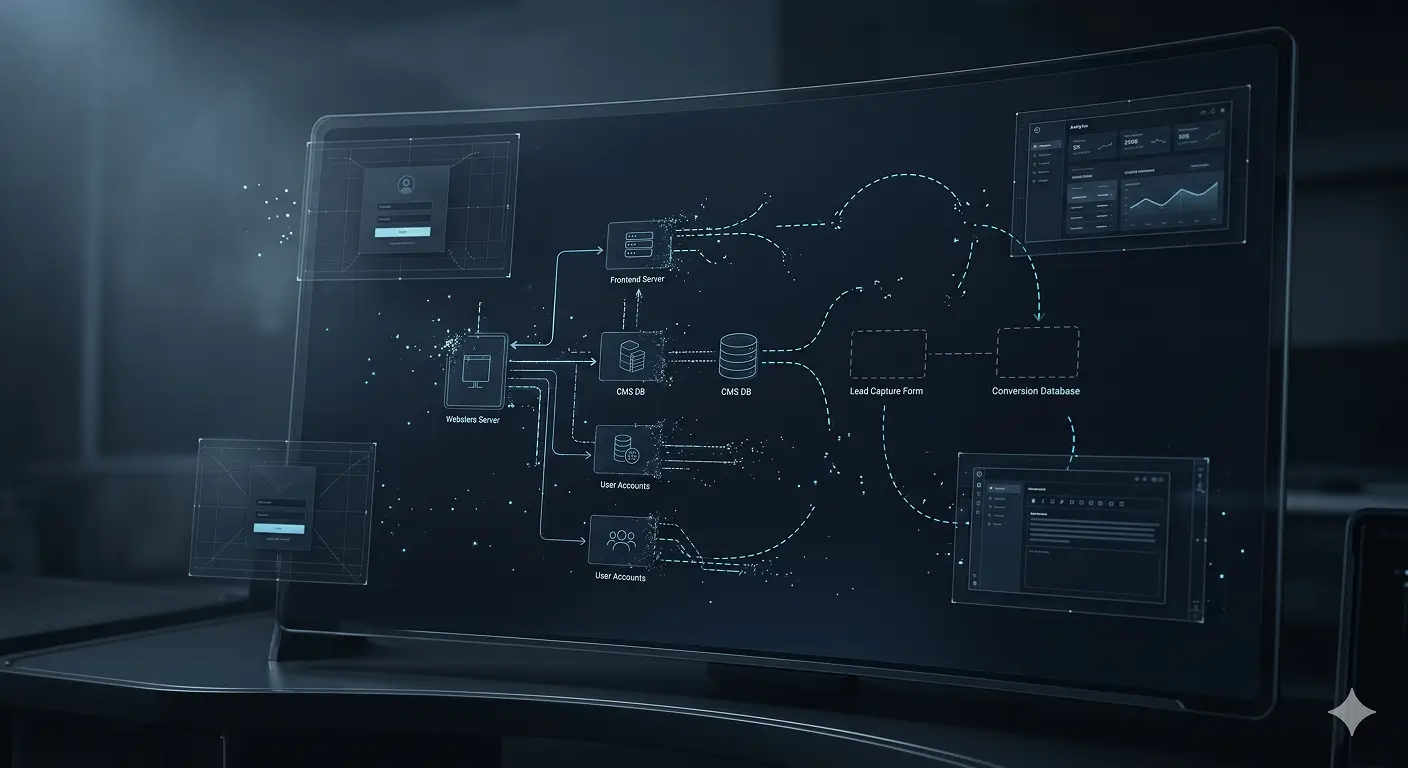
Diagnosis should combine behavior, technical checks, and operational evidence. Review source-to-page alignment, mobile interaction, form completion, analytics events, submission records, and response ownership. A structured website audit can uncover friction hidden by aggregate dashboards. Performance belongs in the review too: Web Vitals guidance separates loading, interactivity, and visual stability so teams can connect technical experience to a specific decision step.
The practical value of website traffic vs conversion appears in a stage-based scorecard. Track qualified entry sessions, engagement with decision content, CTA starts, completed requests, accepted opportunities, and confirmed follow-up. Segment those signals by source, page, device, and offer. This prevents strong and weak journeys from being averaged together and helps the team locate the constraint that deserves attention first.
Form completion is a transition, not the finish line. Useful lead qualification gives the receiving team enough context to judge fit and choose the next step without turning the form into an obstacle. The confirmation should set an honest expectation, while routing should preserve the source, requested service, and relevant answers for the person responsible.
Website automation systems make that sequence dependable when they support a defined process. Conversion flow automation can validate a request, record it, notify an owner, and trigger an appropriate response. Mono’s guide to website form automation explains why the workflow after Submit is part of conversion performance, not an unrelated administrative task.
Lead flow efficiency is visible when accurate context reaches an accountable person without unnecessary copying or delay. Speed alone is not enough, however. Reviewing website lead quality helps separate poor-fit acquisition from weak capture, routing, or sales response.
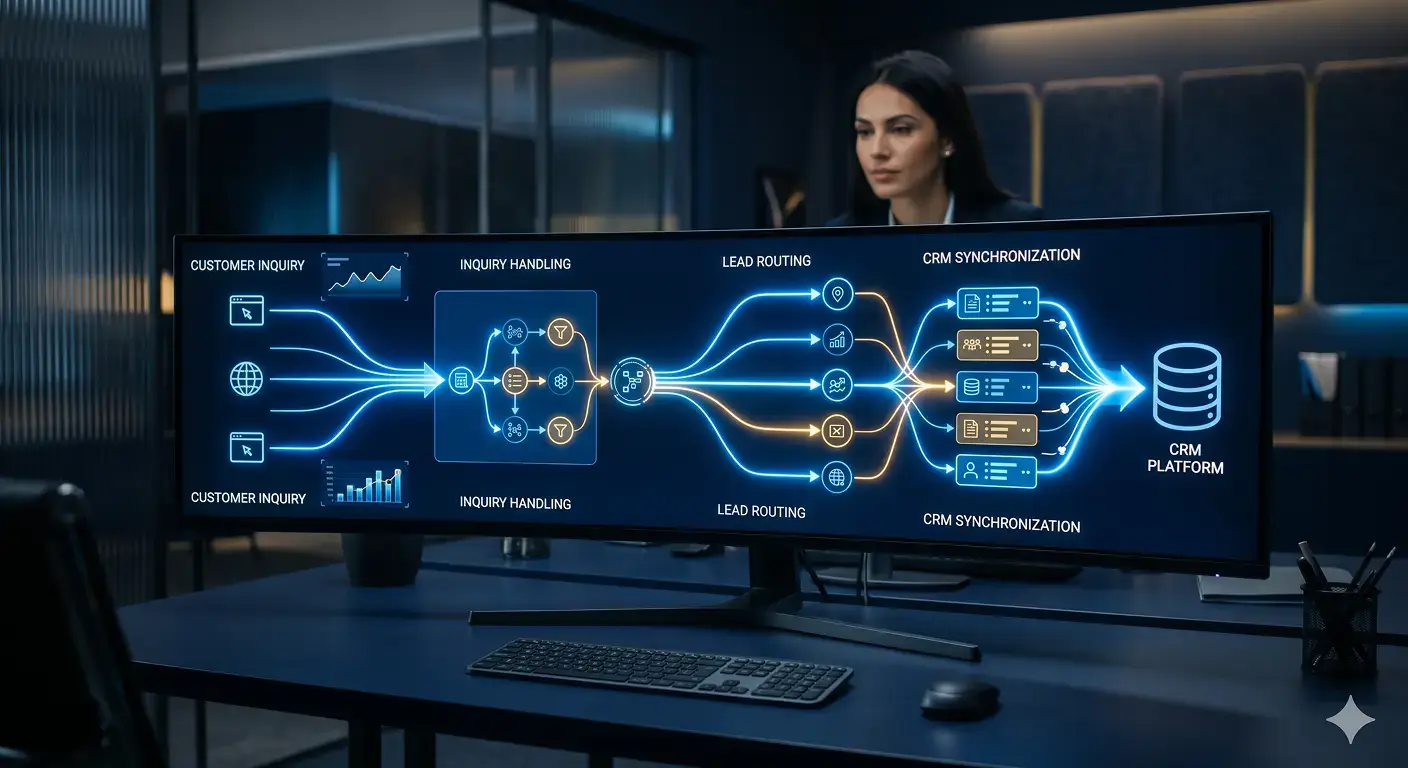
Prioritization should follow evidence. Improve message sequence when visitors cannot identify relevance; strengthen proof when risk remains unresolved; simplify capture when people abandon the request; and define ownership when completed inquiries disappear. Mono’s website revenue optimization framework connects these decisions. A Website Conversion System suits weaknesses in message, trust, CTA, and capture, while a Lead Generation System addresses the wider source-to-response path.
After any change, compare the affected stage with a stable baseline rather than declaring success from more clicks or submissions alone. Check whether the new behavior produces clearer requests, faster ownership, and outcomes the sales team can recognize. This feedback loop prevents isolated page improvements from creating a different bottleneck elsewhere in the customer journey.

The right approach to website traffic vs conversion is therefore sequential. Confirm that demand is relevant, remove friction from the decision path, preserve context after the action, and verify that someone completes the response. When those stages are measurable and owned, further investment in traffic rests on a stronger operating foundation instead of amplifying an unresolved leak.
Review the complete journey from source and message through inquiry capture, routing, response, and measurement.
Start a System ReviewSee Lead Generation SystemArticle FAQ
Start with the current constraint. If relevant visitors cannot understand the offer or complete the next step, improve the journey first. If the journey works but qualified demand is insufficient, acquisition may deserve priority.
Track qualified entries, engagement with decision content, CTA starts, completed inquiries, accepted opportunities, routing, and confirmed follow-up. These stages show where intent is lost.
Traffic may be poorly matched, or the page may have unclear messaging, weak proof, form friction, missing context, or an unreliable response process. Each stage needs separate evidence.
Automation can validate and record the request, confirm receipt, preserve source context, notify an owner, and trigger the next action. It supports a defined process rather than replacing judgment.
Map the journey from source to response, inspect evidence at every handoff, and prioritize the weakest stage that materially prevents qualified visitors from becoming actionable opportunities.