Necessary
Always activeSupports security, form reliability and remembering your privacy choice. It is not used for advertising.

Six structural gaps that turn purchased attention into wasted budget — and the order in which to fix them.

A campaign can do everything right and still return nothing. Targeting is sound, the creative earns clicks, the budget clears, and the dashboard shows movement. Then sales reviews the pipeline and finds almost nothing worth a call. When paid traffic not converting becomes the pattern rather than the exception, the instinct is to change the campaign: new audience, new creative, higher bid. That instinct is expensive, because the campaign is often the only part of the system already doing its job.
Advertising buys attention. It does not buy clarity, speed, trust, or follow-up. Everything that happens after the click belongs to the website, and that is where most media budgets quietly lose their return.
Paid visitors arrive with a fixed expectation created by the ad. They are not browsing. They clicked one specific promise and expect to see it confirmed within seconds. Organic visitors often forgive a slower or vaguer page because they arrived through exploration. Paid visitors do not, and their impatience carries a direct cost, because every one of them was purchased.
The platforms treat this as a measurable factor rather than an opinion. Google Ads calculates Quality Score from three components: expected clickthrough rate, ad relevance, and landing page experience. A weak destination raises the cost of the same demand, so a poor website does not only reduce conversion — it makes every future click more expensive. That is why campaign planning and destination pages belong in the same scope rather than in sequence.
Message match is the first thing a paid visitor checks, usually without realising it. When an ad promises a specific service, price range, or outcome and the destination opens with a generic company introduction, the visitor has to reinterpret the offer. Most will not. The strongest landing page structures repeat the campaign promise on the first screen, then support it with proof before asking for anything.

Speed matters more on paid destinations because there is no patience to draw on. Google’s Core Web Vitals guidance defines a good experience as Largest Contentful Paint within 2.5 seconds, Interaction to Next Paint at 200 milliseconds or less, and Cumulative Layout Shift of 0.1 or lower. Campaign pages loaded with tracking scripts, popups, and heavy hero media routinely miss all three. What LCP, INP and CLS mean for a business site is worth understanding before blaming creative fatigue.
A lead capture form either qualifies or repels. Long forms filter out casual interest but also lose serious buyers. Short forms increase volume while pushing qualification work onto the sales team. The useful question is which fields genuinely change the first response. Reducing drop-off without lowering lead quality is a design decision, not a length decision.
Most paid social traffic is mobile, yet campaign pages are still reviewed on desktop. Sticky headers cover the offer, tap targets sit too close together, keyboards obscure fields, and the action falls below three scrolls of content. Mobile conversion collapses quietly because nobody tests the journey the way the visitor experiences it. Why mobile visitors abandon otherwise good websites usually comes down to friction, not preference.
If conversion tracking fires on a thank-you page that also loads after a newsletter signup, the platform optimises toward the wrong action. When source data is lost at submission, cost per qualified lead cannot be calculated at all — only cost per form. Which metrics actually reflect commercial return separates optimising a campaign from optimising a number.
Paid enquiries decay faster than organic ones because the visitor was comparing options at the moment they clicked. When requests land in a shared inbox without an owner, enquiries leak between capture and sales. Connecting notifications, routing, and automated follow-up after submission protects budget that has already been spent.

Scaling multiplies whatever the system already does. If the destination converts poorly, more budget buys more of the same disappointment at a higher unit cost. Treating paid traffic not converting as a media problem hides the compounding effect: every structural gap is paid for again with each new click, and a weak landing page experience keeps that cost premium in place indefinitely.
There is also a quality dimension that conversion rate alone conceals. More enquiries do not always mean more revenue, and a page tuned purely for submissions can raise volume while reducing paid campaign performance measured at the sales stage.
Work backwards from the enquiry rather than forwards from the ad. Confirm that submissions reach a named owner. Verify that conversion tracking separates qualified actions from incidental ones. Test the page on a mid-range phone over mobile data. Read the ad and the first screen side by side and confirm the message match survives the click. Only then adjust bids, budgets, or audiences.
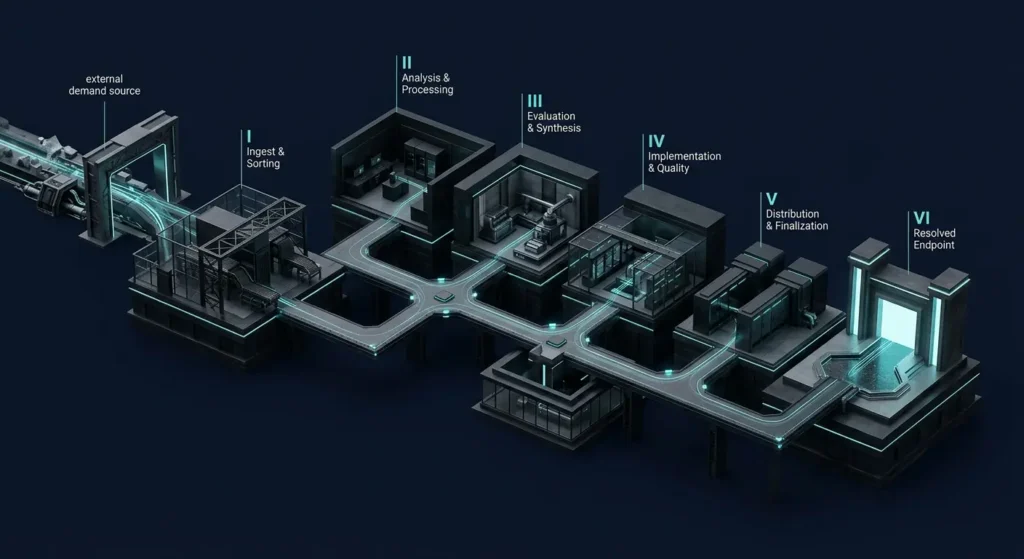
Handled in that order, paid traffic not converting stops being a recurring campaign mystery and becomes a solvable sequence of website decisions. A connected lead generation system — source, page, capture, routing, response, and measurement — is what turns purchased attention into opportunities the team can actually act on.
Share the campaign, the landing page and the current enquiry route. Mono will identify whether the first priority is message match, page performance, form design, tracking or lead ownership — then recommend the smallest useful fix.
Explore Lead SystemGet System ReviewArticle FAQ
Long enough to collect meaningful conversion volume, not just clicks. If several hundred qualified-intent sessions produce almost no enquiries while the ad's clickthrough rate is healthy, the friction is on the page, not in the auction.
Either can work. A dedicated page is preferable when the offer, audience or language differs from the main site. An existing service page is fine when it already opens with the same promise the ad makes and supports the same action.
Not directly, but the destination is one input into how platforms assess ad quality, which influences what the same placement costs. The more reliable gain is a lower cost per useful enquiry, since the same spend produces more usable outcomes.
Usually because the platform counts a technical event while the business counts a usable opportunity. Duplicate triggers, thank-you pages shared across multiple actions, and lost source parameters all inflate the platform figure.
In most cases, yes. Message alignment, form fields, mobile layout, event configuration and routing are typically page-level and workflow-level changes rather than architectural ones.