Necessary
Always activeSupports security, form reliability and remembering your privacy choice. It is not used for advertising.

Conversion depends on a connected journey from relevance and trust through usable action, reliable capture, and an owned response.
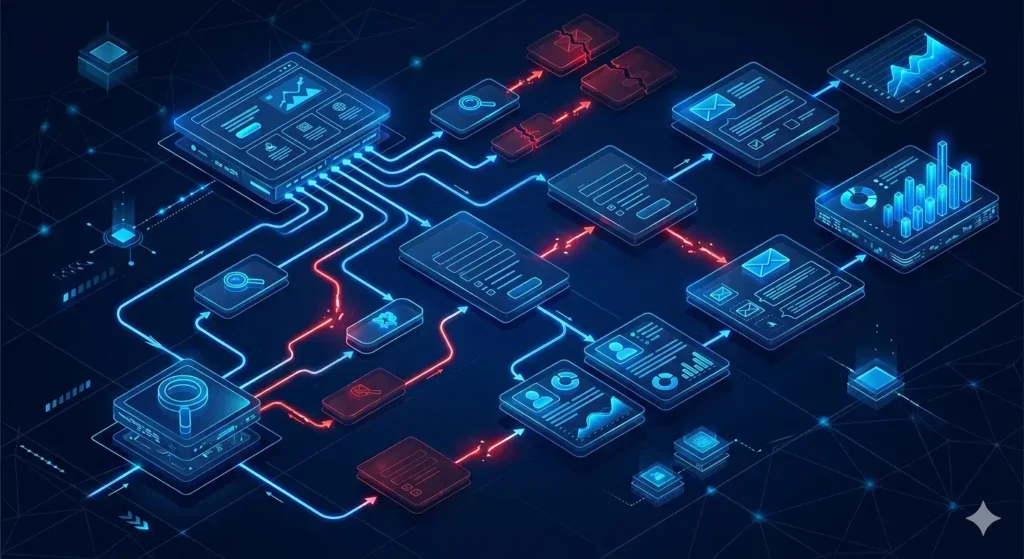
Website conversion issues are rarely caused by one weak button. They develop when the journey fails to answer the visitor’s questions in the order required for a confident decision. Message, evidence, interaction, capture, and response must support one another; improving only the final call to action leaves earlier uncertainty intact.
Trace a real journey from search or campaign promise to the business response. At each stage, ask what the visitor needs to understand, what risk they perceive, and what appropriate commitment comes next. A formal conversion rate diagnosis separates evidence from assumptions before copy, design, or technology changes are selected.
1. The first screen does not establish relevance. Broad claims force people to interpret the offer for themselves. State the service category, audience, problem, and useful outcome in specific language. Then make the next step proportional to intent. A conversion-focused website guides; it does not demand commitment before the visitor understands the context.
2. Information appears in the wrong order. The conversion flow should move from orientation to explanation, evidence, risk reduction, and action. Strong visual hierarchy supports that sequence by directing attention to the information that matters now rather than making every element compete.
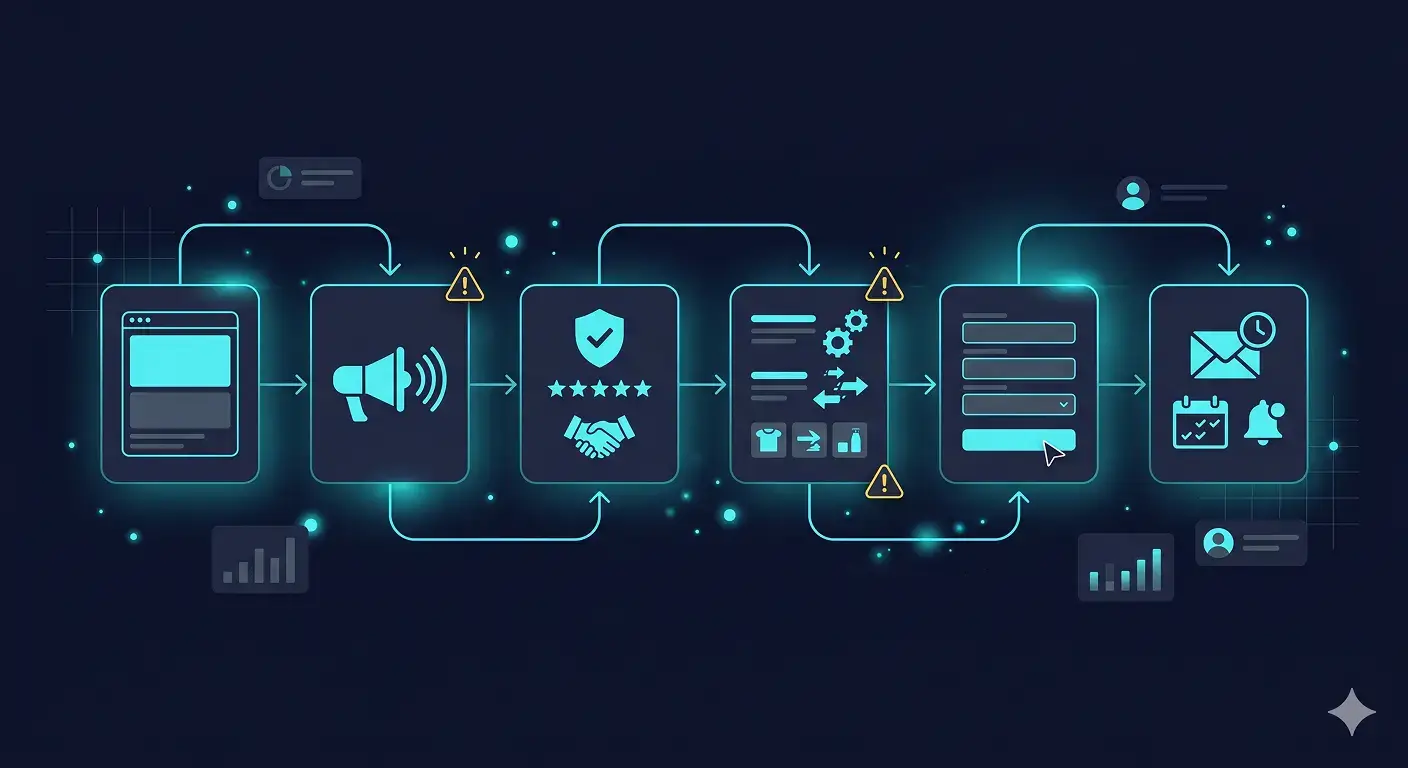
3. Trust is generic or distant. Place evidence near the claim it supports. Explain process, responsibilities, relevant experience, constraints, and what happens after contact. The current website trust signal examples show why credibility is structural. A logo strip at the bottom cannot repair uncertainty beside a form.
4. The form creates work without progress. Ask only for information needed at this stage, use clear labels, preserve entered data after errors, and state the response expectation. Slow website issues can make interaction unreliable even when the surrounding page appears complete. Test keyboards, screen readers, mobile spacing, validation, delivery, and confirmation.
5. The enquiry loses context. CRM integration should preserve source, service interest, consent, and useful answers, then assign a responsible owner. Customer handling becomes inconsistent when every submission reaches a shared inbox without priority or status. The form is not successful merely because WordPress stored a record.

6. Response depends on manual attention. Lead flow automation can confirm receipt, route the request, create a task, and record exceptions. A website automation system should protect a defined human process, not replace judgment or hide unclear ownership. Mono’s automation overview provides the relevant system context.
7. Optimization stops at surface metrics. Website performance optimization matters because loading and responsiveness protect intent; Google documents these dimensions through Core Web Vitals. Yet speed cannot resolve weak positioning, missing evidence, or failed follow-up. Measure the complete journey instead of treating one score as the business outcome.
Combine analytics with observation. Review entry pages, scroll and action events, form starts, validation errors, completed submissions, lead quality, response ownership, and outcome. Interview the team receiving requests because operational workarounds often remain absent from dashboards. Compare common paths rather than averaging visitors with different intent.
Test failure states deliberately. Submit invalid information, interrupt the network, use an unavailable appointment, and confirm what happens when email or an integration fails. Error messages should explain recovery without exposing technical details. Internal systems should record a safe exception that a named person can resolve.
Review privacy and accessibility as conversion requirements. Collect only necessary information, protect sensitive details, provide meaningful labels, support keyboard use, and associate errors with fields. These practices reduce avoidable friction while improving the quality and safety of the captured request.
Look for compounded faults. A slightly unclear headline, distant proof, long form, and delayed confirmation may each appear tolerable in isolation yet collectively stop action. Mono’s conversion optimization improvements offer focused checks, while the analysis of systems versus disconnected pages helps diagnose wider architecture.

Rank constraints by customer impact, frequency, business consequence, evidence quality, and implementation risk. Fix broken actions and severe trust gaps before decorative refinements. A focused release may restructure one service journey, simplify its form, and connect response ownership without requiring an immediate full rebuild.
Document the baseline before changing it. For website conversion issues, useful evidence includes qualified enquiry volume, completion errors, response ownership, and the stage where suitable prospects stop. Compare like periods and traffic sources, and avoid presenting correlation as proof when campaign mix or demand has also changed.
Use the Website Conversion System when traffic exists but the decision path is weak, or examine a lead generation website system when capture and handling need to operate together. Define acceptance criteria, verify the change, and continue monitoring after launch.
Website conversion issues become manageable when every stage has a purpose, observable outcome, and owner. Build clarity before persuasion, earn trust before commitment, make action usable, and ensure the organisation can respond with the context the visitor has already provided.
Review message, evidence, interaction, capture, and response before assuming the problem is traffic.
Request a System ReviewSee Conversion SolutionsArticle FAQ
Visitors need relevance, explanation, evidence, risk reduction, and a suitable next step before a call to action can feel appropriate.
Design helps when it clarifies hierarchy and interaction, but it cannot replace a specific offer, credible evidence, usable capture, or dependable response.
Test labels, keyboard and mobile use, validation, error recovery, delivery, confirmation, captured context, ownership, and integration failure states.
It preserves relevant enquiry context, creates accountability, supports status tracking, and reduces repeated questioning after submission.
No. A focused repair to one priority journey, trust gap, form, or response process may produce the evidence needed before a wider rebuild.