Necessary
Always activeSupports security, form reliability and remembering your privacy choice. It is not used for advertising.

A campaign can win the click and still lose the visitor when the landing page changes the promise, audience, proof, or expected next action.

Paid traffic can be well targeted, the ad can earn the click, and the offer can still lose momentum within seconds. The reason is often landing page message match: the degree to which the page continues the promise, context, and expected next step created by the ad. When that continuity breaks, visitors must stop and reinterpret what they just clicked.
That problem is narrower than general website conversion. A page may be credible, fast, and visually polished yet still feel wrong for the visitor who arrived from a specific campaign. Mono’s conversion rate diagnosis framework starts with clarity because confusion early in the journey makes every later conversion element work harder.
Strong landing page message match does not require repeating the ad word for word. It means preserving the same intent across the transition: audience, problem, offer, proof, and action. Google Ads advises that landing pages should closely match the ad and keywords, including the call to action, because visitors expect to find what the ad led them to expect.
For a service business, this continuity is part of the wider Lead Generation System: traffic should move into a focused landing experience, qualified capture, routing, response, and measurement rather than ending at the click.
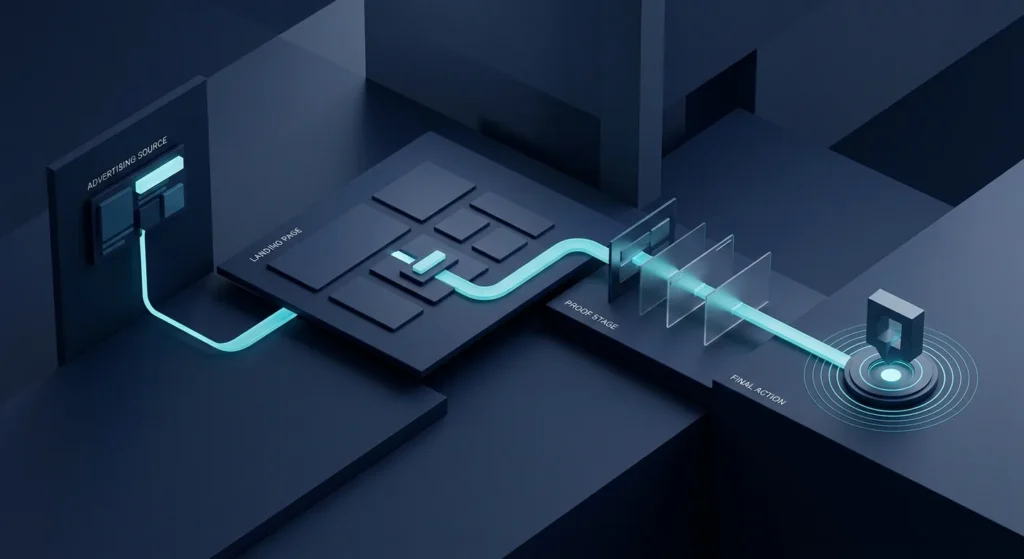
An ad might promise a “B2B website conversion audit,” while the landing page opens with “Digital solutions for ambitious businesses.” Both can be technically true, but the second forces the visitor to translate the offer again.
This creates conversion friction at the exact moment when recognition should be strongest. The landing headline should confirm that the visitor reached the right place before expanding the proposition. Mono’s guidance on website conversion issues makes the same structural point: vague first-screen messaging weakens the path before the CTA is even considered.
Campaign targeting creates a specific user intent. If the ad addresses a clinic owner, SaaS buyer, or tourism operator but the destination page immediately returns to generic company messaging, relevance falls and ad relevance cannot compensate for a generic post-click experience.
This is where visual hierarchy matters as much as copy. The audience-specific message, supporting proof, and next action should dominate the first screen instead of competing with unrelated services or navigation choices.
A campaign may advertise a review, consultation, demo, quote, or fixed package. If the landing page shifts to a different commitment, the visitor has to reassess the decision.
Good call-to-action alignment keeps the job consistent. If the ad promises a review, the page should explain that review and make requesting it obvious. The transition should feel like the next step in the same decision, not the start of a new sales conversation.
Generic testimonials and company credentials can build trust, yet paid visitors need proof that supports the specific campaign promise. A landing page for website conversion should prioritize relevant case evidence, process clarity, and the mechanism behind the offer.
That is why a Website Conversion System treats message, trust, CTA, form, and measurement as connected layers. The page should reduce uncertainty in the order created by the campaign, not simply reuse homepage proof blocks.
Weak campaign tracking makes message problems harder to diagnose. Teams may know which ad generated sessions but not which promise, page variation, or lead path produced useful opportunities.
Google Analytics documents how campaign parameters can preserve source and campaign context in reporting through UTM parameters. That data is more useful when paired with landing-page actions and lead quality, not treated as a traffic report alone. Mono’s Digital Growth Infrastructure follows the same principle by connecting demand sources, website journeys, capture, ownership, and reporting.
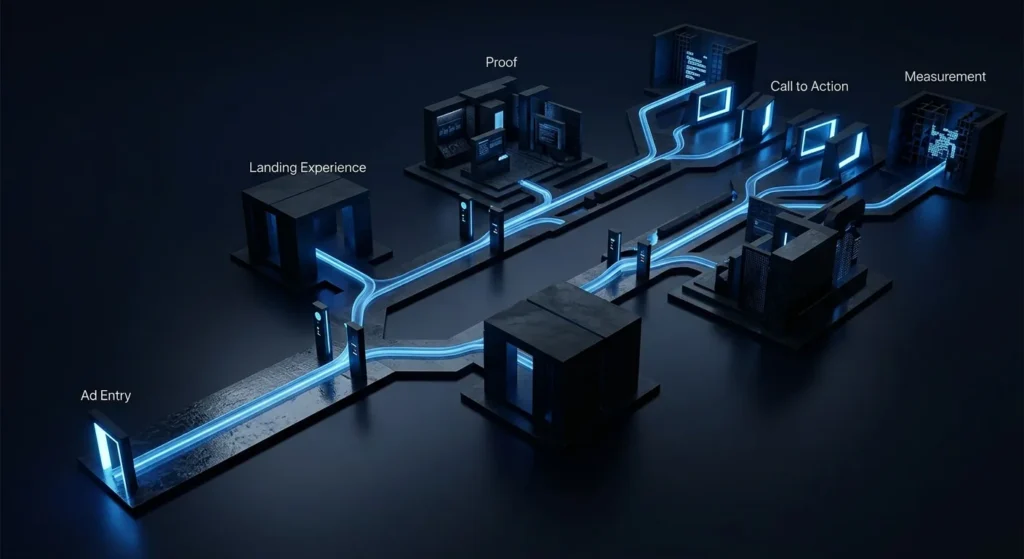
Start by mapping each active ad group or creative to the exact promise it makes. Then inspect the destination page in sequence: headline, supporting copy, proof, CTA, form, confirmation, and follow-up. Different user intent should lead to different page emphasis when one generic experience would dilute the promise.
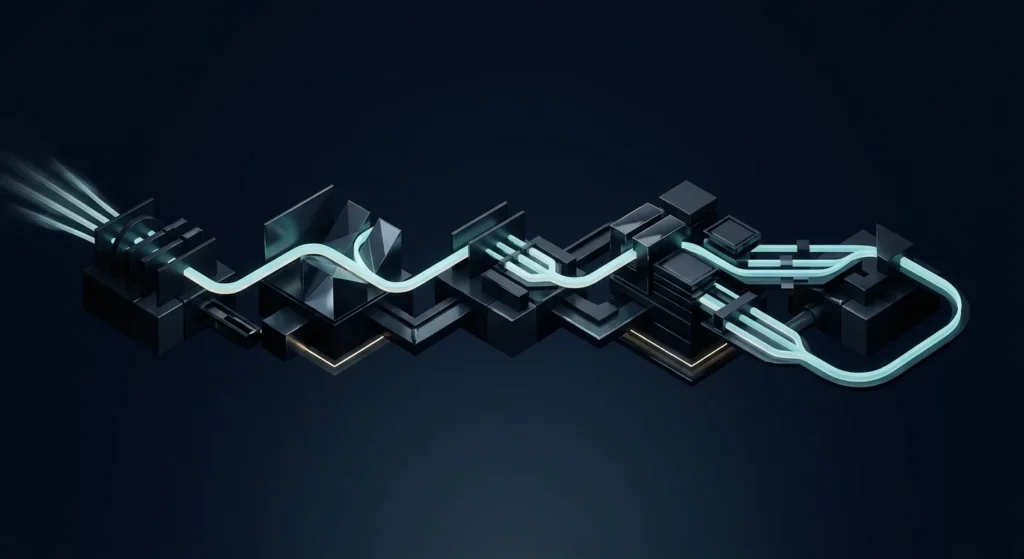
A focused Digital Marketing workflow should connect campaign intent with landing-page strategy and measurement. Many problems can also be resolved by improving the high-converting landing page itself rather than redesigning the whole site.
Use landing page message match as an operating rule, not a copywriting trick. When campaign language changes, review the destination. When the destination changes, verify the ads pointing to it. When multiple audiences need different promises, separate their journeys using a clear website structure strategy instead of sending everyone to one generic page. This also makes campaign tracking easier to interpret because each route has a clearer purpose.
The goal is continuity from attention to action. If paid traffic is arriving but qualified inquiries are weak, a Website Conversion System review can help identify whether the break is in the message, proof, CTA, capture path, or the handoff after submission.
If campaigns are producing clicks but not enough qualified inquiries, diagnose the message, proof, CTA, capture, and measurement path before increasing spend.
Explore Conversion SystemRequest Conversion ReviewArticle FAQ
Message match means the destination page continues the audience, promise, offer, and expected action established by the ad rather than forcing visitors to reinterpret what they clicked.
Because the post-click experience may change the headline, audience, offer, proof, or CTA. The ad can attract the right visitor while the destination page loses that intent.
No. Separate pages are useful when audiences, offers, objections, or intended actions differ enough that one generic page cannot serve them clearly.
Track meaningful landing-page actions, form progression, completed inquiries, campaign/source context, lead quality, and what happens after the request reaches the business.
Usually not. Focused changes to the headline, supporting message, proof, CTA, form, or campaign routing can often repair the path without rebuilding the entire website.