Necessary
Always activeSupports security, form reliability and remembering your privacy choice. It is not used for advertising.

Your website can look finished and still leave your team doing the work it should be absorbing — the difference is structural, not visual.

Most websites are judged on how they look and how fast they load. Neither test explains why some sites quietly generate qualified work while others produce activity nobody can act on. The difference is usually website system architecture: how the site connects to the tools, workflows and people that handle what it captures. A page can be well designed and still be structurally isolated from the business it represents.
The term describes the structural relationship between the public interface and the operational layer behind it: where a lead goes after submission, which system owns the record, what triggers a response, and how the result becomes visible in reporting.
A brochure website has almost none of this. It presents services, collects an email, and stops. Everything after that point is a human task. That model works while volume is low and one person handles every inquiry. It fails when the business grows, because each new lead adds work rather than absorbing it. The distinction between pages and systems is the difference between a site that displays the business and one that runs part of it.

The cost of a disconnected site rarely appears as a single failure. It appears as a pattern: inquiries copied by hand into a spreadsheet, bookings confirmed manually, source data lost between the ad click and the sales conversation, and follow-up that depends on someone remembering.
Each of these is small. Together they form the operational bottlenecks that make growth feel expensive. They also stretch lead response time, which matters because someone who submits a form is usually still comparing providers. Deciding what should happen after a form is submitted and where each inquiry should be routed is architecture work, not admin work.
A working website system architecture is not one large platform. It is a small number of layers that agree on the same data:
These layers are what turn separate subscriptions into connected business systems. Some are simple data links, described in more detail in when a site needs to talk to other platforms; others are rule-based workflow automation. Work that requires judgment, such as qualifying or answering an enquiry before a person sees it, sits closer to AI automation.
Revenue loss is usually blamed on traffic or campaign quality. More often it starts inside the structure: a checkout that opens in a second tool, a booking path with no confirmation, an inquiry that never reaches the person who could close it. Disconnected tools create duplicate records and reports that show visits without showing outcomes.
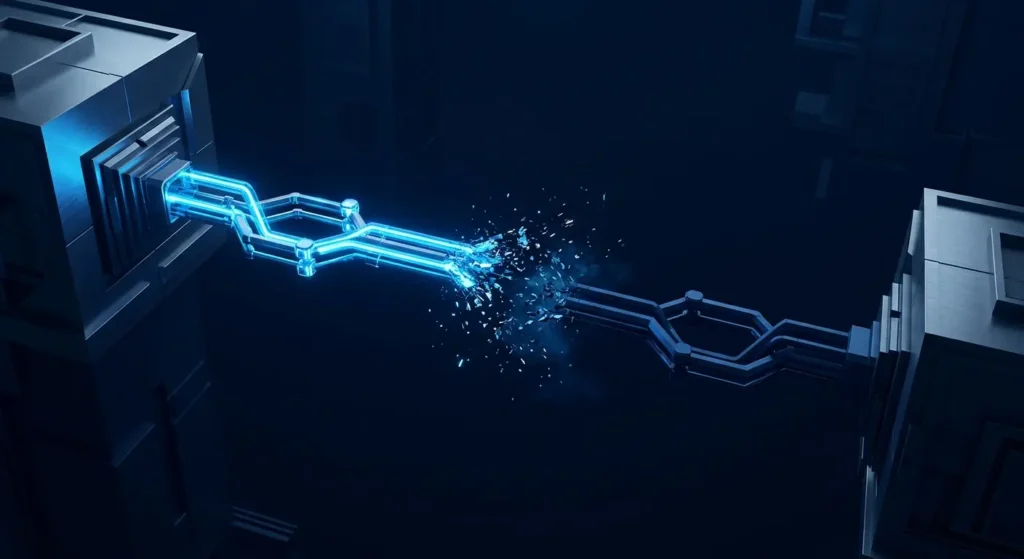
That last point is the expensive one. If the handoff between systems is invisible, the business cannot tell which pages earn money and which only earn attention — which is why measuring return properly has to start with the connections, not the traffic chart.
Structure is not only an internal concern. Google discovers most pages by following links from pages it already knows, as described in its documentation on how Search works, so a site whose important pages are buried or orphaned makes itself harder to index. Experience is measurable in the same way: Core Web Vitals are field metrics collected from real users rather than a lab score, which is why a site can pass a synthetic test and still frustrate visitors. A structured performance review usually finds the cause in architecture rather than in a single slow asset.
Most teams respond to these symptoms with a redesign, which changes the surface and leaves the structure intact. A more useful starting point is to trace one real request end to end: where it arrives, what happens automatically, where a person intervenes, and how long each step takes.
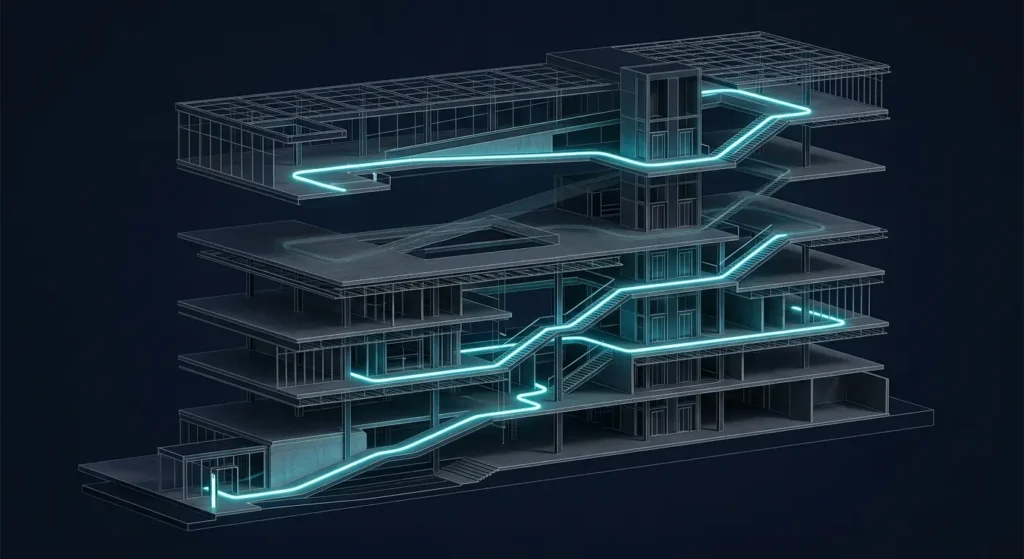
That single exercise usually reveals whether the problem is a page, a missing connection, or the absence of any owner for a step. It also shows what scalable website infrastructure would need to handle — and it is the same logic behind digital growth infrastructure, where capture, operations and reporting are treated as one flow instead of separate purchases.
A brochure site can be beautiful and still leave the business doing the work its website should absorb. Sound website system architecture does not make the site bigger; it makes the business behind it faster, more consistent and easier to measure. That is what separates a site that presents a company from one that helps operate it.
Share your website and describe the step your team still handles manually — the inquiry that gets retyped, the booking that needs confirming, the report nobody trusts. Mono will identify the structural gap causing it and the smallest useful place to start.
Get a System ReviewExplore Website Conversion SystemArticle FAQ
It is how a website is wired to everything that happens after a visitor acts — where the inquiry goes, which tool stores it, what responds automatically, and how the outcome shows up in reporting. It describes connections and ownership, not visual design.
A brochure site presents information and hands every following step to a person. A system-based site completes part of the process itself: it records the request with its source, routes it to an owner, confirms it, and makes the result measurable.
It depends on where the manual work sits, not on company size. If one person can comfortably handle every inquiry, connections add little. Once handoffs are being missed, delayed, or retyped, structure is already the constraint.
Usually the workflow causing the most friction today — most often lead capture into a CRM, or booking confirmation into a calendar. Connecting one path properly is more valuable than several shallow integrations.
Often, yes. Many structural gaps are missing connections, absent routing rules, or untracked actions rather than platform limitations. A diagnosis should establish what already works before any rebuild is considered.