Necessary
Always activeSupports security, form reliability and remembering your privacy choice. It is not used for advertising.

A redesign creates business value when it diagnoses the current system, preserves proven assets, and reconnects content, user journeys, technology, and lead handling.

A new interface can make an outdated site feel current, but appearance alone cannot repair a confusing journey, weak proof, or broken lead handling. A useful website redesign strategy starts by identifying why the present site underperforms, then decides what to preserve, repair, and rebuild. That turns redesign from a subjective visual exercise into a business decision grounded in user behaviour, content, technology, and measurable actions.
Begin with a structured review of priority pages and complete user journeys. Look for unclear propositions, mismatched search intent, buried proof, competing calls to action, difficult forms, mobile friction, and unreliable follow-up. A formal conversion rate diagnosis helps separate symptoms from causes. Analytics, search data, form submissions, sales feedback, and direct usability checks should inform the brief rather than decorate it after decisions have been made.
This diagnosis should name the most important website conversion problems and connect each one to a desired outcome. If visitors cannot understand the offer, more visual polish will not create clarity. If they hesitate before submitting a form, inspect proof, expectations, field design, and confirmation states. The principles behind visual hierarchy and website trust are especially useful when attention is moving in the wrong order. Record the baseline before work begins so launch checks can distinguish genuine improvement from changes that merely shift problems to another page or workflow.
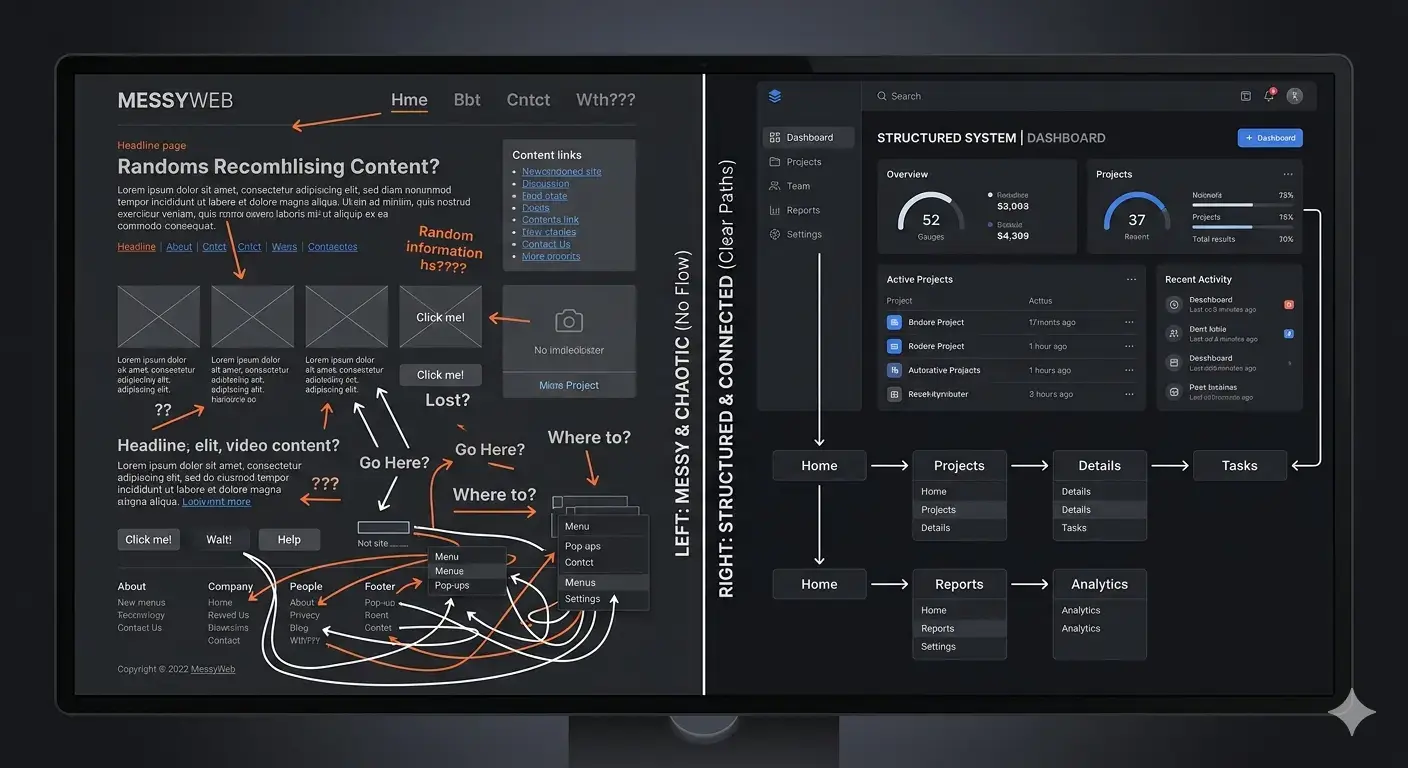
Redesign does not mean deleting everything. Inventory pages, rankings, backlinks, internal links, high-intent content, analytics events, forms, integrations, and reusable components before changing templates. A disciplined website redesign content strategy preserves accurate material and established search intent while fixing gaps, duplication, and weak sequencing. Existing URLs should remain stable unless a separately planned migration provides a compelling reason to change them.
Map the role of every important page within a broader website structure strategy. The goal is not a larger sitemap; it is a clearer route from entry to understanding, confidence, and action. Mono’s explanation of systems versus disconnected pages shows why navigation, content hierarchy, and next steps must work together. Retain useful equity, but remove structural ambiguity.
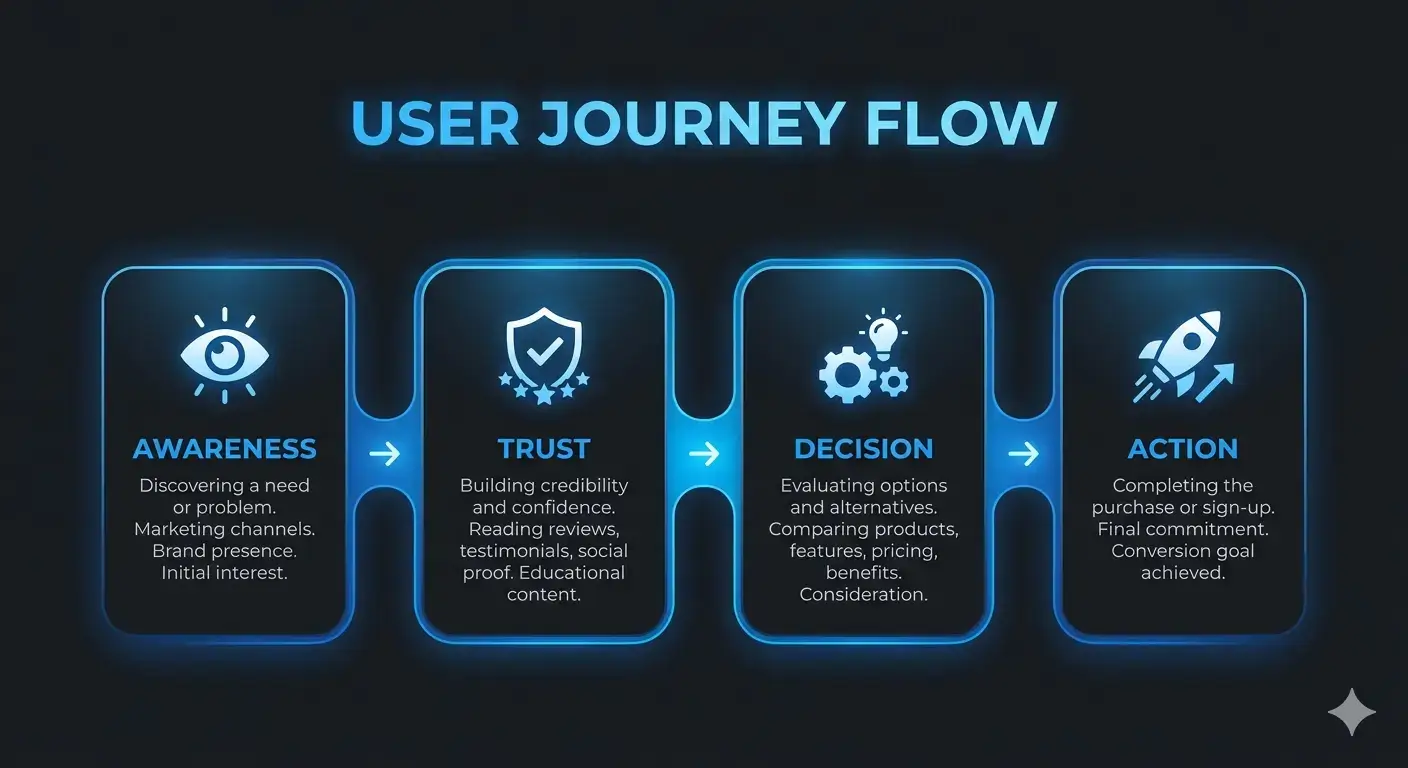
A conversion-focused website gives each page and section a defined job. Entry pages align with visitor intent. Service pages explain relevance and process. Proof appears near moments of doubt. Calls to action match readiness rather than demanding the same commitment from everyone. Review practical website trust signal examples and the underlying conversion psychology principles before approving wireframes.
This journey becomes the basis for a lead conversion strategy: what happens before a form, which information is captured, who receives it, how quickly the visitor gets confirmation, and how the team follows up. The route should be understandable without relying on aggressive prompts. When traffic is not converting, the missing connection is often between message, trust, action, and response.
Templates are only one layer of website system architecture. Hosting, content management, tracking, consent, forms, CRM connections, notifications, and ownership rules influence whether the experience remains dependable after launch. Define these requirements before development so the visible journey and the operational workflow do not diverge. A redesign should reduce manual gaps, not add attractive screens above them.
Performance also needs evidence. Review representative devices and high-value journeys, not only a homepage score. Google’s Web Vitals guidance separates loading, interactivity, and visual stability, while Mono’s review of common website performance issues connects technical symptoms to continuity and trust. Set practical acceptance checks for navigation, forms, tracking, accessibility, and responsive behaviour.

Translate findings into prioritized requirements before choosing visual directions. A practical sequence is:
Testing should cover comprehension and behaviour, not personal taste. Ask whether users can identify the offer, find relevant evidence, predict what happens after an action, and recover from errors. The most damaging website UX mistakes often appear in labels, feedback states, mobile layouts, or form details that static design reviews overlook.
The strongest website redesign strategy protects established value while changing the parts that obstruct understanding, trust, and action. It gives content, design, development, SEO, and operations a shared model of the customer journey. That alignment matters more than novelty because it creates a site the business can maintain, measure, and improve.
Before approving new screens, return to the diagnosis: which problem does this decision solve, what evidence supports it, and how will the result be checked? If the team cannot answer, the project is drifting back toward decoration. A complete website redesign strategy makes those decisions explicit and turns the redesign into a controlled system upgrade.
Review the current journey, technical constraints, and lead flow before committing budget to a new interface.
Start a System ReviewView Web DevelopmentArticle FAQ
Review priority user journeys, search performance, content, conversion paths, trust signals, forms, analytics, integrations, technical performance, and the operational process after a lead takes action.
Keep URLs, content, and internal links that still provide search, referral, or user value. Change them only through a deliberate migration plan with clear evidence and appropriate redirect mapping.
A visual refresh changes presentation. A system-led redesign also improves information architecture, messaging, decision paths, lead capture, integrations, measurement, and ownership.
Plan conversion paths before high-fidelity design. They influence page roles, content order, proof, calls to action, forms, confirmation states, and follow-up workflows.
Test representative journeys on relevant devices, then verify redirects, forms, feedback states, tracking, accessibility, responsive behaviour, performance, integrations, and team ownership.