Necessary
Always activeSupports security, form reliability and remembering your privacy choice. It is not used for advertising.

Mono rebuilt HGNS’s law firm website around a structured consultation flow, combining clearer legal-service content with WooCommerce booking, payments and automated email communication.
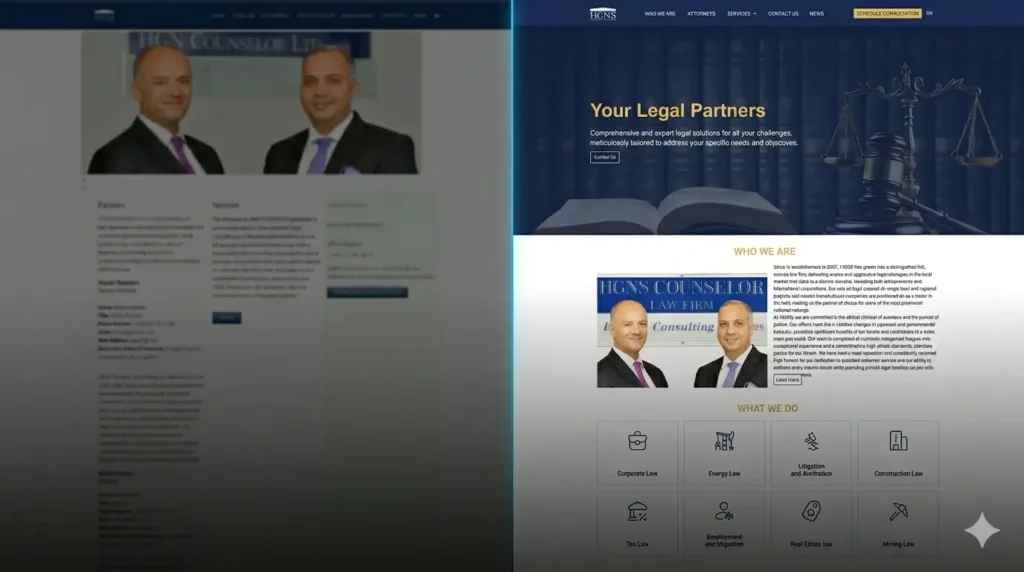
HGNS already had an established law firm presence, but its website was not supporting one of the most important user journeys: moving a prospective client from understanding the firm and its legal services to arranging a consultation.
The project therefore required more than a visual refresh. Mono rebuilt the website structure and connected it to a functional consultation workflow so that legal-service discovery, lawyer selection, scheduling, payment and communication could operate as parts of the same customer journey.
The previous HGNS website contained the necessary company and legal-service information, but the experience was fragmented. Service and attorney content lacked clear structure, the path from information to action was weak, and the existing appointment functionality failed at the point where a visitor attempted to book.
That booking failure was particularly important because consultation was the website’s primary commercial action. A visitor could reach the appointment interface and still encounter an error instead of completing the next step.
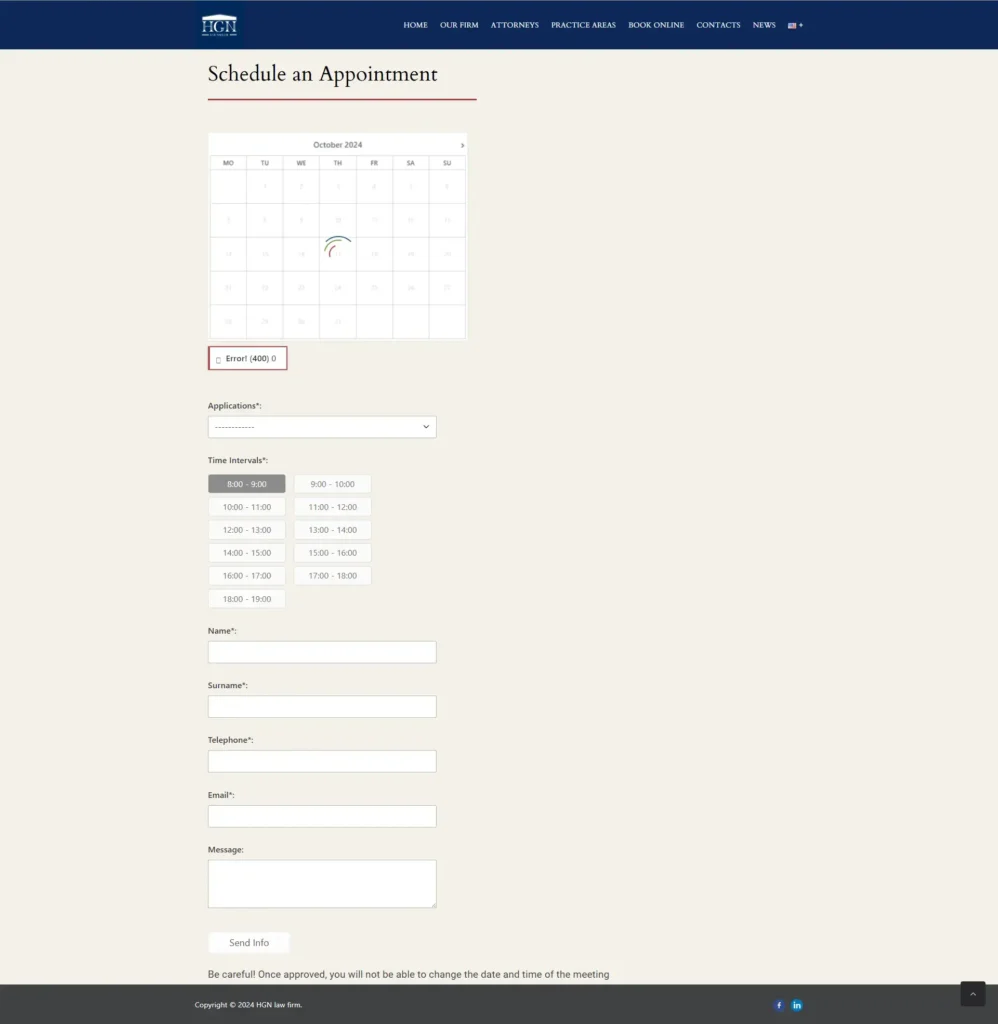
The requirement was therefore clear: reorganize the public-facing website while rebuilding the consultation path into something the firm could actually use.
Mono redesigned the HGNS website around a more structured legal-service journey and implemented the consultation process using WooCommerce.
The project connected several previously separate parts of the experience:
This changed the role of the website. Instead of functioning mainly as an information layer, it could also support a defined path from legal-service research to a scheduled consultation.
For projects where the central requirement is capturing and processing appointments or service requests, Mono treats this flow as a booking and inquiry system rather than an isolated form or page.
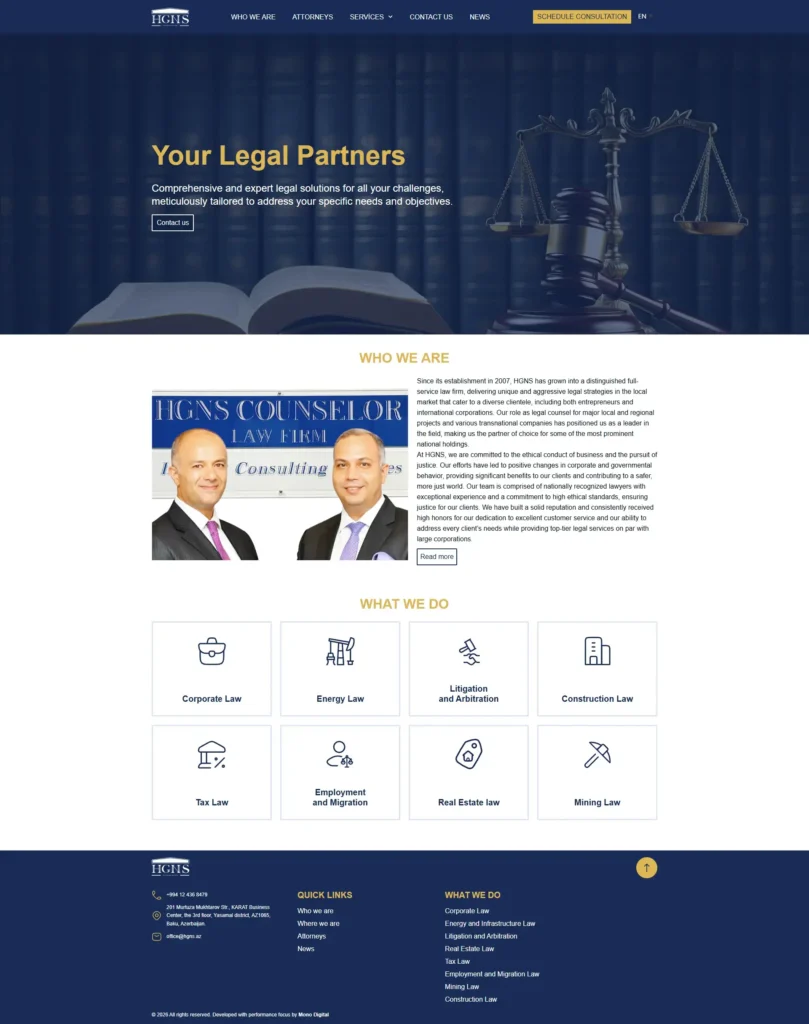
The homepage was reorganized to establish the firm’s positioning earlier and give visitors clearer routes into its services, company information and consultation process.
Legal positioning, firm information and practice areas were brought into a more deliberate hierarchy, while consultation remained visible as the primary action.
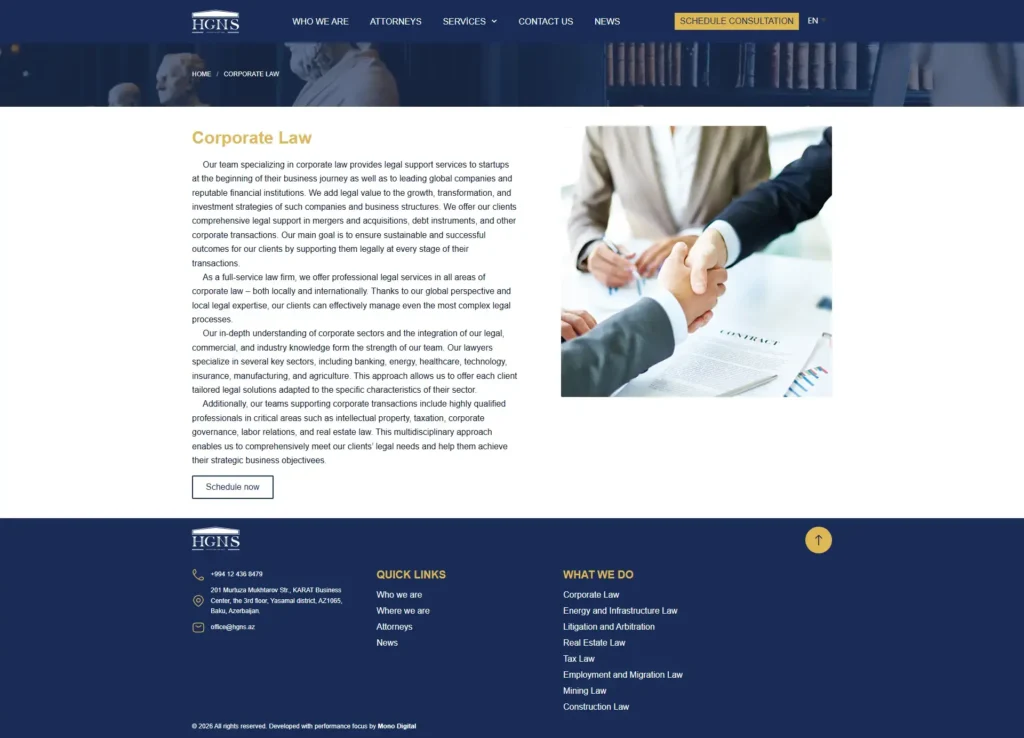
Individual legal services needed to work as decision-making pages rather than dense information sections.
The refreshed structure separated practice areas more clearly, improved content hierarchy and made individual services easier to scan. Consultation access was then connected to this service-discovery path rather than existing as a disconnected part of the website.
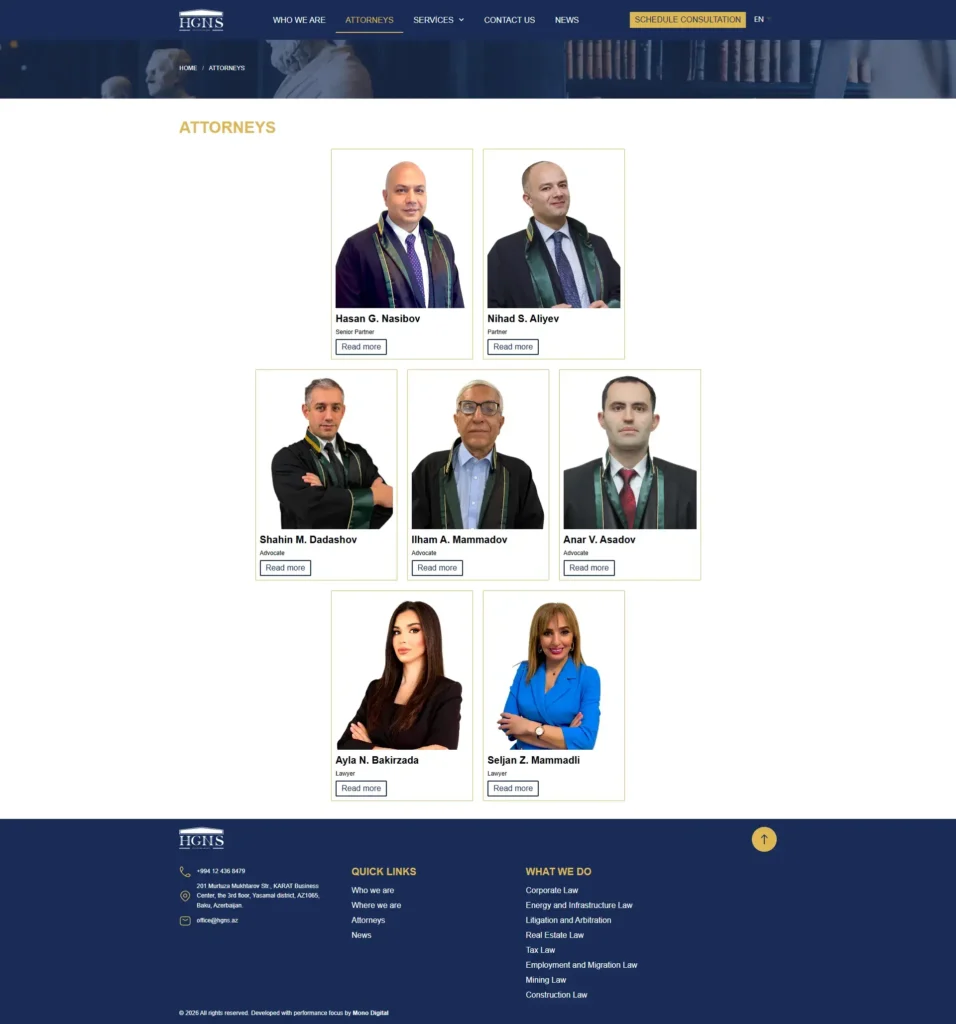
For a law firm, the people delivering the service are an important part of the decision process.
The attorneys section was rebuilt around structured individual profiles, with roles such as Partner and Advocate presented clearly. This gave prospective clients a more organized view of the team behind the firm’s legal services.
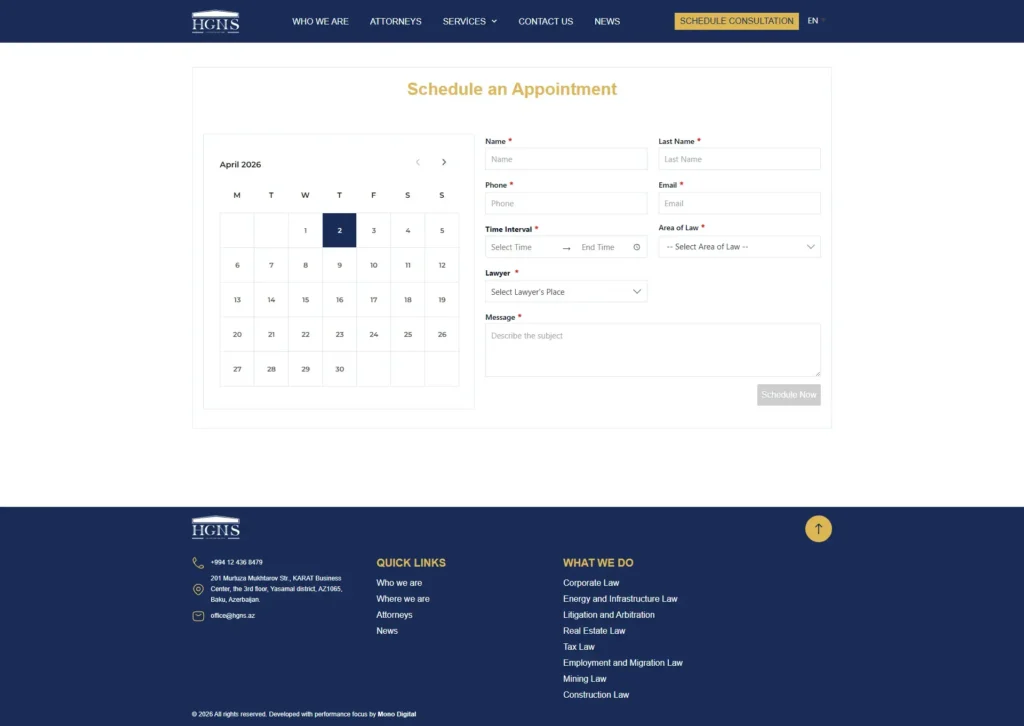
The consultation workflow was the project’s main functional component.
The completed booking experience allowed a visitor to work through appointment availability, choose a suitable time interval, specify an area of law and select a lawyer. Payment functionality and automated email communication were connected to the same process.
This replaced the previously failing appointment point with a working operational workflow built around an actual consultation journey.
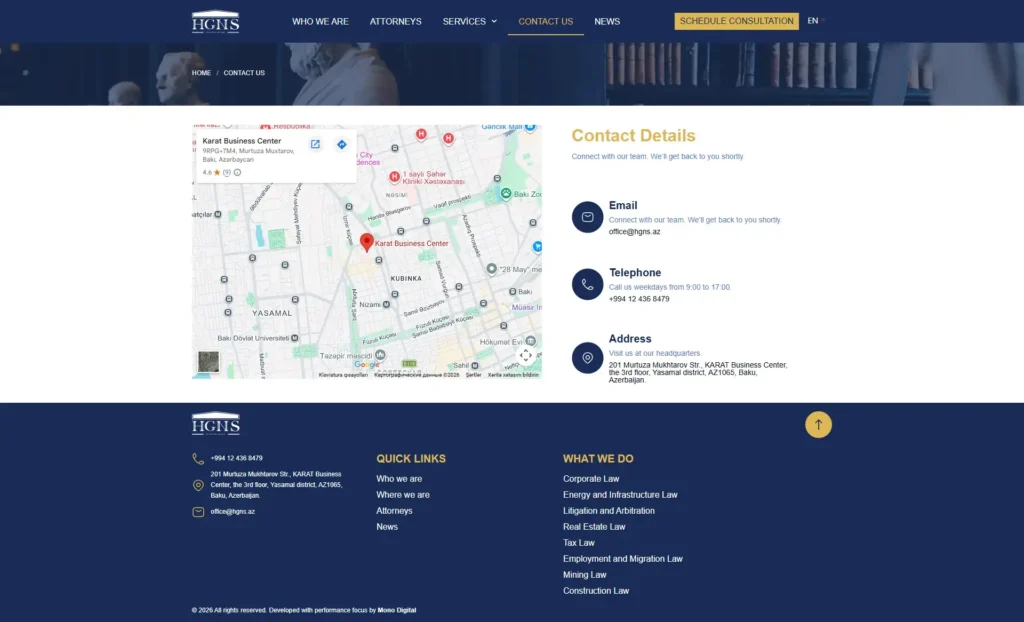
The contact experience was also reorganized so visitors had a clear alternative route for reaching the firm.
Contact information was presented in structured blocks alongside an integrated Google Maps view, making location and communication details easier to identify.
The website redesign and consultation functionality were implemented as one connected experience rather than as separate interface improvements.
WooCommerce provided the documented foundation for the consultation process, while the booking interface handled calendar selection, availability, lawyer and practice-area choices. Payment processing and automated email communication extended that process beyond the initial form submission.
The frontend structure was rebuilt at the same time so that homepage positioning, practice-area content, attorney information and contact details all contributed to the path toward consultation.
HGNS moved from a website with a failing consultation point and fragmented information architecture to a more structured legal website with an operational booking flow.
The completed system gave visitors a clearer route from understanding the firm’s services to choosing a lawyer or practice area and arranging a consultation. On the operational side, scheduling, payment and email communication were brought into the same workflow.
The result was therefore not simply a redesigned law firm website. It was a website rebuilt around the specific interaction the business needed it to support: turning legal-service interest into a structured consultation process.